


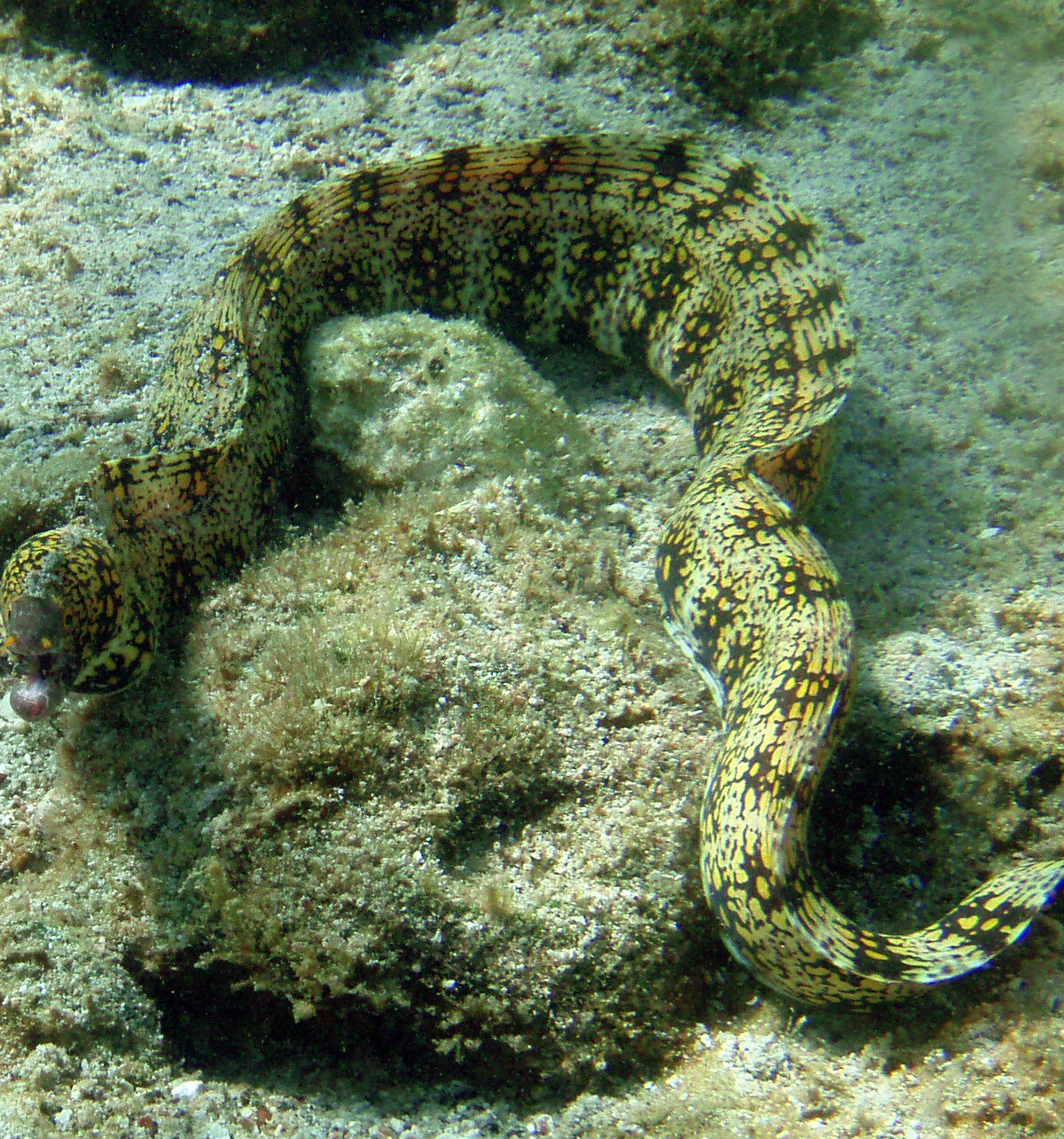
SNOWFLAKE MORAY EEL
DESCRIPTION
Snowflake Moray Eel is a striking species known for its unique coloration, featuring a white or cream body adorned with dark brown or black spots that resemble snowflakes. This moray eel typically inhabits rocky crevices and coral reefs, where it can be found hiding during the day and becoming more active at night. Its behavior is largely solitary, and it plays a crucial role in the marine ecosystem by controlling the population of smaller fish and invertebrates.
FUN FACTS
- Snowflake Moray Eels have a unique feeding mechanism that allows them to extend their jaws to capture prey, which is quite different from most fish
- They also have a second set of jaws, called pharyngeal jaws, that help them grip and swallow their food
- | These eels are often mistaken for snakes due to their elongated bodies and lack of pectoral fins
- Despite their fearsome appearance, they are generally not aggressive towards humans unless provoked
QUICK INFO
Lifespan10-15 years in the wild, up to 20 in captivity
Average Weight2-5 kg
Average Length1.2-1.5 m
Diet TypeCarnivore
Social Structuresolitary, typically found alone in their crevices
Activity PatternNocturnal
Breeding Seasonunknown
- Habitat
- These eels are typically found in warm, shallow waters, often residing in rocky or coral reef environments. They prefer areas with plenty of hiding spots to ambush prey.
- Biomes
- Coral Reef, Marine
- Native Range
- Snowflake Moray Eels are native to the tropical and subtropical waters of the Indo-Pacific region.
- Continent
- Asia, Australia, Africa
- Countries
- Red Sea, East Africa, Indian Ocean islands, Southeast Asia, Great Barrier Reef
- Diet
- Snowflake Moray Eels primarily feed on small fish and crustaceans, using their sharp teeth to capture prey. They are known to hunt by ambushing their food from their hiding spots.
- Diet Type
- Carnivore
- Favorite Food
- small fish, crustaceans
- Social Structure
- solitary, typically found alone in their crevices
- Activity Pattern
- Nocturnal
- Group Size
- 1
- Territorial
- 1
 LC
LC
2-5 kg
Weight
1.2-1.5 m
Length
- Coloration
- white or cream body with dark brown or black spots
- Lifespan
- 10-15 years in the wild, up to 20 in captivity
- Sexual Maturity
- 3-4 years
- Breeding Season
- unknown
LC
Least Concern
IUCN Red List Status
- Population Status
- The population status of Snowflake Moray Eels is currently stable, but they face threats from habitat destruction.
- Wild Population Estimate
- unknown
- Population Trend
- Stable
- Endangered
- 0
- Threats
- Main threats include habitat loss due to coral reef degradation and overfishing. Pollution and climate change also pose risks to their environment.
- Predators
- larger fish, sharks, and some species of sea turtles
- Defense Mechanisms
- Snowflake Moray Eels rely on their camouflage and the protection of their crevices to avoid predators.
- Compatible Animals
- none
- Found in Zoos
- Uncommon