


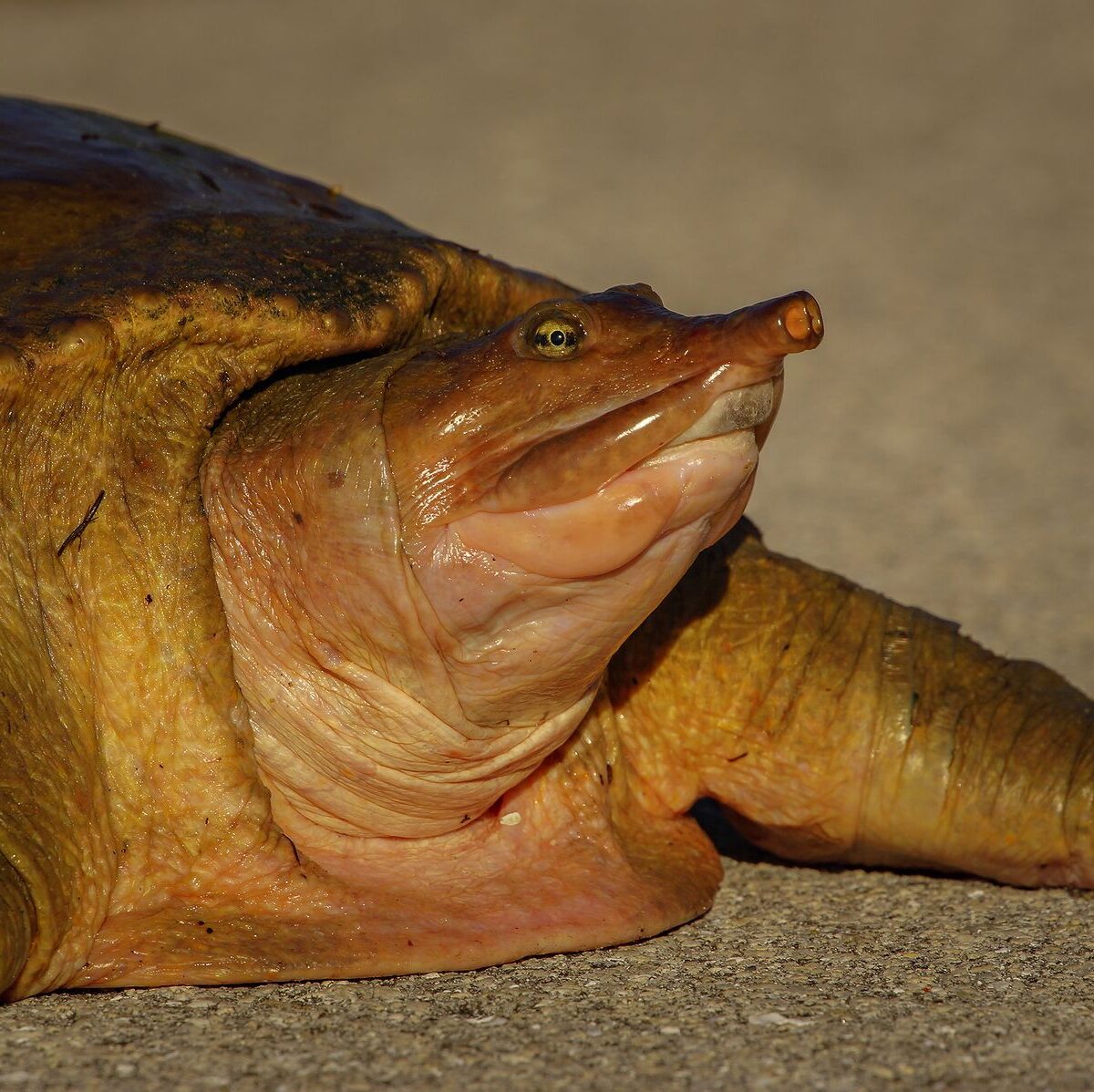
SOFTSHELL TURTLE
DESCRIPTION
Softshell Turtle is commonly known as the Asian Softshell Turtle and the Indian Softshell Turtle. This species is characterized by its flattened, leathery shell, which lacks the hard scutes found in many other turtles. They are primarily aquatic and are known for their ability to breathe through their skin, allowing them to stay submerged for extended periods while foraging or hiding from predators.
FUN FACTS
- Softshell Turtles are known for their unique ability to breathe through their skin, which allows them to stay submerged for long periods without surfacing for air
- This adaptation is particularly useful in their natural habitats where they can remain hidden from predators while still obtaining oxygen
- | Unlike many other turtles, Softshell Turtles have a soft, flexible shell that is more akin to a leather texture than a hard shell, making them more agile in the water
- This adaptation helps them to be effective hunters, as they can move quickly to catch prey
QUICK INFO
Lifespan20-30 years in the wild
Average Weight5-15 kg
Average Length0.5-1 m
Diet TypeCarnivore
Social Structuresolitary, typically found alone except during mating season
Activity PatternDiurnal
Breeding SeasonSpring to early summer
- Habitat
- Softshell Turtles inhabit freshwater environments such as rivers, lakes, and ponds. They prefer areas with soft, muddy bottoms where they can easily bury themselves.
- Biomes
- Freshwater, Wetlands
- Native Range
- Softshell Turtles are native to South and Southeast Asia, including countries like India, Bangladesh, and Thailand.
- Continent
- Asia
- Countries
- India, Bangladesh, Thailand, Myanmar, Vietnam
- Diet
- Softshell Turtles are carnivorous, primarily feeding on aquatic invertebrates, fish, and occasionally small amphibians. They are opportunistic feeders and will consume whatever prey is available in their habitat.
- Diet Type
- Carnivore
- Favorite Food
- aquatic invertebrates, fish
- Social Structure
- solitary, typically found alone except during mating season
- Activity Pattern
- Diurnal
- Group Size
- 1-2
- Territorial
- 0
 LC
LC
 VU
VU
5-15 kg
Weight
0.5-1 m
Length
- Coloration
- Softshell Turtles have a brown to olive-green coloration with a smooth, leathery texture.
- Sexual Dimorphism
- Males are generally smaller than females and have a more elongated tail.
- Lifespan
- 20-30 years in the wild
- Offspring per Birth
- 10-30
- Sexual Maturity
- 5-7 years
- Breeding Season
- Spring to early summer
EN
Endangered
IUCN Red List Status
- Population Status
- The population of Softshell Turtles is currently declining due to habitat loss and hunting.
- Wild Population Estimate
- Unknown
- Population Trend
- Decreasing
- Endangered
- 1
- Threats
- Main threats include habitat destruction, pollution, and hunting for their meat and shells. These factors have led to significant declines in their populations across their native range.
- Conservation Program
- Various local conservation efforts are in place, but comprehensive programs are lacking.
- Predators
- Large fish, birds of prey, and mammals such as raccoons and otters are known predators of Softshell Turtles.
- Defense Mechanisms
- Softshell Turtles can quickly bury themselves in the mud or sand to avoid predators.
- Found in Zoos
- Uncommon