


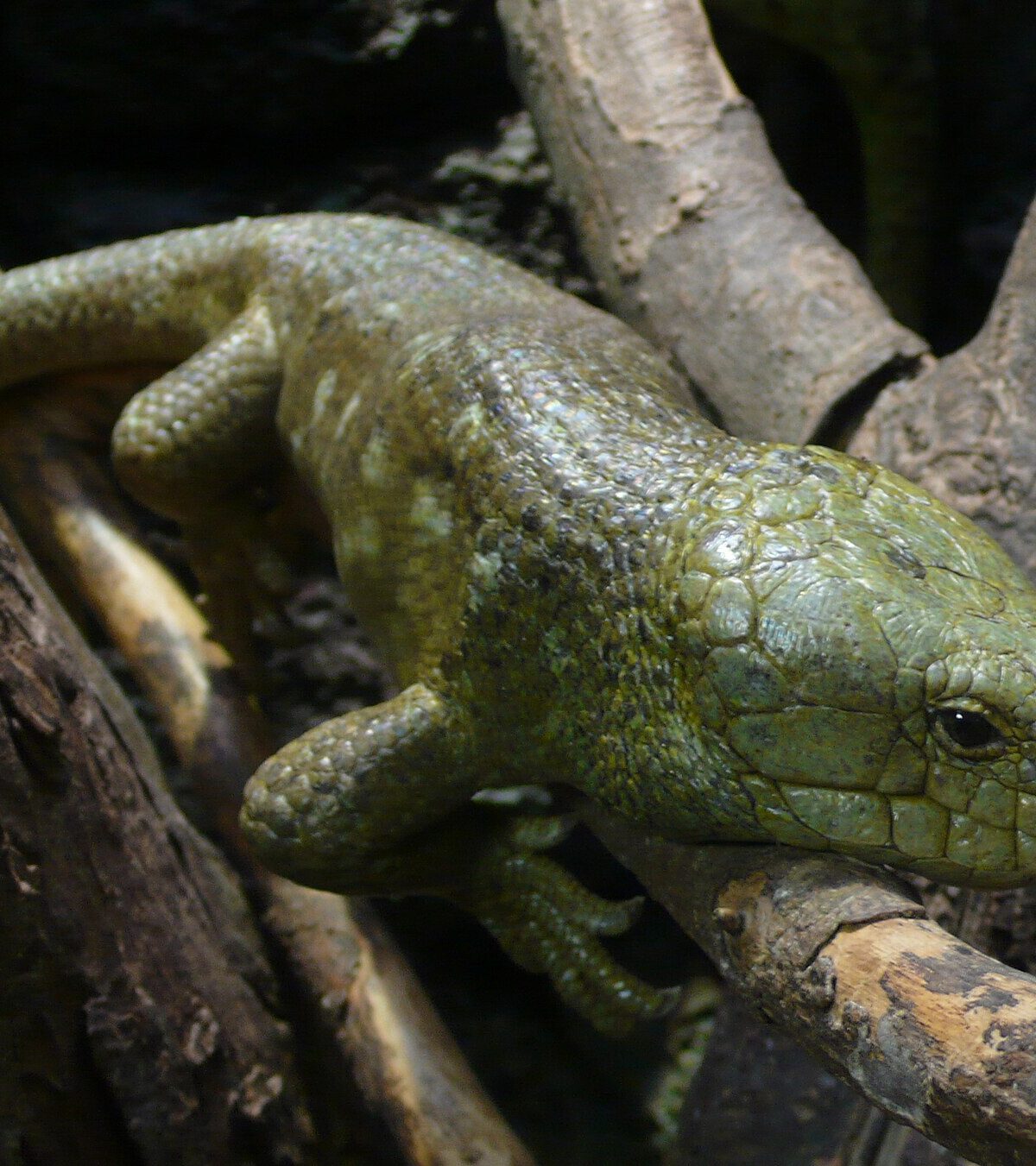
SOLOMON ISLANDS SKINK
Corucia zebrata
DESCRIPTION
The Solomon Islands Skink is a large, robust lizard that can reach lengths of up to 30 cm. It has a smooth, shiny body with a coloration that typically ranges from brown to olive green, often featuring darker stripes or spots. This skink is primarily terrestrial and is known for its burrowing behavior, often found hiding under leaf litter or in crevices.
FUN FACTS
- The Solomon Islands Skink is known for its unique ability to adapt to various microhabitats within its forest environment, showcasing a remarkable level of ecological versatility
- Additionally, this skink plays a crucial role in its ecosystem by helping to control insect populations, contributing to the overall health of its habitat
QUICK INFO
Lifespan5-10 years in the wild
Average Length30 cm
Diet TypeOmnivore
Social Structuresolitary, typically found alone except during mating season
Activity PatternDiurnal
- Habitat
- This species inhabits tropical forests and shrublands, often favoring areas with dense vegetation. It is typically found on the forest floor, where it can easily access its food sources.
- Biomes
- Tropical Rainforest
- Native Range
- The Solomon Islands Skink is native to the Solomon Islands, located in the southwestern Pacific Ocean.
- Continent
- Oceania
- Countries
- Solomon Islands
- Diet
- The Solomon Islands Skink primarily feeds on insects and other small invertebrates. It may also consume plant material occasionally.
- Diet Type
- Omnivore
- Favorite Food
- insects, small invertebrates
- Social Structure
- solitary, typically found alone except during mating season
- Activity Pattern
- Diurnal
- Group Size
- 1
- Territorial
- 0
 VU
VU
 LC
LC
30 cm
Length
- Coloration
- brown to olive green with darker stripes or spots
- Sexual Dimorphism
- males may be slightly larger than females
- Lifespan
- 5-10 years in the wild
- Sexual Maturity
- 1-2 years
LC
Least Concern
IUCN Red List Status
- Population Status
- The population status of the Solomon Islands Skink is not well-documented, but it is believed to be stable in its natural habitat.
- Population Trend
- Stable
- Endangered
- 0
- Threats
- Habitat loss due to deforestation and human encroachment poses a significant threat to the Solomon Islands Skink. Additionally, invasive species may compete for resources or prey on this skink.
- Predators
- birds of prey, snakes, and larger mammals
- Defense Mechanisms
- The Solomon Islands Skink may use its burrowing ability to escape predators and can also exhibit a quick, darting movement to evade capture.
- Found in Zoos
- Uncommon