


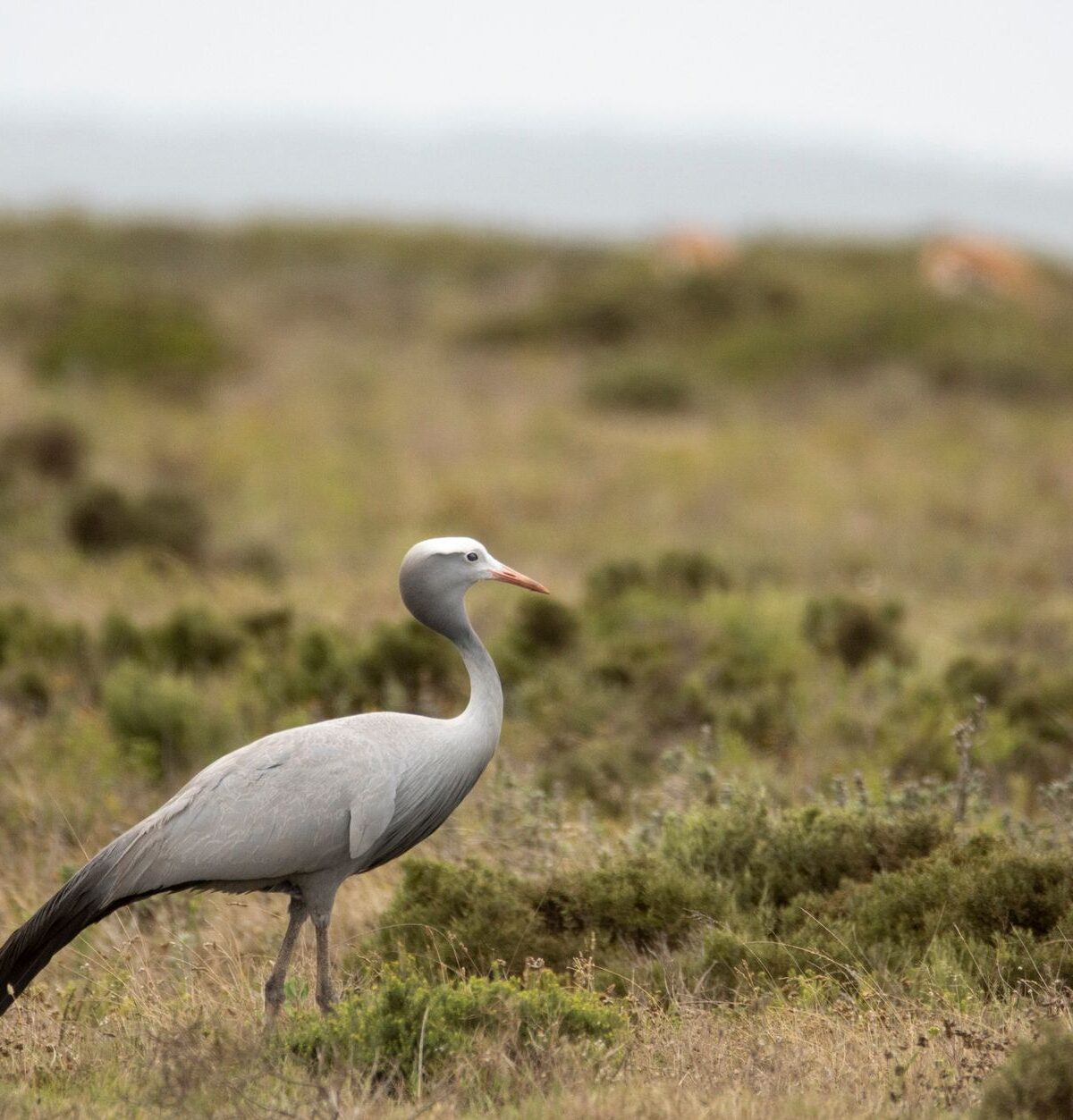
SOUTH AFRICAN BLUE CRANE
Anthropoides paradiseus
DESCRIPTION
South African Blue Crane (Anthropoides paradiseus) is a large, elegant bird known for its striking blue-gray plumage and long legs. It exhibits a unique courtship dance that involves elaborate displays and vocalizations, making it a fascinating species to observe. This crane is primarily found in open grasslands and agricultural fields, where it forages for food and raises its young.
FUN FACTS
- The South African Blue Crane is the national bird of South Africa and is featured on the country's coat of arms
- They are known for their unique mating dance, which involves jumping and bowing, and can be quite a spectacle during courtship season
QUICK INFO
Lifespan15-20 years in the wild, up to 30 in captivity
Average Weight3.5-4.5 kg
Average Length1.0-1.2 m
Diet TypeOmnivore
Social StructureThey are typically found in pairs or small family groups, especially during the breeding season.
Activity PatternDiurnal
Breeding SeasonSpring (September-November)
- Habitat
- This species inhabits open grasslands, savannas, and agricultural areas, often near water sources. It prefers areas with short grass for foraging and nesting.
- Biomes
- Grassland, Savanna
- Native Range
- The South African Blue Crane is native to southern Africa, primarily found in South Africa, Namibia, and Botswana.
- Continent
- Africa
- Countries
- South Africa, Namibia, Botswana
- Diet
- The South African Blue Crane primarily feeds on seeds, grains, and insects, foraging on the ground for its food. It may also consume small invertebrates and plant material.
- Diet Type
- Omnivore
- Favorite Food
- seeds, grains, insects
- Social Structure
- They are typically found in pairs or small family groups, especially during the breeding season.
- Activity Pattern
- Diurnal
- Group Size
- 2-10
- Territorial
- 1
 CR
LC
CR
LC
3.5-4.5 kg
Weight
1.0-1.2 m
Length
- Coloration
- The plumage is predominantly blue-gray with a distinctive black crown and a long, slender neck.
- Sexual Dimorphism
- Males are generally larger than females, but coloration is similar.
- Lifespan
- 15-20 years in the wild, up to 30 in captivity
- Offspring per Birth
- 1-2
- Sexual Maturity
- 3-4 years
- Breeding Season
- Spring (September-November)
LC
Least Concern
IUCN Red List Status
- Population Status
- The population of South African Blue Cranes is currently stable, but they face threats from habitat loss.
- Wild Population Estimate
- 25,000-30,000
- Population Trend
- Stable
- Endangered
- 0
- Threats
- Main threats include habitat destruction due to agricultural expansion and human encroachment. Additionally, they are vulnerable to collisions with power lines.
- Conservation Program
- Various conservation programs are in place to protect their habitats and raise awareness about their status.
- Predators
- Main predators include large birds of prey, such as eagles and hawks, as well as terrestrial predators like jackals and domestic dogs.
- Defense Mechanisms
- They rely on their ability to fly and their strong legs for quick escapes, as well as their vocalizations to warn of danger.
- Found in Zoos
- Uncommon