


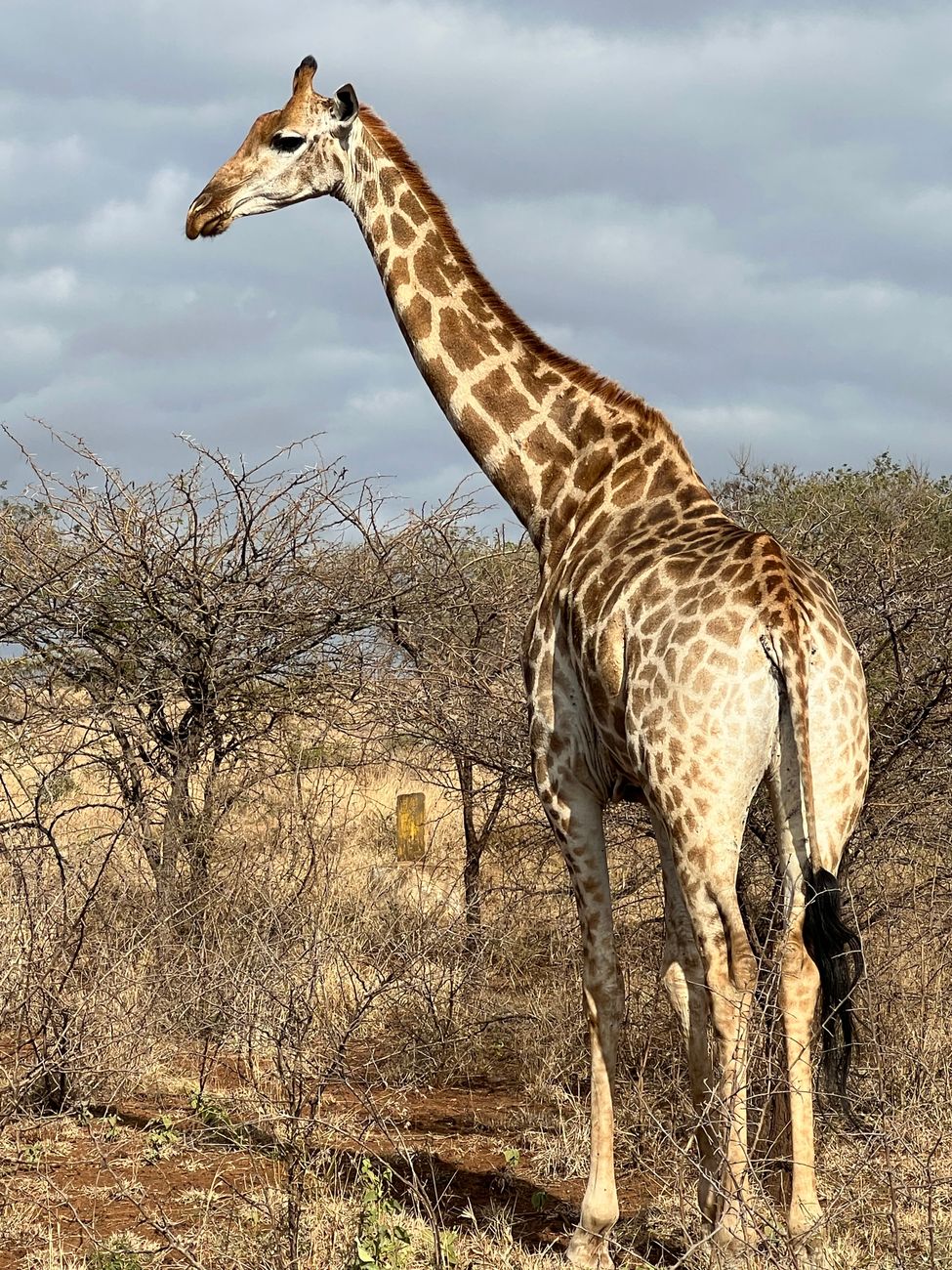
SOUTH AFRICAN GIRAFFE
Giraffa giraffa
DESCRIPTION
Also called Cape Giraffe, South African Giraffe (Giraffa giraffa) is a tall, long-necked mammal known for its distinctive spotted coat. They exhibit a unique gait, moving both legs on one side of their body followed by the legs on the other side, which allows them to navigate their savanna habitats efficiently. These giraffes are social animals, often found in loose herds, and play a crucial role in their ecosystem by browsing on leaves and branches, which helps maintain the health of their environment.
FUN FACTS
- Giraffes have a unique cardiovascular system that allows them to pump blood up their long necks to their brains, which is essential for maintaining blood flow when they bend down to drink
- | Their tongues are about 18 inches long and are prehensile, allowing them to grasp leaves and twigs, and they are also darkly pigmented to protect against sunburn
QUICK INFO
Lifespan15-25 years in the wild, up to 30 years in captivi
Average Weight800-1,200 kg
Average Length4.3-5.7 m
Diet TypeHerbivore
Social Structuregroup — they often form loose herds that can vary in size.
Activity PatternDiurnal
Breeding SeasonYear-round, with peaks depending on local conditions
- Habitat
- They inhabit open savannas, grasslands, and woodlands, where they can easily access their preferred food sources. Their long necks allow them to reach high foliage that many other herbivores cannot.
- Biomes
- Savanna, Grassland, Woodland
- Native Range
- South African Giraffes are native to the southern regions of Africa, particularly in South Africa, Namibia, Botswana, and Zimbabwe.
- Continent
- Africa
- Countries
- South Africa, Namibia, Botswana, Zimbabwe
- Diet
- South African Giraffes primarily feed on leaves, fruits, and flowers from trees and shrubs, favoring acacia species.
- Diet Type
- Herbivore
- Favorite Food
- Acacia leaves
- Social Structure
- group — they often form loose herds that can vary in size.
- Activity Pattern
- Diurnal
- Group Size
- 5-20
- Territorial
- 0
 LC
LC
 LC
LC
800-1,200 kg
Weight
4.3-5.7 m
Length
4.5-6 m
Height (Shoulder)
- Coloration
- Their coat is characterized by large, irregular brown patches separated by lighter-colored fur, providing excellent camouflage in their natural habitat.
- Sexual Dimorphism
- Males are generally larger and have thicker necks than females.
- Lifespan
- 15-25 years in the wild, up to 30 years in captivi
- Gestation Period
- 450 days
- Offspring per Birth
- 1
- Sexual Maturity
- 3-4 years
- Breeding Season
- Year-round, with peaks depending on local conditions
LC
Least Concern
IUCN Red List Status
- Population Status
- The population of South African Giraffes is currently stable, but they face threats from habitat loss and poaching.
- Wild Population Estimate
- 20,000-25,000
- Population Trend
- Stable
- Endangered
- 0
- Threats
- Main threats include habitat destruction due to agriculture and urbanization, as well as poaching for their skin and bones. Conservation efforts are ongoing to protect their habitats and reduce human-wildlife conflict.
- Conservation Program
- Various local and international conservation programs are in place to protect giraffe populations and their habitats.
- Predators
- Lions, hyenas, and crocodiles are known predators of South African Giraffes, particularly targeting calves.
- Defense Mechanisms
- Giraffes use their height to spot predators from a distance and can deliver powerful kicks to defend themselves.
- Compatible Animals
- Zebras, antelopes, ostriches
- Found in Zoos
- Common