


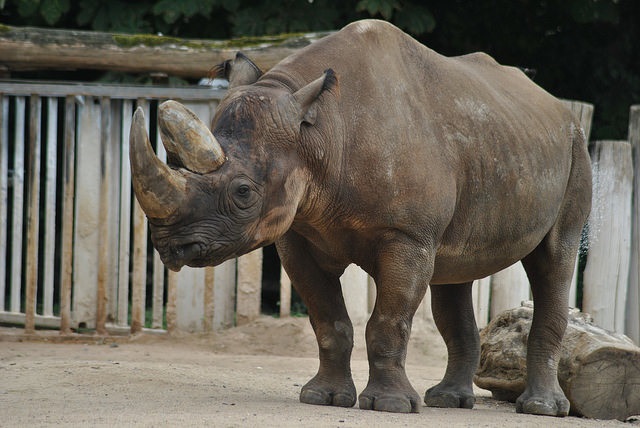
SOUTH-CENTRAL BLACK RHINOCEROS
Diceros bicornis minor
DESCRIPTION
South-Central Black Rhinoceros (Diceros bicornis minor) is a subspecies of the Southern Black Rhinoceros, characterized by its smaller size and more pointed upper lip, which is adapted for grasping leaves and twigs. These rhinos are generally solitary animals, with males being more territorial than females, and they exhibit a range of behaviors including wallowing in mud to regulate their body temperature and protect their skin from parasites. Ecologically, they play a crucial role in their habitat by influencing vegetation structure and dynamics through their grazing habits.
FUN FACTS
- The South-Central Black Rhinoceros has a unique ability to run at speeds of up to 30 miles per hour despite their large size, making them surprisingly agile
- Additionally, their skin is sensitive and can get sunburned, which is why they often wallow in mud to protect themselves from the sun and insects
QUICK INFO
Lifespan40-50 years in the wild, up to 60 in captivity
Average Weight800-1,400 kg
Average Length3.0-3.8 m
Diet TypeHerbivore
Social StructureSolitary, with occasional mother-offspring pairs.
Activity PatternDiurnal
Breeding SeasonYear-round
- Habitat
- South-Central Black Rhinoceroses inhabit savannas, grasslands, and scrub forests, where they can find ample vegetation. They prefer areas with dense bush cover for protection and food.
- Biomes
- Savanna, Grassland
- Native Range
- Historically found across southern Africa, their current range is primarily limited to specific protected areas in South Africa, Namibia, and Zimbabwe.
- Continent
- Africa
- Countries
- South Africa, Namibia, Zimbabwe
- Diet
- They primarily consume a variety of shrubs, leaves, and grasses.
- Diet Type
- Herbivore
- Favorite Food
- Acacia leaves, shrubs
- Social Structure
- Solitary, with occasional mother-offspring pairs.
- Activity Pattern
- Diurnal
- Group Size
- 1-2
- Territorial
- 1
 VU
VU
800-1,400 kg
Weight
3.0-3.8 m
Length
1.4-1.8 m at shoulder
Height (Shoulder)
- Coloration
- Grayish-brown with a rough, thick skin.
- Sexual Dimorphism
- Males are generally larger than females.
- Lifespan
- 40-50 years in the wild, up to 60 in captivity
- Gestation Period
- 15-16 months
- Offspring per Birth
- 1
- Sexual Maturity
- 3-4 years
- Breeding Season
- Year-round
VU
Vulnerable
IUCN Red List Status
- Population Status
- The population of South-Central Black Rhinoceros is currently recovering due to conservation efforts, but they remain vulnerable.
- Wild Population Estimate
- 5,000-6,000
- Population Trend
- Increasing
- Endangered
- 1
- Threats
- The main threats include poaching for their horns and habitat loss due to agricultural expansion and human settlement. Conservation efforts are crucial to mitigate these threats.
- Conservation Program
- Various anti-poaching initiatives and habitat restoration projects are in place across their range.
- Predators
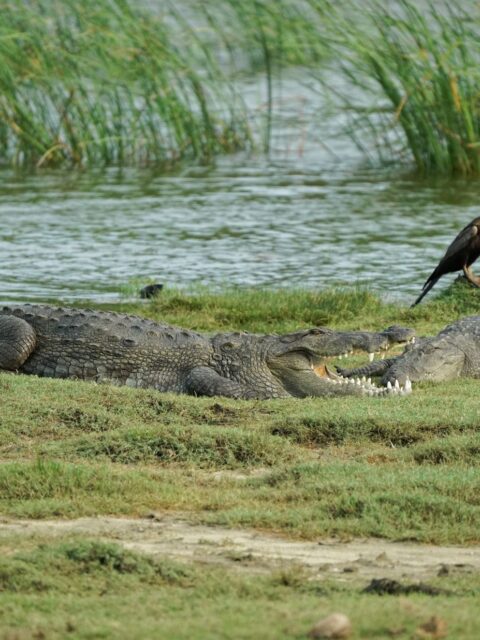
- Humans are the primary threat, but young rhinos may be vulnerable to lions and crocodiles.
- Defense Mechanisms
- They rely on their size and strength, using their horns to defend against threats.
- Compatible Animals
- None
- Found in Zoos
- Uncommon