


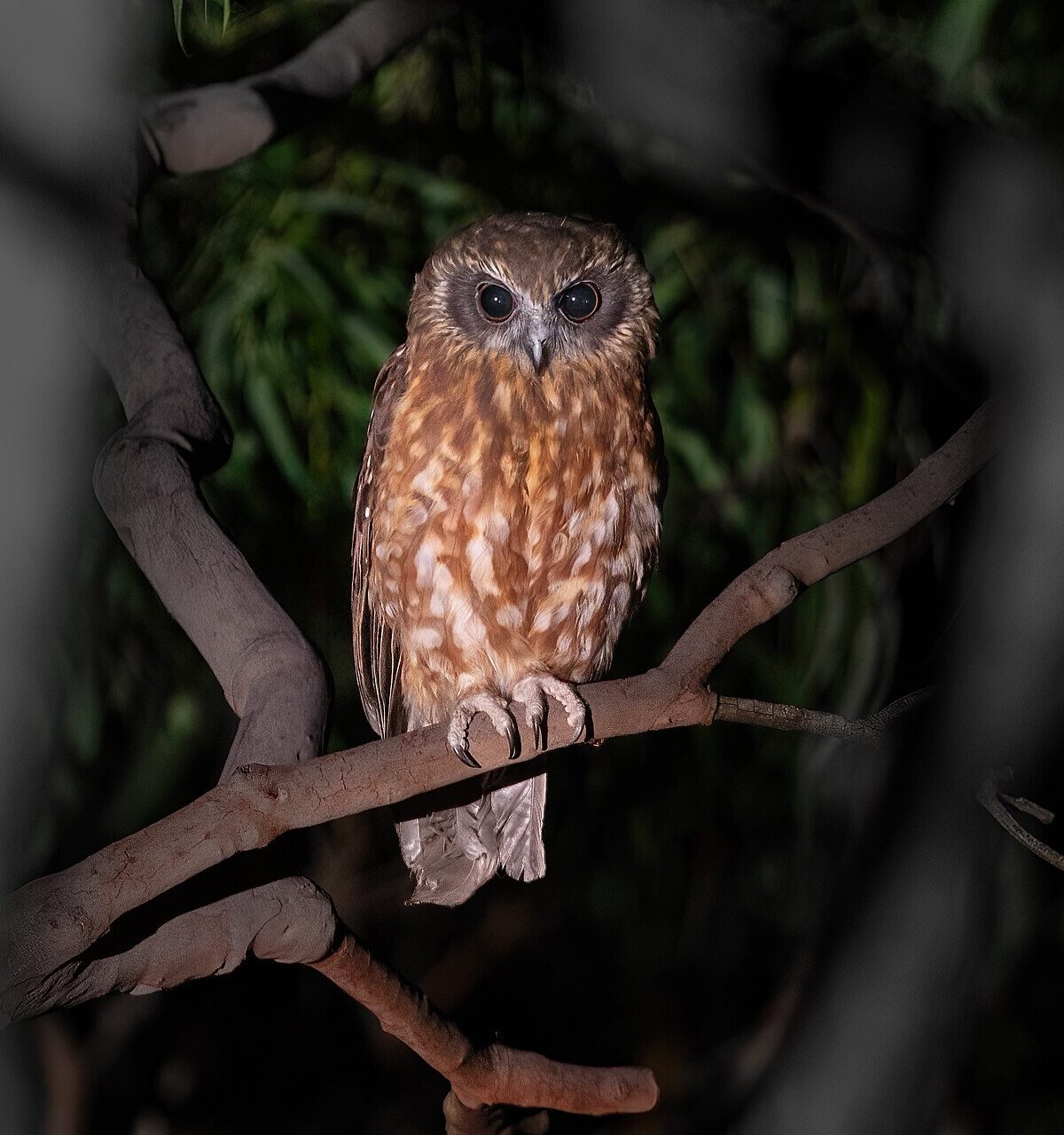
SOUTHERN BOOBOOK
Ninox boobook
DESCRIPTION
Southern Boobook (Ninox boobook) is commonly known as the Morepork due to its distinctive call that sounds like 'more-pork'. This medium-sized owl features a rounded head, large yellow eyes, and a mottled brown and white plumage that provides excellent camouflage against tree bark. It is primarily nocturnal, hunting at night for small mammals and birds, and is known for its territorial behavior, often calling to establish its presence in a given area.
FUN FACTS
- Southern Boobooks are known for their unique vocalizations, which can vary significantly between individuals and regions, making them a subject of interest for ornithologists studying bird communication
- | In some cultures, the call of the Southern Boobook is associated with folklore and is believed to be an omen or a sign of change, reflecting the deep connection between this species and the cultural narratives of the regions it inhabits
QUICK INFO
Lifespanup to 10 years in the wild
Average Weight200-400 g
Average Length30-40 cm
Diet TypeCarnivore
Social Structuresolitary, pairs during breeding season
Activity PatternNocturnal
Breeding SeasonSpring to early summer
- Habitat
- Southern Boobooks inhabit a variety of forested environments, including woodlands, open forests, and urban areas with sufficient tree cover. They prefer habitats that provide ample nesting sites and hunting opportunities.
- Biomes
- Temperate Forest, Tropical Rainforest, Urban
- Native Range
- The Southern Boobook is native to Australia, New Zealand, and New Guinea.
- Continent
- Australia, Oceania
- Countries
- Australia, New Zealand, Papua New Guinea, Indonesia
- Diet
- Southern Boobooks primarily feed on small mammals, birds, and insects, utilizing their keen eyesight and hearing to locate prey in the dark.
- Diet Type
- Carnivore
- Favorite Food
- small mammals, birds
- Social Structure
- solitary, pairs during breeding season
- Activity Pattern
- Nocturnal
- Group Size
- 1-2
- Territorial
- 1

 VU
VU
200-400 g
Weight
30-40 cm
Length
- Coloration
- mottled brown and white plumage
- Sexual Dimorphism
- females are generally larger than males
- Lifespan
- up to 10 years in the wild
- Offspring per Birth
- 2-4
- Sexual Maturity
- 1-2 years
- Breeding Season
- Spring to early summer
LC
Least Concern
IUCN Red List Status
- Population Status
- The population of Southern Boobooks is currently stable, though habitat loss poses a potential threat.
- Wild Population Estimate
- unknown
- Population Trend
- Stable
- Endangered
- 0
- Threats
- Main threats include habitat destruction due to logging and urban development, as well as predation by introduced species such as cats and foxes.
- Predators
- Cats, foxes, large birds of prey
- Defense Mechanisms
- Southern Boobooks rely on their camouflage and silent flight to avoid detection by predators.
- Found in Zoos
- Uncommon