


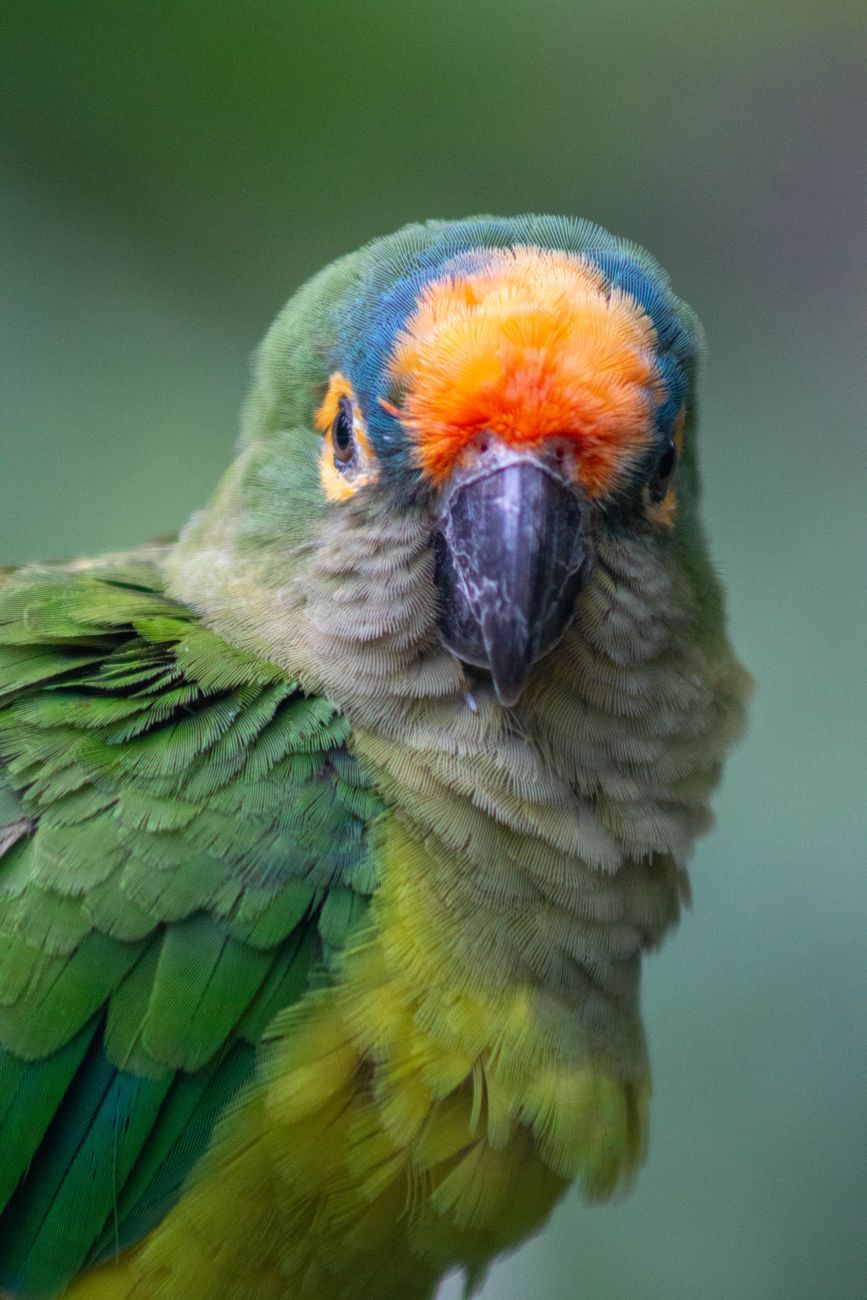
SOUTHERN GOLDEN-CAPPED CONURE
Aratinga auricapillus
DESCRIPTION
Southern Golden-capped Conure (Aratinga auricapillus) is a small, colorful parrot known for its vibrant plumage and playful behavior. It features a striking golden crown and green body, with hints of blue and yellow on its wings and tail. These birds are highly social and often found in flocks, engaging in vocalizations and acrobatics as part of their lively interactions.
FUN FACTS
- Southern Golden-capped Conures are known for their intelligence and ability to mimic sounds, including human speech
- They require mental stimulation and social interaction to thrive, making them popular pets among bird enthusiasts
- | These birds are highly acrobatic and enjoy climbing and hanging upside down, showcasing their agility and playful nature
- In the wild, they often engage in synchronized flying, which strengthens their social bonds within the flock
QUICK INFO
Lifespan15-20 years in the wild, up to 30 in captivity
Average Weight90-120 g
Average Length24-28 cm
Diet TypeHerbivore
Social StructureThey are typically found in small to medium-sized flocks, showcasing a strong social structure. Flocks can consist of 5-20 individuals, often engaging in cooperative behaviors.
Activity PatternDiurnal
Breeding SeasonSpring (September-November)
- Habitat
- Southern Golden-capped Conures inhabit subtropical and tropical forests, often near water sources. They prefer areas with abundant vegetation for foraging and nesting.
- Biomes
- Tropical Rainforest, Subtropical Forest
- Native Range
- This species is native to the southeastern regions of Brazil, particularly in the states of São Paulo and Paraná.
- Continent
- South America
- Countries
- Brazil
- Diet
- They primarily feed on seeds, fruits, and nuts, foraging in trees and shrubs. Their diet is supplemented with flowers and leaves, showcasing their adaptability to various food sources.
- Diet Type
- Herbivore
- Favorite Food
- seeds, fruits, nuts
- Social Structure
- They are typically found in small to medium-sized flocks, showcasing a strong social structure. Flocks can consist of 5-20 individuals, often engaging in cooperative behaviors.
- Activity Pattern
- Diurnal
- Group Size
- 5-20
- Territorial
- 0
 LC
LC
90-120 g
Weight
24-28 cm
Length
- Coloration
- They have a green body with a bright yellow-orange crown and blue wing feathers.
- Lifespan
- 15-20 years in the wild, up to 30 in captivity
- Offspring per Birth
- 3-5
- Sexual Maturity
- 2-3 years
- Breeding Season
- Spring (September-November)
LC
Least Concern
IUCN Red List Status
- Population Status
- The population is currently stable, but habitat loss poses a potential threat.
- Wild Population Estimate
- 10,000-20,000
- Population Trend
- Stable
- Endangered
- 0
- Threats
- Main threats include habitat destruction due to deforestation and the illegal pet trade. These factors can significantly impact their populations in the wild.
- Predators
- Natural predators include birds of prey and snakes, which may target eggs and young birds. Additionally, larger mammals may pose a threat to their nests.
- Defense Mechanisms
- They often use their vocalizations to alert the flock of potential dangers and may engage in evasive flight maneuvers.
- Compatible Animals
- other small parrots, finches
- Found in Zoos
- Uncommon