


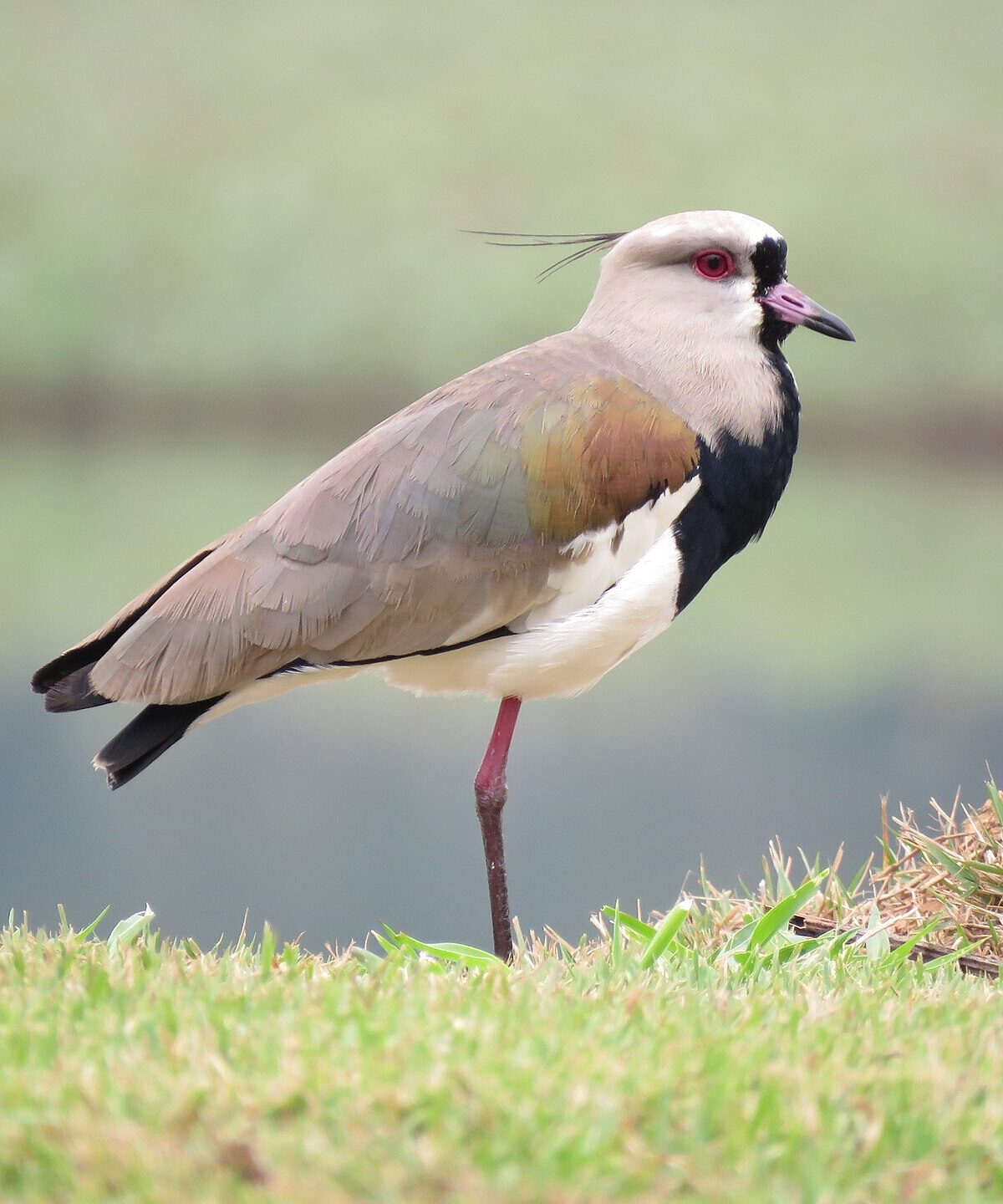
SOUTHERN LAPWING
Vanellus chilensis
DESCRIPTION
The Southern Lapwing, also known as Vanellus chilensis, is a striking bird characterized by its distinctive black and white plumage, with a prominent crest on its head. It has long legs and a unique facial pattern that includes a black crown and a white face. This species is known for its aggressive behavior, especially during the breeding season, where it fiercely defends its territory against intruders.
FUN FACTS
- Southern Lapwings are known for their unique courtship displays, which include aerial acrobatics and loud calls that can be heard from a distance
- These displays not only attract mates but also serve to establish territory against rivals
- | The Southern Lapwing has a fascinating behavior of feigning injury to distract predators away from their nests
- This tactic is quite effective, as it draws attention away from their vulnerable eggs or chicks, allowing them a better chance of survival
QUICK INFO
Lifespan10-15 years in the wild
Average Weight200-300 g
Average Length30-35 cm
Diet TypeOmnivore
Social Structurepair, often seen in small groups during foraging
Activity PatternDiurnal
Breeding SeasonSpring to early summer
- Habitat
- Southern Lapwings inhabit a variety of open environments, including grasslands, wetlands, and agricultural fields. They prefer areas with short vegetation where they can easily spot predators and forage for food.
- Biomes
- Grassland, Wetland, Agricultural
- Native Range
- The Southern Lapwing is native to South America, particularly found in countries like Argentina, Brazil, and Uruguay.
- Continent
- South America
- Countries
- Argentina, Brazil, Uruguay, Paraguay, Chile
- Diet
- Southern Lapwings primarily feed on insects, small invertebrates, and occasionally plant material. They are known to forage in open fields and wetlands, using their sharp eyesight to spot food.
- Diet Type
- Omnivore
- Favorite Food
- insects, small invertebrates
- Social Structure
- pair, often seen in small groups during foraging
- Activity Pattern
- Diurnal
- Group Size
- 2-10
- Territorial
- 1

 LC
LC
 VU
VU
200-300 g
Weight
30-35 cm
Length
- Coloration
- black and white with a distinctive crest and facial markings
- Lifespan
- 10-15 years in the wild
- Offspring per Birth
- 2-4
- Sexual Maturity
- 1-2 years
- Breeding Season
- Spring to early summer
LC
Least Concern
IUCN Red List Status
- Population Status
- The population of Southern Lapwings is currently stable, with no significant declines reported.
- Wild Population Estimate
- 100,000+
- Population Trend
- Stable
- Endangered
- 0
- Threats
- Main threats include habitat loss due to agricultural expansion and urban development. Additionally, predation by domestic animals can impact local populations.
- Predators
- foxes, domestic cats, birds of prey
- Defense Mechanisms
- Southern Lapwings are known for their aggressive behavior, using loud calls and physical displays to deter predators.
- Found in Zoos
- Uncommon