


SOUTHERN LEOPARD FROG
Lithobates sphenocephalus
DESCRIPTION
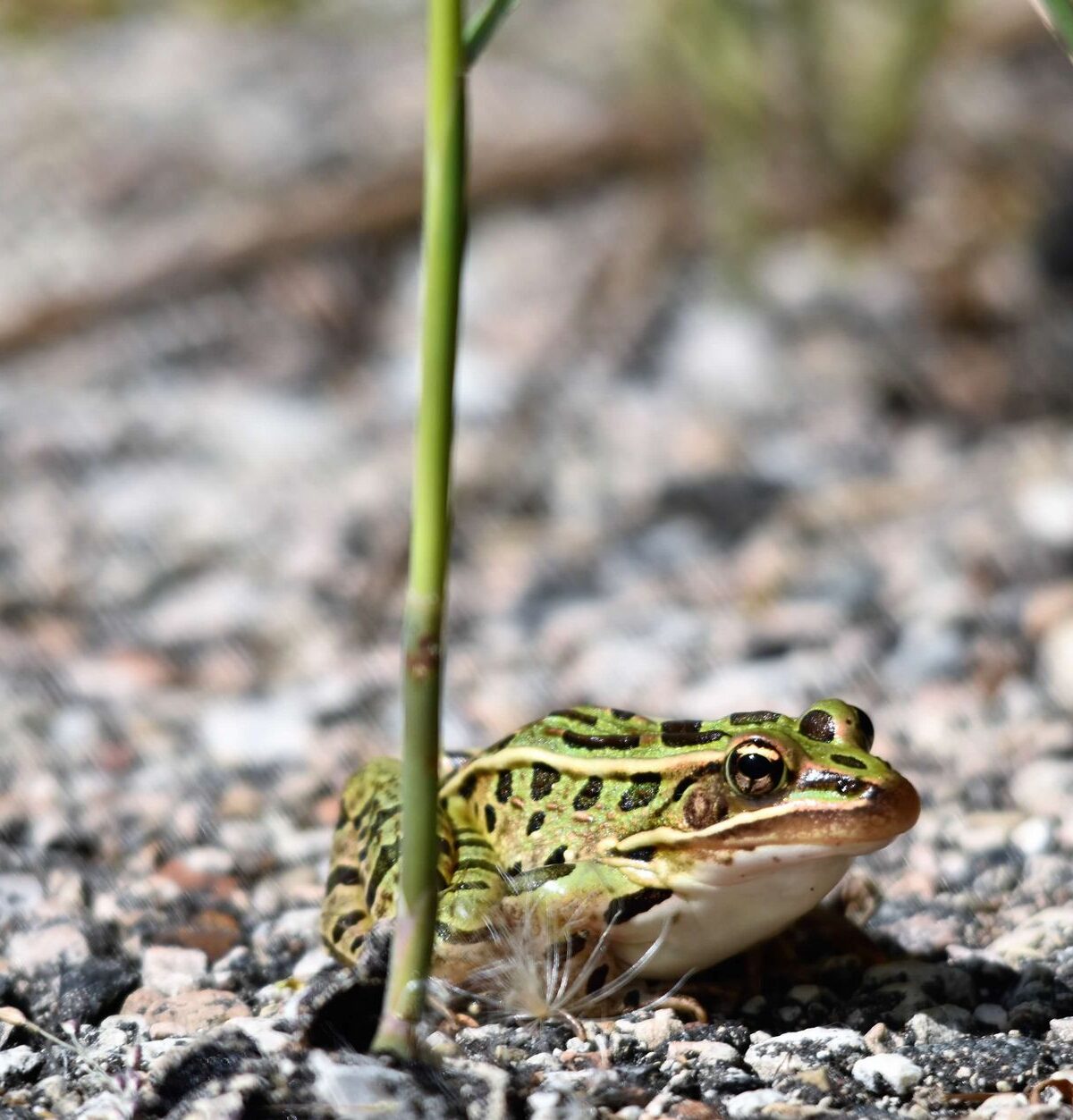
Southern Leopard Frog (Lithobates sphenocephalus) is a medium-sized frog known for its distinctive spotted appearance, which resembles that of a leopard. It typically has a green or brown background color with dark, rounded spots on its back and legs, providing excellent camouflage in its natural habitat. This species is often found near water bodies and is known for its agile swimming and jumping abilities, making it a proficient predator and prey evader.
FUN FACTS
- Southern Leopard Frogs are known for their impressive jumping ability, which can reach distances of up to 2 meters in a single leap
- They also have a unique mating call that varies by region, making them an interesting subject for studies on frog communication and behavior.|These frogs play a crucial role in their ecosystems as both predators and prey, helping to maintain the balance of insect populations while also serving as food for various larger animals
- Their presence in an environment is often an indicator of a healthy ecosystem, as they are sensitive to changes in water quality and habitat conditions
QUICK INFO
Lifespan5-10 years in the wild
Average Weight30-50 g
Average Length7.5-10 cm
Diet TypeInsectivore
Social Structuresolitary, with temporary gatherings during breeding
Activity PatternNocturnal
Breeding SeasonSpring to early summer (March-July)
- Habitat
- These frogs inhabit a variety of freshwater environments, including ponds, marshes, and streams, often favoring areas with abundant vegetation. They require both aquatic and terrestrial habitats for breeding and foraging.
- Biomes
- Wetlands, Temperate Forests
- Native Range
- Southern Leopard Frogs are native to the southeastern United States, ranging from Texas to Florida and up to the Carolinas.
- Continent
- North America
- Countries
- United States
- Diet
- Southern Leopard Frogs primarily consume insects and other small invertebrates. They are opportunistic feeders, often catching their prey with a quick flick of their long, sticky tongues.
- Diet Type
- Insectivore
- Favorite Food
- insects, small invertebrates
- Social Structure
- solitary, with temporary gatherings during breeding
- Activity Pattern
- Nocturnal
- Group Size
- 1-10
- Territorial
- 0
 VU
VU
 LC
LC
30-50 g
Weight
7.5-10 cm
Length
- Coloration
- green or brown with dark spots
- Sexual Dimorphism
- males are generally smaller and have more pronounced vocal sacs than females
- Lifespan
- 5-10 years in the wild
- Offspring per Birth
- 1000-3000 eggs
- Sexual Maturity
- 1-2 years
- Breeding Season
- Spring to early summer (March-July)
LC
Least Concern
IUCN Red List Status
- Population Status
- The population of Southern Leopard Frogs is currently stable, but they face habitat loss in some areas.
- Wild Population Estimate
- unknown
- Population Trend
- Stable
- Endangered
- 0
- Threats
- Main threats include habitat destruction due to urban development and pollution of water bodies. Additionally, climate change may impact their breeding habitats and food availability.
- Predators
- Birds, snakes, and larger amphibians are known predators of Southern Leopard Frogs.
- Defense Mechanisms
- They rely on camouflage to avoid detection and can also leap away quickly to escape predators.
- Found in Zoos
- Uncommon