


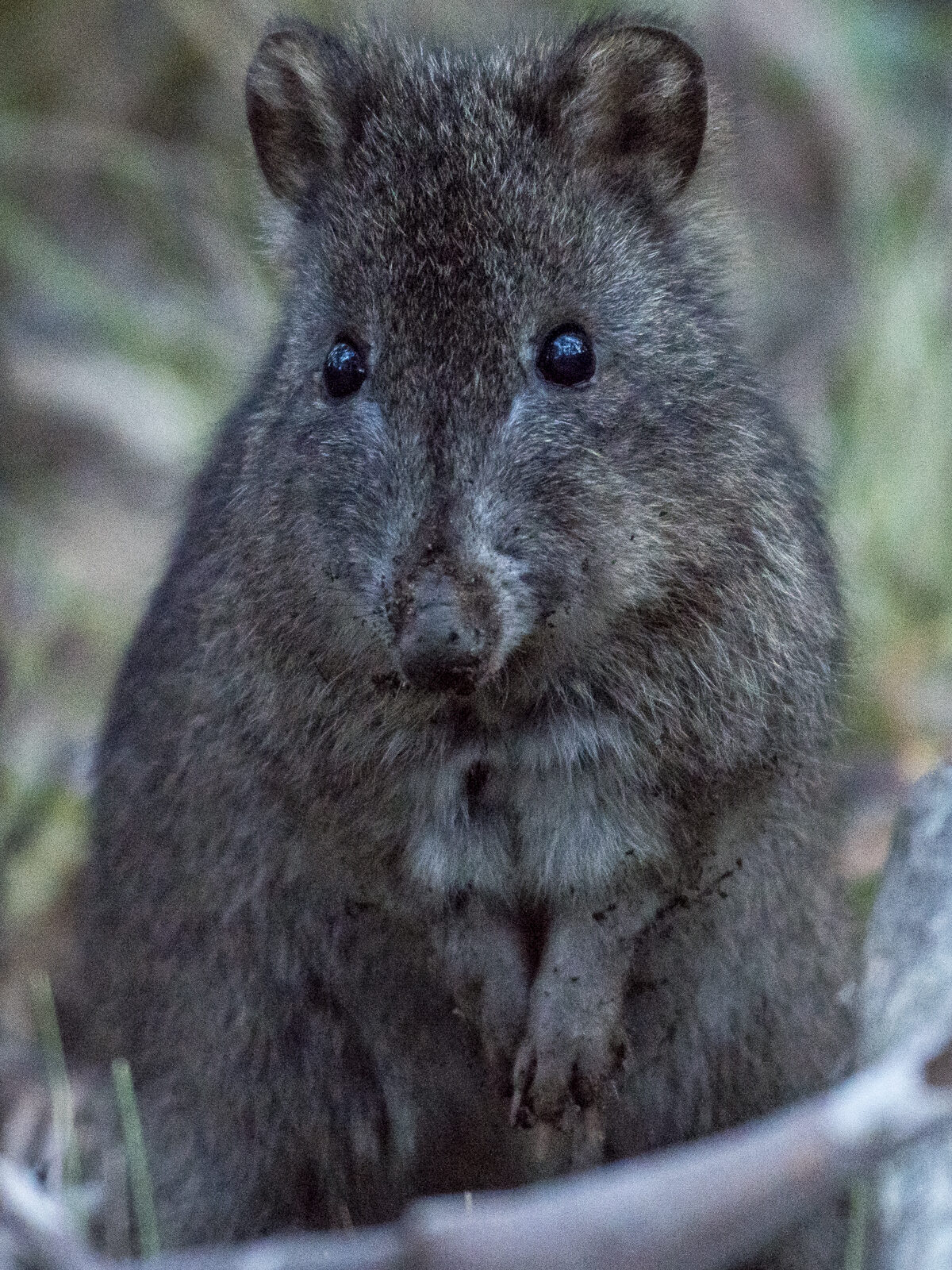
SOUTHERN POTOROO
Potorous tridactylus
DESCRIPTION
Southern Potoroo (Potorous tridactylus) is a small marsupial native to Australia, characterized by its compact body, long tail, and large ears. It has a soft, dense fur that is typically brown or grey, providing excellent camouflage in its natural habitat. This nocturnal creature is known for its foraging behavior, often digging in the ground for food and using its keen sense of smell to locate underground fungi and invertebrates.
FUN FACTS
- Southern Potoroos are known for their unique foraging behavior, which involves digging in the soil to find truffles, a type of underground fungus
- This not only provides them with food but also plays a vital role in the ecosystem by helping to disperse fungal spores, promoting forest health
- | Despite their small size, Southern Potoroos are important indicators of environmental health, as their presence signifies a healthy ecosystem
- Conservation efforts are crucial for their survival, and they are often used in educational programs to raise awareness about the importance of preserving native habitats
QUICK INFO
Lifespan5-10 years in the wild, up to 15 in captivity
Average Weight1.0-1.5 kg
Average Length30-40 cm
Diet TypeOmnivore
Social Structuresolitary, occasionally seen in pairs during foraging
Activity PatternNocturnal
Breeding SeasonSpring to early summer
- Habitat
- Southern Potoroos inhabit dense, shrubby woodlands and heathlands, often in areas with a rich understorey of vegetation. They prefer habitats that provide ample cover and food sources, particularly in coastal regions.
- Biomes
- Temperate Forest, Coastal
- Native Range
- The native range of the Southern Potoroo is primarily along the southeastern coast of Australia, particularly in New South Wales and Victoria.
- Continent
- Australia
- Countries
- Australia
- Diet
- Southern Potoroos primarily feed on fungi, roots, and invertebrates, showcasing a preference for truffles and other underground fungi. Their diet plays a crucial role in the ecosystem as they help in the dispersal of fungal spores.
- Diet Type
- Omnivore
- Favorite Food
- truffles, roots, invertebrates
- Social Structure
- solitary, occasionally seen in pairs during foraging
- Activity Pattern
- Nocturnal
- Group Size
- 1-2
- Territorial
- 0

 VU
VU
1.0-1.5 kg
Weight
30-40 cm
Length
- Coloration
- brown to grey fur with a lighter underbelly
- Lifespan
- 5-10 years in the wild, up to 15 in captivity
- Gestation Period
- 30 days
- Offspring per Birth
- 1-2
- Sexual Maturity
- 1-2 years
- Breeding Season
- Spring to early summer
EN
Endangered
IUCN Red List Status
- Population Status
- The Southern Potoroo population is currently declining due to habitat loss and predation.
- Wild Population Estimate
- less than 10,000
- Population Trend
- Decreasing
- Endangered
- 1
- Threats
- Main threats to the Southern Potoroo include habitat destruction due to land development and agriculture, as well as predation by introduced species such as foxes and cats. These factors have significantly impacted their populations and distribution.
- Conservation Program
- Conservation efforts include habitat restoration and protection, as well as predator control programs.
- Predators
- foxes, feral cats, birds of prey
- Defense Mechanisms
- Southern Potoroos rely on their camouflage and burrowing behavior to evade predators, often hiding in dense vegetation.
- Found in Zoos
- Uncommon