


SOUTHERN PUDU
DESCRIPTION
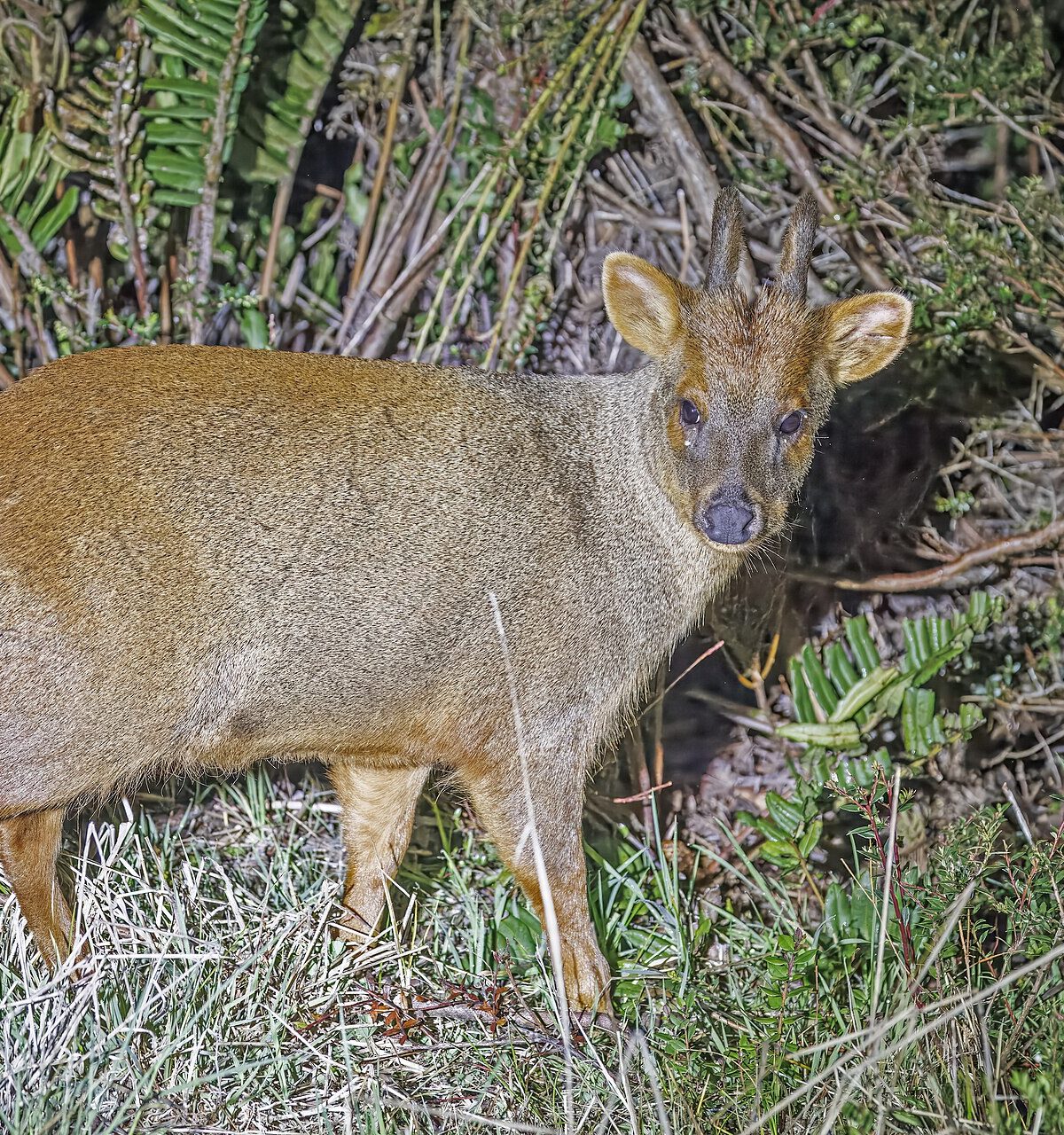
Southern Pudu is commonly known as Pudu and is the smallest deer species in the world. This diminutive deer has a compact body, short legs, and a distinctive reddish-brown coat with white spots, which helps it blend into its forested habitat. Southern Pudu is primarily a solitary animal, often found in dense underbrush where it forages for food and avoids predators.
FUN FACTS
- Southern Pudu is not only the smallest deer species but also one of the smallest hoofed mammals in the world, making it a unique sight in the animal kingdom
- Despite their small size, they are quite agile and can navigate through dense underbrush with ease, which helps them escape from predators.|Southern Pudu has a unique vocalization that resembles a high-pitched whistle, which they use to communicate with each other, especially during the mating season
- This vocalization is quite different from the typical sounds made by larger deer species, highlighting their distinctiveness
QUICK INFO
Lifespan10-15 years in the wild, up to 20 years in captivi
Average Weight7-14 kg
Average Length0.9-1.1 m
Diet TypeHerbivore
Social StructureSolitary, though they may occasionally be seen in pairs during the breeding season.
Activity PatternCrepuscular
Breeding SeasonLate summer to early fall
- Habitat
- Southern Pudu inhabits temperate rainforests and dense underbrush, often in mountainous regions. They prefer areas with plenty of cover to hide from predators.
- Biomes
- Temperate Rainforest, Montane Forest
- Native Range
- Southern Pudu is native to the southern regions of South America, particularly in Chile and Argentina.
- Continent
- South America
- Countries
- Chile, Argentina
- Diet
- Southern Pudu primarily feeds on leaves, fruits, and herbs, making it a herbivore. Its diet varies seasonally based on the availability of vegetation.
- Diet Type
- Herbivore
- Favorite Food
- leaves, fruits, herbs
- Social Structure
- Solitary, though they may occasionally be seen in pairs during the breeding season.
- Activity Pattern
- Crepuscular
- Group Size
- 1-2
- Territorial
- 0

 VU
VU
7-14 kg
Weight
0.9-1.1 m
Length
0.3-0.4 m at shoulder
Height (Shoulder)
- Coloration
- reddish-brown coat with white spots
- Sexual Dimorphism
- males are slightly larger than females and have antlers
- Lifespan
- 10-15 years in the wild, up to 20 years in captivi
- Gestation Period
- 210 days
- Offspring per Birth
- 1
- Sexual Maturity
- 1-2 years
- Breeding Season
- Late summer to early fall
VU
Vulnerable
IUCN Red List Status
- Population Status
- The population of Southern Pudu is currently declining due to habitat loss and hunting.
- Wild Population Estimate
- unknown
- Population Trend
- Decreasing
- Endangered
- 1
- Threats
- Main threats to Southern Pudu include habitat destruction due to logging and agriculture, as well as hunting. These factors have significantly reduced their population in the wild.
- Conservation Program
- Conservation efforts are underway in some regions, including habitat protection and anti-poaching measures.
- Predators
- Main predators include pumas, foxes, and large birds of prey.
- Defense Mechanisms
- Southern Pudu relies on its small size and camouflage to evade predators, often remaining motionless in dense vegetation.
- Found in Zoos
- Uncommon