


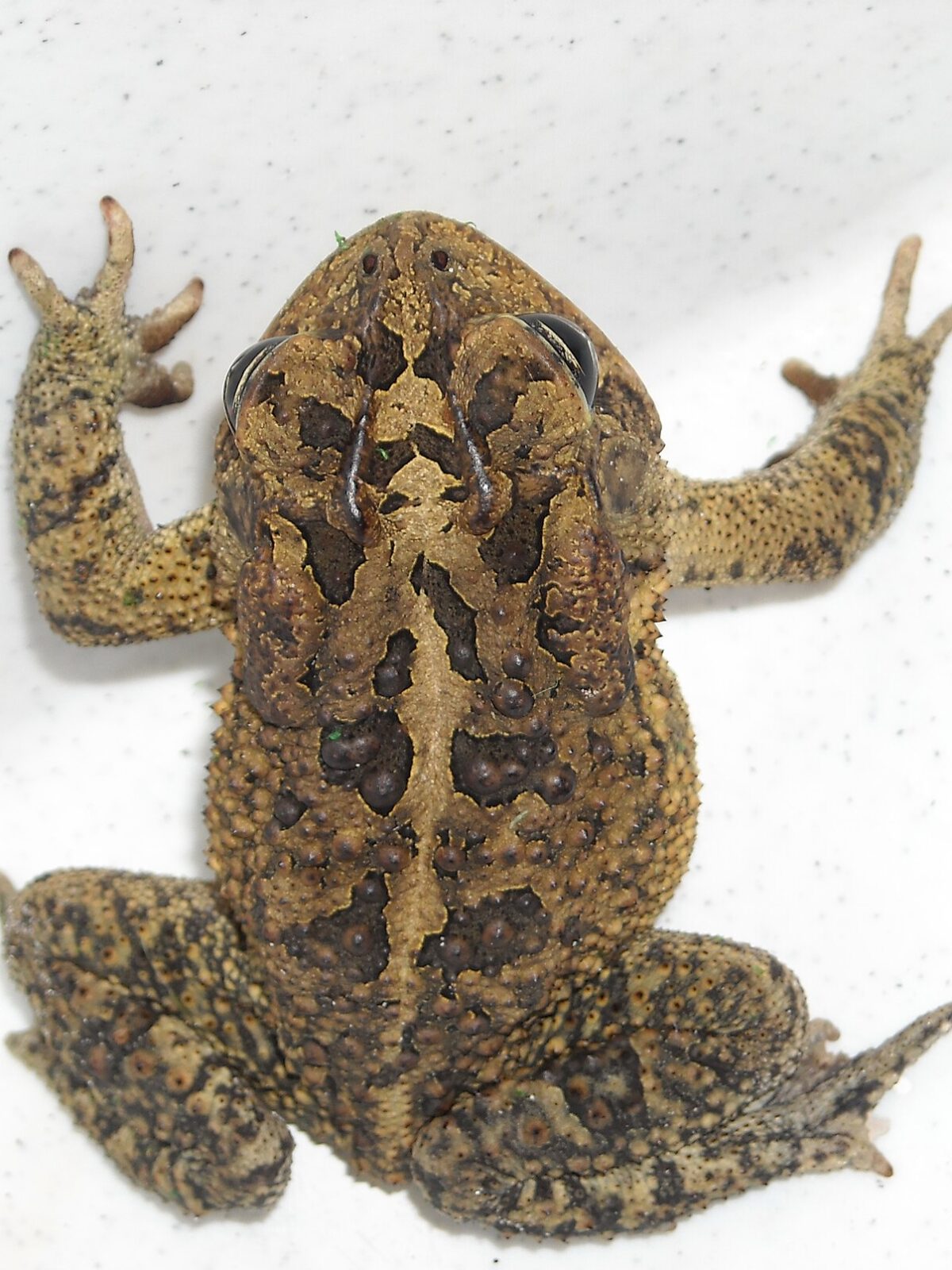
SOUTHERN TOAD
Anaxyrus terrestris
DESCRIPTION
Southern Toad (Anaxyrus terrestris) is a medium-sized toad characterized by its warty skin and a range of colors from brown to gray, often with dark spots. This species is known for its distinctive parotoid glands, which are prominent and can secrete toxins as a defense mechanism against predators. Southern Toads are primarily nocturnal and are often found near water sources, where they breed and hunt for food.
FUN FACTS
- Southern Toads can absorb water through their skin, which helps them stay hydrated in their often dry habitats
- | They are known for their loud mating calls, which can be heard from a distance, especially during the breeding season when males compete for female attention
QUICK INFO
Lifespan5-10 years in the wild
Average Weight30-100 g
Average Length7.5-10 cm
Diet TypeInsectivore
Social Structuresolitary, typically found alone except during breeding
Activity PatternNocturnal
Breeding SeasonSpring (March-May)
- Habitat
- Southern Toads inhabit a variety of environments, including pine forests, hardwood swamps, and suburban areas. They prefer moist areas close to water bodies for breeding.
- Biomes
- Temperate Forest, Wetlands
- Native Range
- The Southern Toad is native to the southeastern United States, ranging from North Carolina to Florida and west to Louisiana.
- Continent
- North America
- Countries
- United States
- Diet
- Southern Toads primarily consume insects and other small invertebrates, making them effective pest controllers in their habitats.
- Diet Type
- Insectivore
- Favorite Food
- crickets, beetles, and other insects
- Social Structure
- solitary, typically found alone except during breeding
- Activity Pattern
- Nocturnal
- Group Size
- 1-5
- Territorial
- 0
 LC
LC
 VU
VU
 LC
LC
30-100 g
Weight
7.5-10 cm
Length
- Coloration
- brown to gray with dark spots and warty texture
- Sexual Dimorphism
- males are generally smaller and have more pronounced vocal sacs than females
- Lifespan
- 5-10 years in the wild
- Offspring per Birth
- up to 10,000 eggs
- Sexual Maturity
- 2-3 years
- Breeding Season
- Spring (March-May)
LC
Least Concern
IUCN Red List Status
- Population Status
- The population of Southern Toads is currently stable, though local declines may occur due to habitat loss.
- Wild Population Estimate
- unknown
- Population Trend
- Stable
- Endangered
- 0
- Threats
- Main threats include habitat destruction due to urban development and pollution. Additionally, road mortality poses a significant risk during their migration to breeding sites.
- Predators
- snakes, birds, raccoons, and larger mammals
- Defense Mechanisms
- Southern Toads can secrete toxins from their skin, which can deter predators.
- Found in Zoos
- Uncommon