


SPARROW DOVE
Geopelia striata
DESCRIPTION
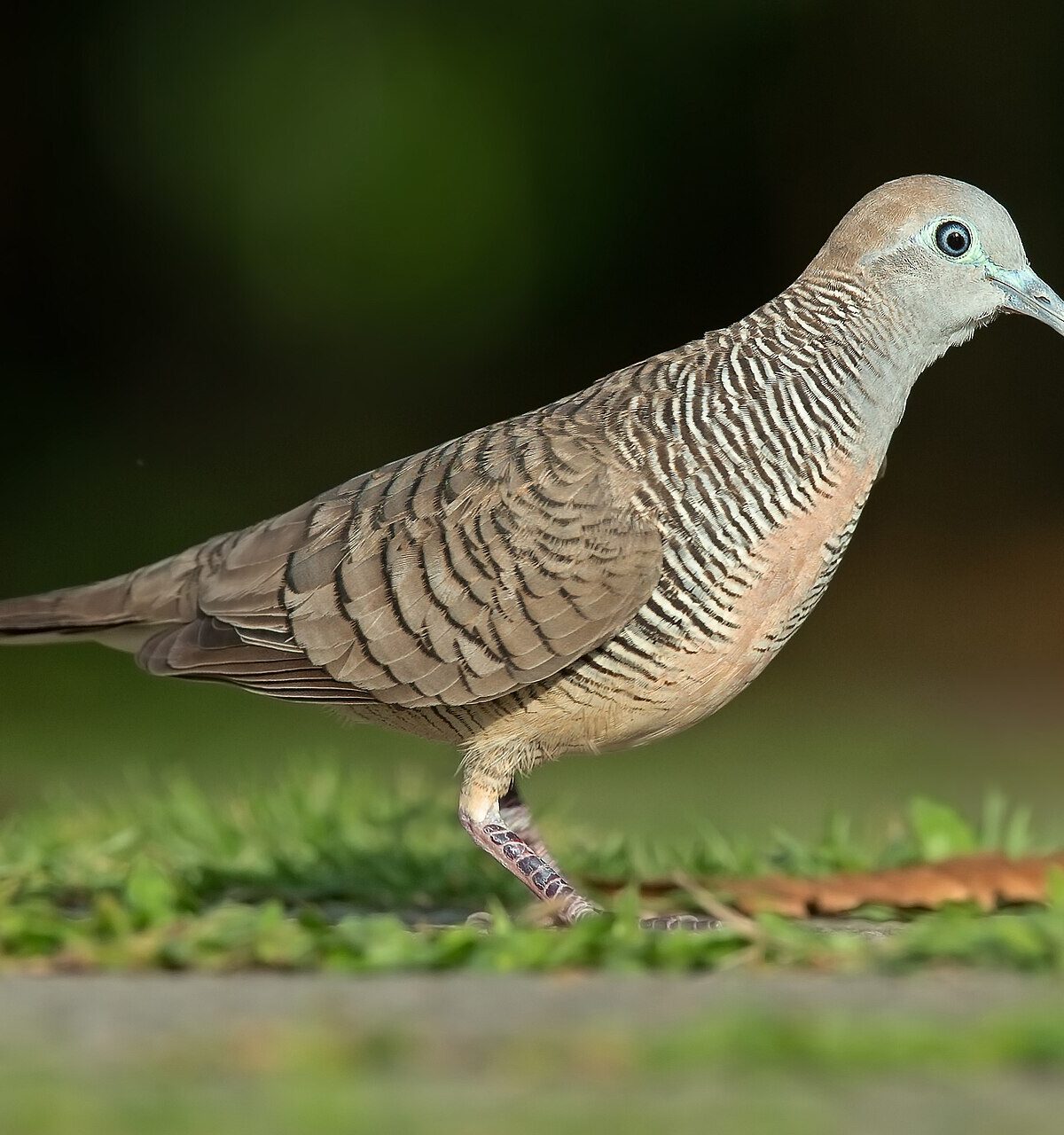
Sparrow Dove (Geopelia striata) is commonly known as the Barred Dove and Striped Dove. This small, plump dove features a distinctive pattern of light and dark stripes on its wings and back, giving it a unique appearance among doves. They are often seen foraging on the ground in pairs or small groups, exhibiting a calm demeanor and a gentle cooing call that adds to their charm.
FUN FACTS
- Sparrow Doves are known for their unique cooing sounds, which can vary between individuals, making them quite vocal
- They are also popular in aviculture due to their calm nature and ease of care, often being kept as pets or in aviaries.|These doves have a fascinating courtship display, where males perform a series of bowing and puffing movements to attract females
- This behavior is not only a part of their mating ritual but also helps strengthen pair bonds
QUICK INFO
Lifespan5-10 years in the wild, up to 15 years in captivit
Average Weight100-150 g
Average Length25-30 cm
Diet TypeGranivore
Social Structurepair or group, often seen in small flocks
Activity PatternDiurnal
Breeding SeasonYear-round in suitable climates
- Habitat
- Sparrow Doves inhabit open woodlands, grasslands, and urban areas where they can find food and nesting sites. They prefer areas with some tree cover for roosting and nesting.
- Biomes
- Savanna, Tropical Rainforest, Temperate Forest
- Native Range
- Sparrow Doves are native to Southeast Asia, including regions such as Indonesia, Malaysia, and the Philippines.
- Continent
- Asia
- Countries
- Indonesia, Malaysia, Philippines, Thailand, Singapore
- Diet
- Sparrow Doves primarily feed on seeds, grains, and fruits, foraging on the ground for food. They may also consume small invertebrates occasionally.
- Diet Type
- Granivore
- Favorite Food
- seeds, grains, fruits
- Social Structure
- pair or group, often seen in small flocks
- Activity Pattern
- Diurnal
- Group Size
- 2-10
- Territorial
- 0
 CR
CR
 LC
LC
100-150 g
Weight
25-30 cm
Length
- Coloration
- primarily grayish-brown with barred patterns on wings and back
- Sexual Dimorphism
- males and females are similar in appearance, but males may have slightly brighter coloration
- Lifespan
- 5-10 years in the wild, up to 15 years in captivit
- Offspring per Birth
- 1-2
- Sexual Maturity
- 6-12 months
- Breeding Season
- Year-round in suitable climates
LC
Least Concern
IUCN Red List Status
- Population Status
- The population of Sparrow Doves is currently stable, with no significant declines reported.
- Wild Population Estimate
- Unknown
- Population Trend
- Stable
- Endangered
- 0
- Threats
- Main threats include habitat loss due to deforestation and urbanization. However, they adapt well to human-altered environments.
- Predators
- Cats, hawks, snakes, and larger birds of prey.
- Defense Mechanisms
- Sparrow Doves rely on their ability to blend into their surroundings and their flight speed to evade predators.
- Compatible Animals
- other doves, finches, small parrots
- Found in Zoos
- Common