


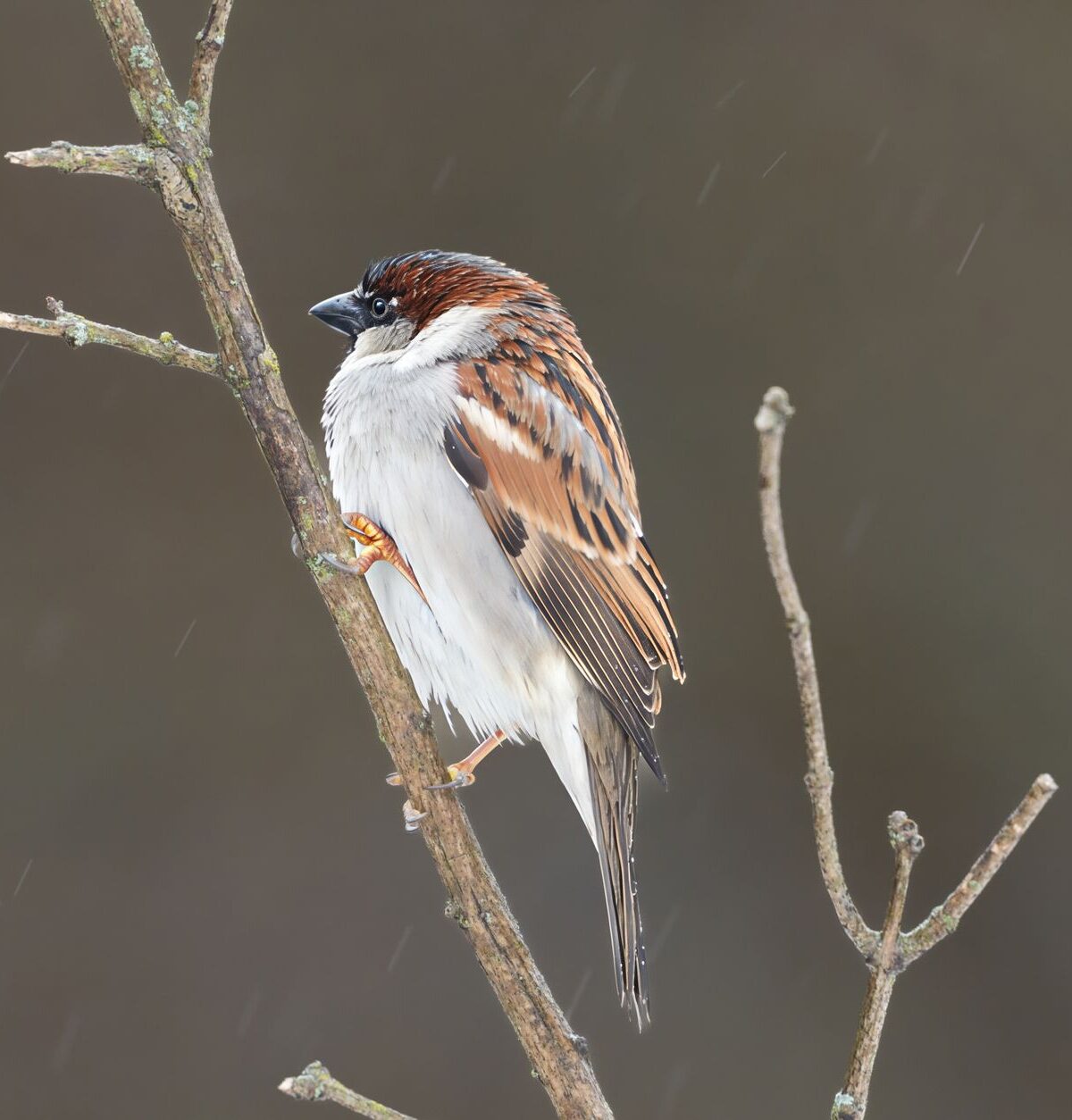
SPARROW
DESCRIPTION
Sparrow is commonly known as the House Sparrow, a small bird characterized by its stout body and short tail. It has a distinctive brown and gray plumage, with males often displaying a black bib and white cheeks. These birds are highly social and can often be seen in flocks, foraging for food in urban and rural environments.
FUN FACTS
- Sparrows are known for their adaptability to human environments, often nesting in buildings and foraging in parks
- They have a unique social structure, where they engage in communal roosting and foraging, which helps them avoid predators
- | The House Sparrow is one of the most widely distributed birds in the world, having successfully colonized many urban areas
- Their ability to thrive in diverse environments has made them a common sight in cities across the globe
QUICK INFO
Lifespan3-5 years in the wild, up to 10 years in captivity
Average Weight24-40 g
Average Length14-18 cm
Diet TypeOmnivore
Social Structuregroup — they are often found in flocks, especially when foraging.
Activity PatternDiurnal
Breeding SeasonSpring to early summer
- Habitat
- Sparrows thrive in a variety of habitats, including urban areas, farmlands, and open woodlands. They prefer environments where food is readily available and where they can find shelter.
- Biomes
- Urban, Grassland, Forest
- Native Range
- Sparrows are native to Europe, Asia, and North Africa, but have been introduced to many other regions, including the Americas and Australia.
- Continent
- Asia, Europe, Africa, North America, Australia
- Countries
- United States, Canada, United Kingdom, India, Australia
- Diet
- Sparrows primarily eat seeds, grains, and small insects. They are known to forage on the ground and in trees, often scavenging in human habitats.
- Diet Type
- Omnivore
- Favorite Food
- seeds, grains, insects
- Social Structure
- group — they are often found in flocks, especially when foraging.
- Activity Pattern
- Diurnal
- Group Size
- 5-50
- Territorial
- 0
 CR
CR
 LC
LC
24-40 g
Weight
14-18 cm
Length
- Coloration
- brown and gray with streaked feathers
- Sexual Dimorphism
- males are more colorful with distinct black markings, while females are more subdued in color.
- Lifespan
- 3-5 years in the wild, up to 10 years in captivity
- Offspring per Birth
- 3-5
- Sexual Maturity
- 1 year
- Breeding Season
- Spring to early summer
LC
Least Concern
IUCN Red List Status
- Population Status
- Sparrows are abundant and widespread, with large populations in many areas.
- Wild Population Estimate
- 100 million
- Population Trend
- Stable
- Endangered
- 0
- Threats
- Main threats include habitat loss due to urbanization and agricultural practices. Additionally, competition with other bird species and predation by domestic cats can impact local populations.
- Predators
- cats, hawks, snakes, and larger birds of prey
- Defense Mechanisms
- Sparrows use flocking behavior to confuse predators and often take cover in dense vegetation.
- Compatible Animals
- finches, canaries, doves
- Found in Zoos
- Common