


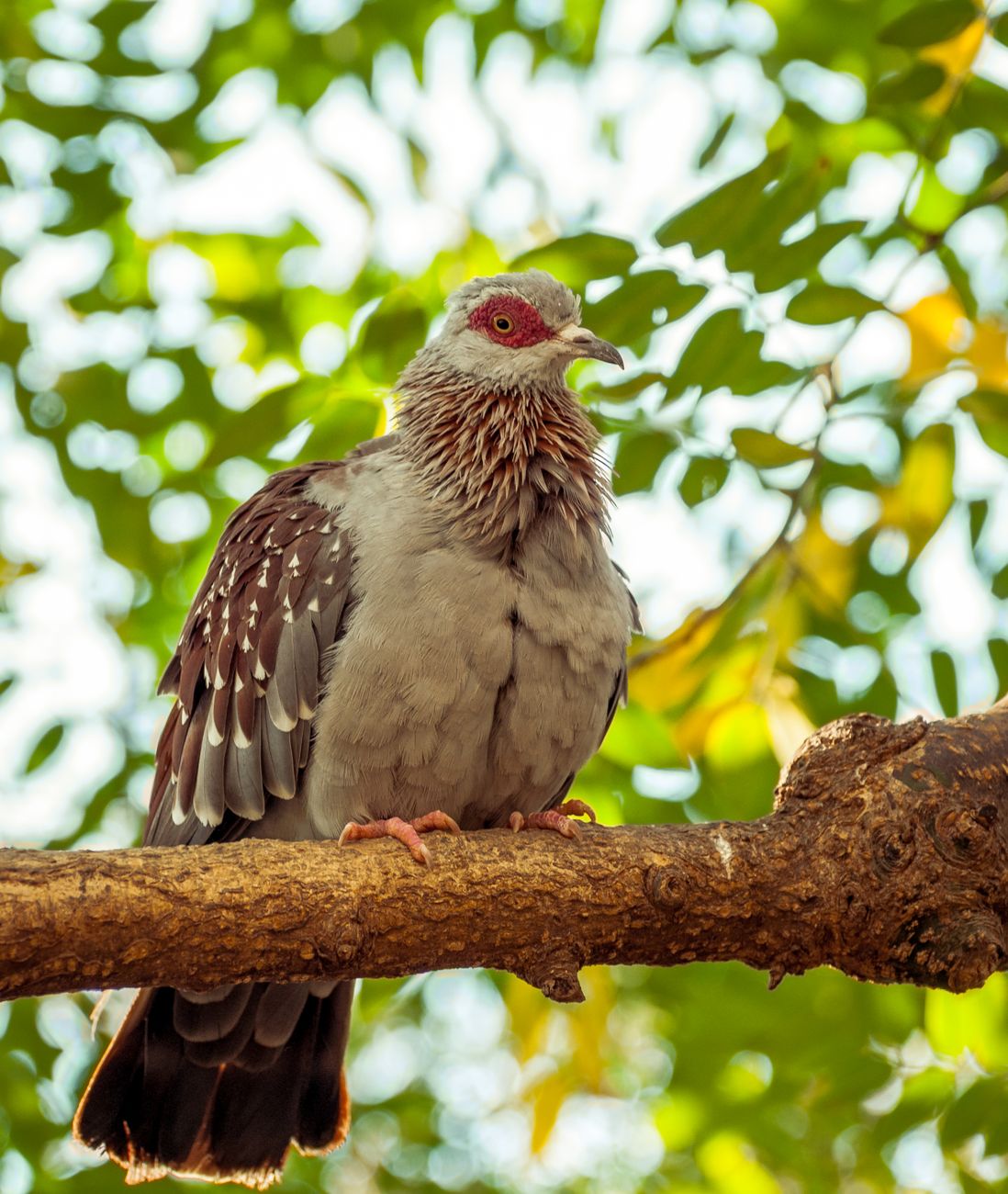
SPECKLED PIGEON
Columba guinea
DESCRIPTION
Speckled Pigeon (Columba guinea) is a large, robust pigeon characterized by its distinctive speckled plumage, which features a mix of gray and brown tones. This species is often found in urban areas, where it adapts well to human presence, feeding on scraps and seeds. In the wild, it inhabits open woodlands and grasslands, showcasing a social behavior that includes foraging in groups and roosting communally.
FUN FACTS
- Speckled Pigeons are known for their unique ability to adapt to urban environments, often seen scavenging in parks and streets
- They have a strong homing instinct, which allows them to return to their nests from long distances, making them popular in pigeon racing.|These pigeons are also notable for their courtship displays, which include puffing up their feathers and performing a series of cooing calls to attract mates
- Their social nature means they often engage in communal roosting, providing safety in numbers
QUICK INFO
Lifespan5-10 years in the wild, up to 15 years in captivit
Average Weight200-300 g
Average Length30-35 cm
Diet TypeHerbivore
Social Structuregroup — they are often found in flocks, especially when foraging or roosting.
Activity PatternDiurnal
Breeding SeasonYear-round, peaking in the rainy season
- Habitat
- Speckled Pigeons thrive in a variety of habitats, including urban areas, open woodlands, and grasslands. They prefer locations with access to food sources and suitable roosting sites.
- Biomes
- Savanna, Grassland, Urban
- Native Range
- The native range of the Speckled Pigeon extends across sub-Saharan Africa, from Senegal in the west to Ethiopia in the east.
- Continent
- Africa
- Countries
- Senegal, Gambia, Guinea, Mali, Nigeria, Cameroon, Ethiopia, Kenya, Tanzania, Uganda
- Diet
- Speckled Pigeons primarily feed on seeds, grains, and fruits, often foraging on the ground. They are known to scavenge in urban environments, taking advantage of food waste.
- Diet Type
- Herbivore
- Favorite Food
- seeds, grains, fruits
- Social Structure
- group — they are often found in flocks, especially when foraging or roosting.
- Activity Pattern
- Diurnal
- Group Size
- 10-50
- Territorial
- 0

 VU
VU
200-300 g
Weight
30-35 cm
Length
- Coloration
- The plumage is predominantly grayish-brown with white speckles on the wings and a distinctive red eye ring.
- Sexual Dimorphism
- Males and females are similar in appearance, but males tend to be slightly larger.
- Lifespan
- 5-10 years in the wild, up to 15 years in captivit
- Offspring per Birth
- 1-2
- Sexual Maturity
- 6-12 months
- Breeding Season
- Year-round, peaking in the rainy season
LC
Least Concern
IUCN Red List Status
- Population Status
- The population of Speckled Pigeons is currently stable, with no significant declines reported.
- Wild Population Estimate
- Unknown
- Population Trend
- Stable
- Endangered
- 0
- Threats
- Main threats include habitat loss due to urbanization and agricultural expansion. However, they are adaptable and can thrive in modified environments.
- Predators
- Cats, birds of prey, and snakes are known predators of Speckled Pigeons.
- Defense Mechanisms
- They rely on their ability to fly quickly and their social behavior to evade predators.
- Found in Zoos
- Uncommon