


SPECTACLED BEAR
DESCRIPTION
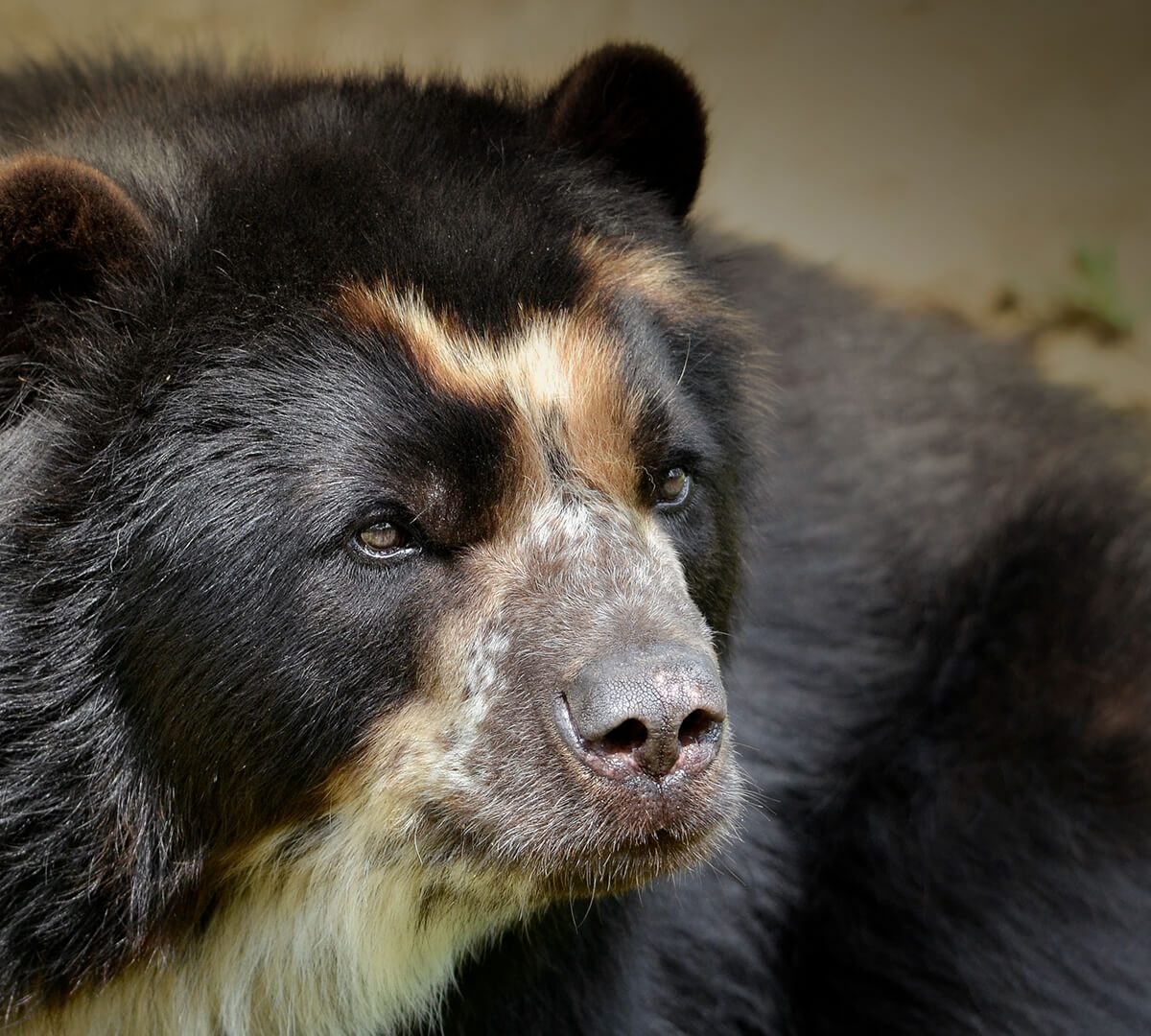
The Spectacled Bear, also known as the Andean Bear, is the only bear species native to South America. It is characterized by its distinctive facial markings, which resemble spectacles, and its thick, shaggy fur that can vary in color from black to brown. These bears are generally shy and elusive, spending much of their time in trees and are known for their excellent climbing abilities.
FUN FACTS
- Spectacled Bears are known for their unique ability to climb trees, which they use to find food and evade threats
- They have a diverse diet that allows them to adapt to various environments, making them an important species for their ecosystem
- | Unlike many other bear species, Spectacled Bears have a relatively low reproductive rate, which makes conservation efforts crucial for their survival
- Their distinctive facial markings not only help in identification but also play a role in social interactions among bears
QUICK INFO
Lifespan20-30 years in the wild, up to 40 in captivity
Average Weight60-115 kg
Average Length1.2-1.8 m
Diet TypeOmnivore
Social StructureSolitary, with occasional pairings during mating season.
Activity PatternCrepuscular
Breeding SeasonSpring (May-July)
- Habitat
- Spectacled Bears inhabit a range of environments, including cloud forests, montane forests, and grasslands. They prefer areas with dense vegetation that provide both food and cover.
- Biomes
- Tropical Rainforest, Montane Forest
- Native Range
- The native range of the Spectacled Bear extends from Venezuela to northern Argentina, primarily in the Andes Mountains.
- Continent
- South America
- Countries
- Venezuela, Colombia, Ecuador, Peru, Bolivia, Argentina
- Diet
- Spectacled Bears are primarily herbivorous, feeding on a variety of plant materials, including fruits, leaves, and flowers. They also consume insects and small animals occasionally, making them opportunistic feeders.
- Diet Type
- Omnivore
- Favorite Food
- Fruits, especially palm fruits and berries
- Social Structure
- Solitary, with occasional pairings during mating season.
- Activity Pattern
- Crepuscular
- Group Size
- 1
- Territorial
- 0
60-115 kg
Weight
1.2-1.8 m
Length
- Coloration
- Typically black or dark brown with lighter facial markings.
- Sexual Dimorphism
- Males are generally larger than females.
- Lifespan
- 20-30 years in the wild, up to 40 in captivity
- Gestation Period
- 220-240 days
- Offspring per Birth
- 1-3
- Sexual Maturity
- 3-4 years
- Breeding Season
- Spring (May-July)
VU
Vulnerable
IUCN Red List Status
- Population Status
- The population is currently considered vulnerable due to habitat loss and fragmentation.
- Wild Population Estimate
- 10,000-20,000
- Population Trend
- Decreasing
- Endangered
- 1
- Threats
- Main threats include habitat destruction due to agriculture and logging, as well as poaching. Climate change also poses a risk to their habitat and food sources.
- Predators
- Humans are the primary threat, but young bears may be vulnerable to large cats such as jaguars.
- Defense Mechanisms
- They can climb trees to escape threats and may use vocalizations or displays to deter potential predators.
- Found in Zoos
- Uncommon