


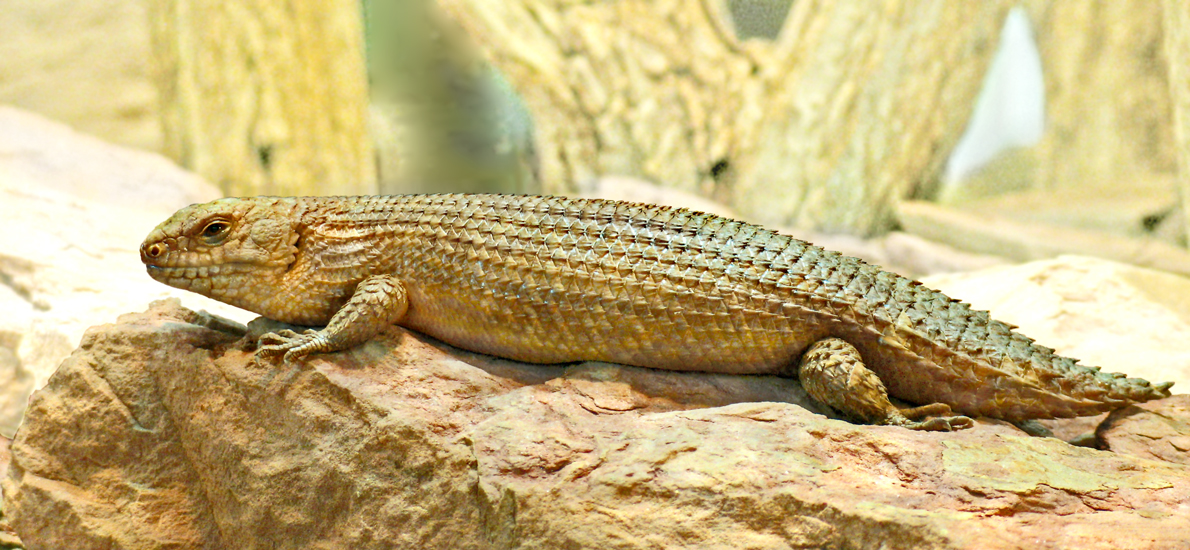
SPINY-TAILED SKINK
Egernia stokesii
DESCRIPTION
Spiny-tailed Skink (Egernia stokesii) is commonly known as Stokes' Skink and is characterized by its robust body and distinctive spiny tail, which serves as a defense mechanism against predators. This species exhibits a range of colors, typically featuring a combination of brown, gray, and black, with a more vibrant coloration in younger individuals. They are social lizards, often found in groups, and are known for their burrowing behavior, creating complex tunnel systems in their natural habitat.
FUN FACTS
- Spiny-tailed Skinks are known for their unique social behavior, often seen basking together in groups, which helps them regulate their body temperature more effectively
- | These skinks have a fascinating ability to regenerate their tails if lost, a trait that is common among many lizard species, allowing them to escape predators while still surviving
QUICK INFO
Lifespan10-15 years in the wild, up to 20 years in captivi
Average Weight200-400 g
Average Length20-30 cm
Diet TypeOmnivore
Social Structuregroup — they often live in small colonies, sharing burrows and basking sites.
Activity PatternDiurnal
Breeding SeasonSpring (September-November)
- Habitat
- These skinks inhabit rocky outcrops, woodlands, and scrublands, often preferring areas with ample cover and access to sunlight. They are known to create burrows in sandy or loose soil, which provide shelter and protection.
- Biomes
- Temperate Forest, Grassland
- Native Range
- Spiny-tailed Skinks are native to Australia, particularly in the southeastern regions.
- Continent
- Australia
- Countries
- Australia
- Diet
- Spiny-tailed Skinks primarily feed on a variety of plant materials, including leaves, flowers, and fruits, but they also consume insects and other small invertebrates.
- Diet Type
- Omnivore
- Favorite Food
- leaves, flowers, fruits, insects
- Social Structure
- group — they often live in small colonies, sharing burrows and basking sites.
- Activity Pattern
- Diurnal
- Group Size
- 3-10
- Territorial
- 0
 VU
VU
 LC
LC

200-400 g
Weight
20-30 cm
Length
- Coloration
- Typically brown or gray with darker bands or spots, and a spiny tail.
- Sexual Dimorphism
- Males are generally larger and have more pronounced coloration than females.
- Lifespan
- 10-15 years in the wild, up to 20 years in captivi
- Offspring per Birth
- 2-6
- Sexual Maturity
- 2-3 years
- Breeding Season
- Spring (September-November)
LC
Least Concern
IUCN Red List Status
- Population Status
- The population is currently stable, with no significant declines reported.
- Wild Population Estimate
- Unknown
- Population Trend
- Stable
- Endangered
- 0
- Threats
- Main threats include habitat destruction due to urban development and agriculture, as well as predation by introduced species such as cats and foxes.
- Predators
- Birds of prey, snakes, and introduced mammals such as cats and foxes.
- Defense Mechanisms
- They have a spiny tail that can deter predators, and they are also capable of burrowing quickly to escape threats.
- Found in Zoos
- Uncommon