


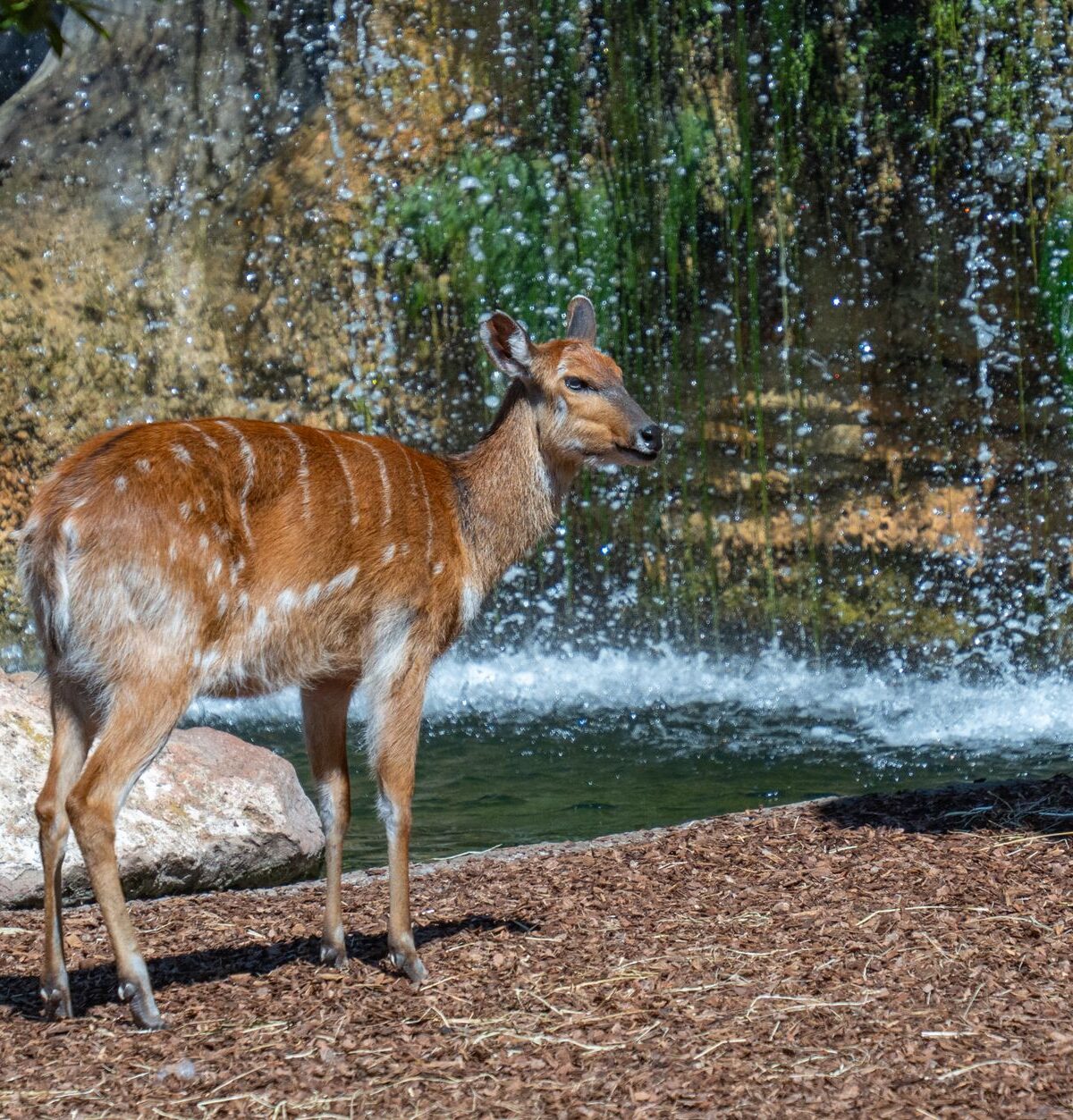
SPIRAL-HORNED ANTELOPE
DESCRIPTION
Spiral-Horned Antelope, also known as Sitatunga, is a unique species of antelope characterized by its long, spiral-shaped horns and elongated hooves, which are adapted for life in swampy habitats. These antelopes have a shaggy, water-repellent coat that varies in color from reddish-brown to grayish-brown, providing excellent camouflage in their wetland environments. They are semi-aquatic and are known for their exceptional swimming abilities, often submerging themselves in water to evade predators.
FUN FACTS
- Spiral-Horned Antelope are remarkable swimmers and can submerge themselves almost completely underwater, with only their nostrils exposed
- This adaptation not only helps them evade predators but also allows them to access food sources that are submerged
- | The spiral horns of male Sitatunga can grow up to 90 cm long and are used in displays of dominance during mating season
- These horns are not only impressive in size but also play a crucial role in their social interactions and territorial disputes
QUICK INFO
Lifespan10-15 years in the wild, up to 20 years in captivi
Average Weight50-125 kg
Average Length1.5-2.0 m
Diet TypeHerbivore
Social StructureThey are typically solitary or found in small groups, often consisting of females and their young. Males are more solitary and territorial.
Activity PatternCrepuscular
Breeding SeasonYear-round, with peaks depending on local conditions
- Habitat
- These antelopes inhabit marshes, swamps, and riverine forests, where they can find ample food and cover from predators. Their adaptations allow them to thrive in these wetland ecosystems.
- Biomes
- Wetlands, Swamp, Riverine Forest
- Native Range
- Spiral-Horned Antelope is native to central and southern Africa, particularly in regions with abundant water sources.
- Continent
- Africa
- Countries
- Democratic Republic of the Congo, Uganda, Tanzania, Zambia, Botswana, Namibia
- Diet
- Spiral-Horned Antelope primarily feeds on aquatic plants, grasses, and sedges found in their wetland habitats. They are known to graze on vegetation both in and out of the water.
- Diet Type
- Herbivore
- Favorite Food
- aquatic plants, grasses
- Social Structure
- They are typically solitary or found in small groups, often consisting of females and their young. Males are more solitary and territorial.
- Activity Pattern
- Crepuscular
- Group Size
- 1-5
- Territorial
- 1
 LC
LC
 LC
LC
 VU
VU
50-125 kg
Weight
1.5-2.0 m
Length
0.9-1.2 m at shoulder
Height (Shoulder)
- Coloration
- Reddish-brown to grayish-brown with white markings on the face and legs.
- Sexual Dimorphism
- Males are larger and have spiral horns, while females are smaller and hornless.
- Lifespan
- 10-15 years in the wild, up to 20 years in captivi
- Gestation Period
- 210 days
- Offspring per Birth
- 1
- Sexual Maturity
- 1-2 years
- Breeding Season
- Year-round, with peaks depending on local conditions
LC
Least Concern
IUCN Red List Status
- Population Status
- The population is currently stable in some areas but declining in others due to habitat loss.
- Wild Population Estimate
- 50,000-100,000
- Population Trend
- Stable
- Endangered
- 0
- Threats
- Main threats include habitat destruction due to agriculture and human encroachment, as well as hunting. These factors have led to localized declines in certain populations.
- Conservation Program
- Various conservation programs are in place to protect wetland habitats and manage hunting.
- Predators
- Nile crocodiles, lions, leopards, and hyenas are known predators of the Spiral-Horned Antelope.
- Defense Mechanisms
- They rely on their excellent swimming ability and camouflage to evade predators, often submerging themselves in water.
- Compatible Animals
- Commonly kept with other antelope species, such as Impala and Waterbuck, in zoos.
- Found in Zoos
- Uncommon