


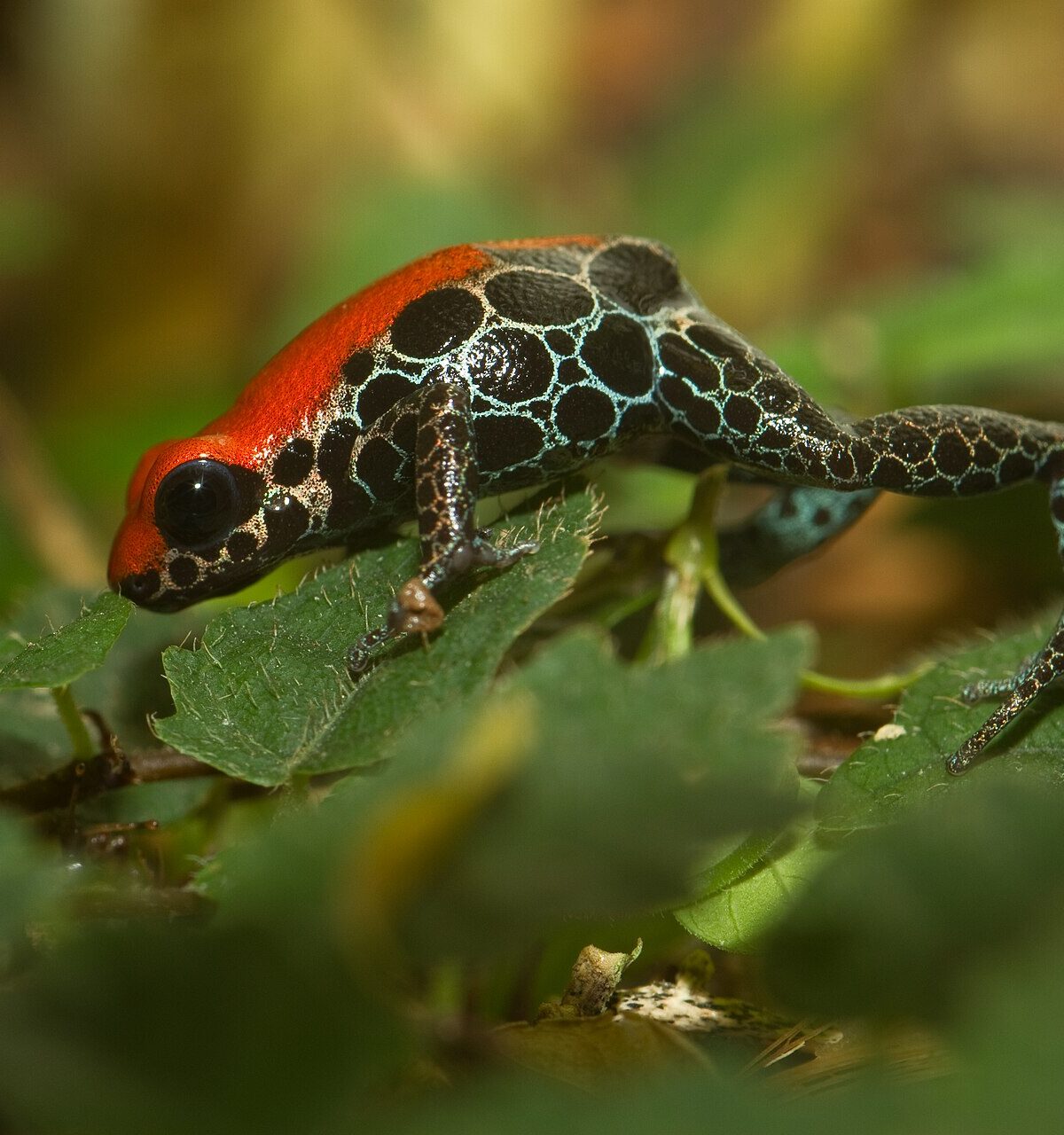
SPLASHBACK POISON DART FROG
Ranitomeya reticulata
DESCRIPTION
Splashback Poison Dart Frog (Ranitomeya reticulata) is a small, brightly colored amphibian known for its striking appearance, which features a distinctive splash of color on its back. This species exhibits a range of colors, including yellow, orange, and black, which serve as a warning to potential predators about its toxicity. Inhabiting the leaf litter of tropical rainforests, these frogs are often found near water sources, where they engage in complex mating calls and behaviors to attract partners.
FUN FACTS
- Splashback Poison Dart Frogs are known for their unique mating rituals, where males will call to attract females and may even engage in competitive displays to win over a mate
- Interestingly, the toxicity of these frogs is derived from their diet in the wild, as they consume specific ants that contain toxic alkaloids, making them poisonous to predators.| These frogs exhibit parental care, with males often guarding the eggs laid in water-filled leaf axils until they hatch, showcasing a fascinating aspect of their reproductive behavior
QUICK INFO
Lifespan5-10 years in the wild, up to 15 in captivity
Average Length2.5-3.5 cm
Diet TypeInsectivore
Social StructureThese frogs are typically solitary or found in pairs during the breeding season, with males often defending small territories.
Activity PatternDiurnal
Breeding SeasonWet season (varies by region)
- Habitat
- These frogs thrive in humid, tropical rainforest environments, often residing in the understory where they can find ample cover and moisture. They prefer areas with abundant leaf litter and proximity to water bodies for breeding.
- Biomes
- Tropical Rainforest
- Native Range
- Ranitomeya reticulata is native to the Amazon Basin, specifically found in parts of Peru and northern Bolivia.
- Continent
- South America
- Countries
- Peru, Bolivia
- Diet
- Splashback Poison Dart Frogs primarily feed on small invertebrates, such as ants and termites, which they capture using their quick reflexes. Their diet is crucial for their toxicity, as the chemicals they derive from their food contribute to their poisonous skin.
- Diet Type
- Insectivore
- Favorite Food
- ants, termites
- Social Structure
- These frogs are typically solitary or found in pairs during the breeding season, with males often defending small territories.
- Activity Pattern
- Diurnal
- Group Size
- 1-2
- Territorial
- 1
 VU
VU
 LC
LC
2.5-3.5 cm
Length
- Coloration
- Brightly colored with a distinctive splash pattern, often in shades of yellow, orange, and black.
- Sexual Dimorphism
- Males are generally smaller and more brightly colored than females.
- Lifespan
- 5-10 years in the wild, up to 15 in captivity
- Offspring per Birth
- 3-10
- Sexual Maturity
- 1-2 years
- Breeding Season
- Wet season (varies by region)
LC
Least Concern
IUCN Red List Status
- Population Status
- The population status of Ranitomeya reticulata is currently stable, but habitat loss poses a potential threat.
- Wild Population Estimate
- Unknown
- Population Trend
- Stable
- Endangered
- 0
- Threats
- Main threats include habitat destruction due to deforestation and climate change, which can alter their rainforest habitats. Additionally, pollution and the pet trade pose risks to their populations.
- Predators
- Birds, snakes, and larger amphibians are known predators of the Splashback Poison Dart Frog.
- Defense Mechanisms
- Their bright coloration serves as a warning to potential predators about their toxicity, which is a common defense mechanism among poison dart frogs.
- Found in Zoos
- Uncommon