


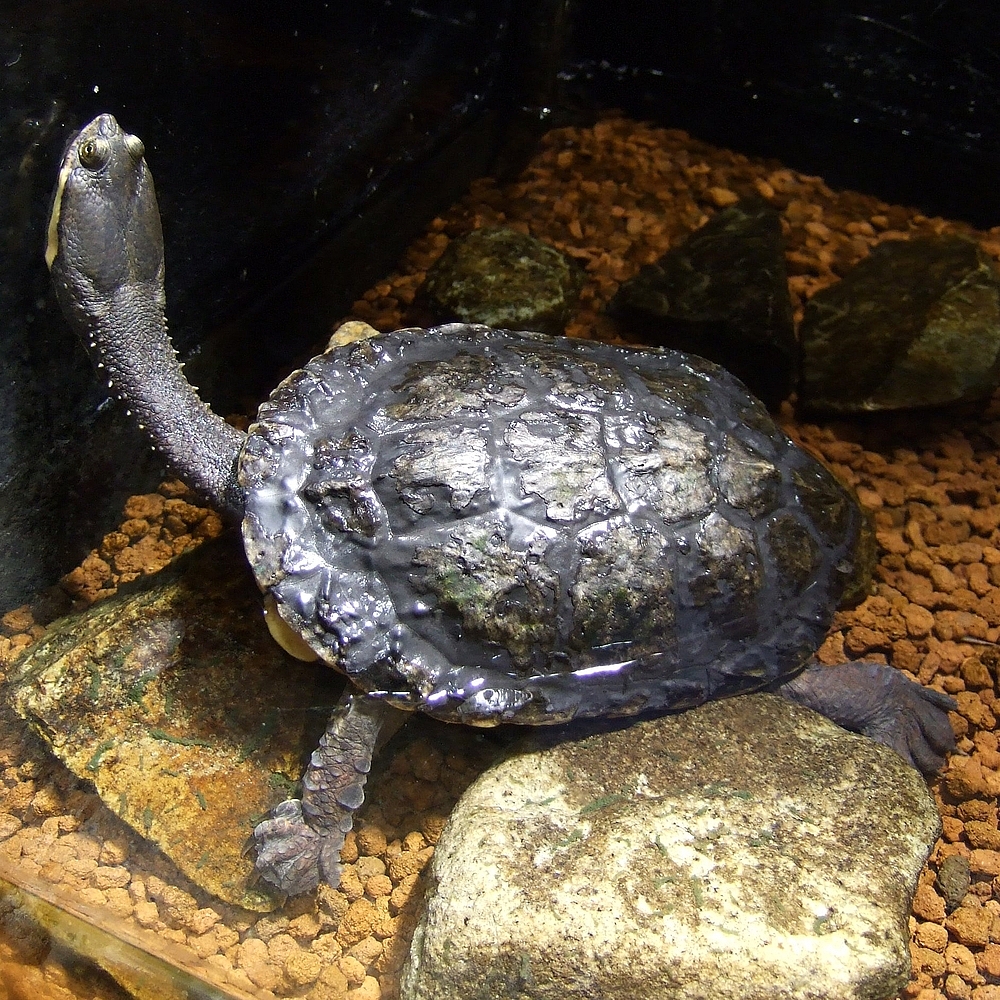
SPOT-BELLIED SIDE-NECKED TURTLE
Hydromedusa tectifera
DESCRIPTION
Spot-Bellied Side-Necked Turtle (Hydromedusa tectifera) is a distinctive freshwater turtle known for its unique appearance, featuring a dark shell adorned with light spots. This species exhibits a side-necked posture, retracting its head sideways into its shell rather than pulling it straight back, which is characteristic of many side-necked turtles. They are primarily found in slow-moving waters and are known for their aquatic lifestyle, often basking on logs or rocks during the day.
FUN FACTS
- Spot-Bellied Side-Necked Turtles are known for their unique swimming style, which involves a graceful, undulating motion that allows them to navigate through dense aquatic vegetation
- Additionally, they have a fascinating reproductive strategy, where females can store sperm for several months before fertilizing their eggs, allowing them to time the hatching of their young with favorable environmental conditions
QUICK INFO
Lifespan20-30 years in captivity
Average Weight1-3 kg
Average Length25-30 cm
Diet TypeCarnivore
Social Structuresolitary
Activity PatternDiurnal
Breeding SeasonSpring to early summer
- Habitat
- Spot-Bellied Side-Necked Turtles inhabit freshwater environments such as rivers, lakes, and swamps. They prefer areas with abundant vegetation and slow-moving waters that provide cover and food sources.
- Biomes
- Freshwater, Wetlands
- Native Range
- This species is native to the Amazon Basin, primarily found in countries like Brazil and Peru.
- Continent
- South America
- Countries
- Brazil, Peru
- Diet
- They primarily feed on aquatic invertebrates and small fish, utilizing their sharp beaks to capture prey. Their diet can vary based on availability in their habitat.
- Diet Type
- Carnivore
- Favorite Food
- aquatic invertebrates, small fish
- Social Structure
- solitary
- Activity Pattern
- Diurnal
- Group Size
- 1-5
- Territorial
- 0
 VU
VU
 LC
LC
1-3 kg
Weight
25-30 cm
Length
- Coloration
- dark brown to black shell with light yellow or white spots
- Sexual Dimorphism
- males are generally smaller than females and have longer tails
- Lifespan
- 20-30 years in captivity
- Offspring per Birth
- 3-10
- Sexual Maturity
- 4-5 years
- Breeding Season
- Spring to early summer
LC
Least Concern
IUCN Red List Status
- Population Status
- The population status is currently stable, but habitat destruction poses a potential threat.
- Wild Population Estimate
- unknown
- Population Trend
- Stable
- Endangered
- 0
- Threats
- Main threats include habitat loss due to deforestation and pollution of water bodies. Additionally, they may be affected by illegal pet trade.
- Predators
- Birds of prey, large fish, and mammals such as raccoons may prey on juvenile turtles.
- Defense Mechanisms
- They can retract their heads and limbs into their shells for protection, and their dark coloration helps them blend into their aquatic environment.
- Found in Zoos
- Uncommon