


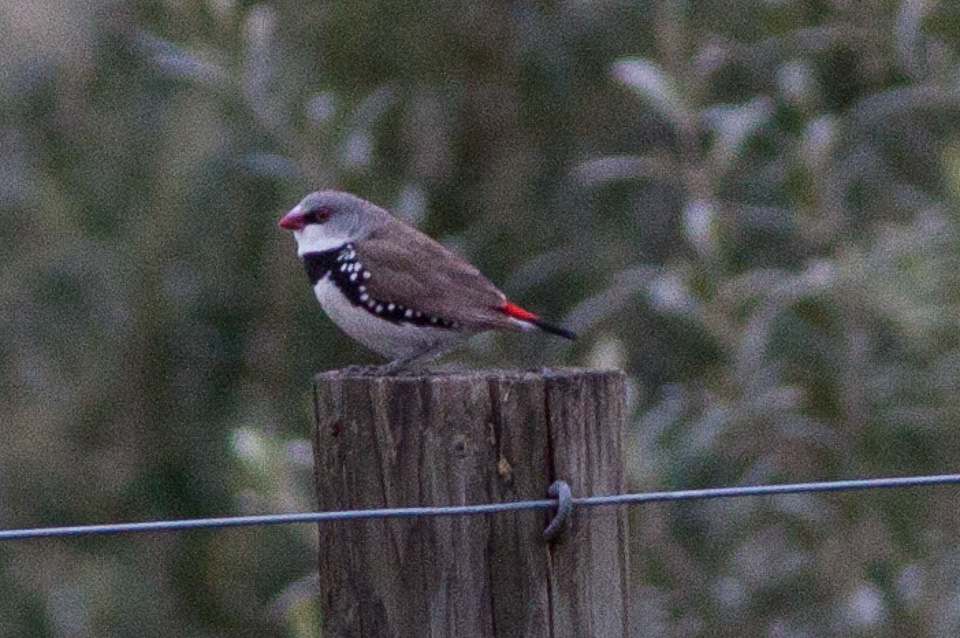
SPOTTED AMADINE
Emblema guttata
DESCRIPTION
Spotted Amadine (Emblema guttata) is a small, colorful finch native to Australia. It is characterized by its striking plumage, which features a combination of brown, white, and black spots, making it visually appealing. These birds are social and often found in small flocks, foraging for seeds and insects in grasslands and open woodlands.
FUN FACTS
- Spotted Amadines are known for their vibrant courtship displays, where males perform elaborate songs and dances to attract females
- They are also popular in aviculture due to their striking appearance and relatively easy care requirements
QUICK INFO
Lifespan5-7 years in the wild, up to 10 years in captivity
Average Weight10-15 g
Average Length10-12 cm
Diet TypeGranivore
Social StructureThey are typically found in pairs or small groups, often forming loose flocks outside of the breeding season.
Activity PatternDiurnal
Breeding SeasonSpring to early summer (September to January)
- Habitat
- They inhabit open grasslands, savannas, and woodland edges, often favoring areas with dense grass cover. These habitats provide ample food sources and nesting sites.
- Biomes
- Grassland, Savanna
- Native Range
- Spotted Amadines are native to eastern and northern Australia.
- Continent
- Australia
- Countries
- Australia
- Diet
- Spotted Amadines primarily feed on seeds, particularly from grasses, as well as small insects. They are known to forage on the ground and in low vegetation.
- Diet Type
- Granivore
- Favorite Food
- grass seeds
- Social Structure
- They are typically found in pairs or small groups, often forming loose flocks outside of the breeding season.
- Activity Pattern
- Diurnal
- Group Size
- 2-20
- Territorial
- 0
 LC
LC
10-15 g
Weight
10-12 cm
Length
- Coloration
- They have a distinctive pattern of brown and white spots on their body, with a reddish-brown head and a pale underbelly.
- Sexual Dimorphism
- Males are generally more brightly colored than females, especially during the breeding season.
- Lifespan
- 5-7 years in the wild, up to 10 years in captivity
- Offspring per Birth
- 3-6
- Sexual Maturity
- 6 months
- Breeding Season
- Spring to early summer (September to January)
LC
Least Concern
IUCN Red List Status
- Population Status
- The population is currently stable, with no significant declines reported.
- Wild Population Estimate
- unknown
- Population Trend
- Stable
- Endangered
- 0
- Threats
- Habitat loss due to agricultural expansion and urban development poses a threat to their populations. However, they are not currently facing significant threats.
- Predators
- Common predators include larger birds of prey and snakes.
- Defense Mechanisms
- They rely on their ability to blend into their surroundings and their social behavior to evade predators.
- Compatible Animals
- other small finches, canaries
- Found in Zoos
- Uncommon