


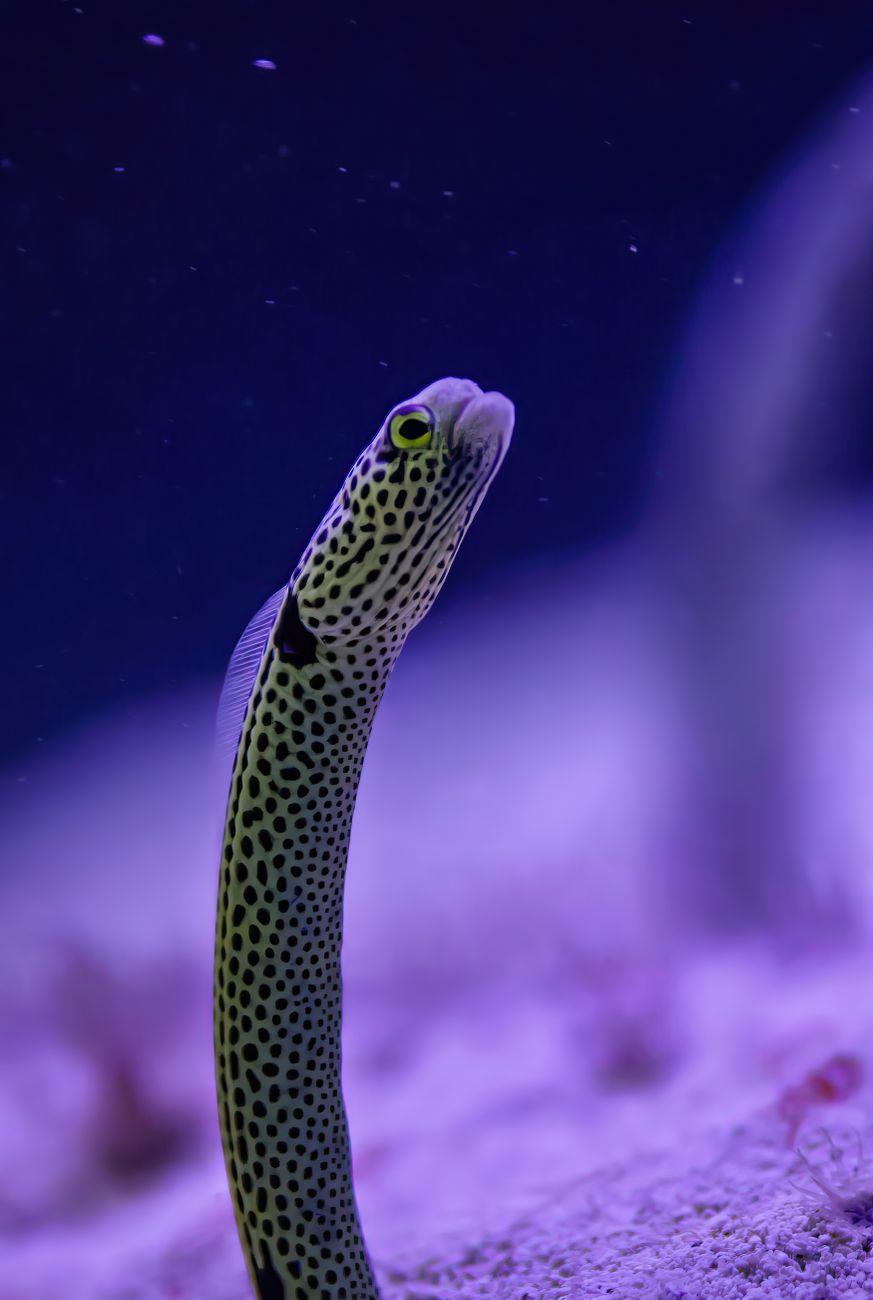
SPOTTED GARDEN EEL
DESCRIPTION
Spotted Garden Eel is a species of eel that is characterized by its elongated body and distinctive spotted pattern. These eels typically inhabit sandy substrates in shallow waters, where they can be seen emerging from their burrows. They are social creatures, often found in large colonies, and exhibit fascinating behaviors such as swaying with the currents while remaining partially buried in the sand.
FUN FACTS
- Spotted Garden Eels are fascinating for their unique feeding behavior, where they can be seen swaying gently with the water currents while their bodies remain hidden in the sand
- This adaptation not only helps them feed efficiently but also provides protection from predators
- | These eels are often mistaken for other species due to their similar appearance, but their distinctive spots and social behavior set them apart
- They play an important role in their ecosystem by helping to maintain the balance of marine life through their feeding habits
QUICK INFO
Lifespan5-10 years in the wild
Average Weight0.5-1 kg
Average Length1-1.5 m
Diet TypeCarnivore
Social Structuregroup — they are often found in large colonies, which can consist of hundreds of individuals.
Activity PatternDiurnal
Breeding SeasonYear-round
- Habitat
- These eels are typically found in sandy or muddy substrates in shallow coastal waters. They prefer areas with good water flow, which helps bring food to them.
- Biomes
- Marine
- Native Range
- Spotted Garden Eels are native to the tropical and subtropical waters of the Indo-Pacific region.
- Continent
- Asia, Australia, Africa
- Countries
- Japan, Philippines, Indonesia, Australia, Mozambique
- Diet
- Spotted Garden Eels primarily feed on small planktonic organisms, which they filter from the water using their specialized jaws. They are known to consume a variety of small invertebrates as well.
- Diet Type
- Carnivore
- Favorite Food
- plankton, small invertebrates
- Social Structure
- group — they are often found in large colonies, which can consist of hundreds of individuals.
- Activity Pattern
- Diurnal
- Group Size
- 50-200
- Territorial
- 0
0.5-1 kg
Weight
1-1.5 m
Length
- Coloration
- They have a light brown or yellowish body with dark spots, which provides camouflage against the sandy substrate.
- Lifespan
- 5-10 years in the wild
- Sexual Maturity
- 2-3 years
- Breeding Season
- Year-round
LC
Least Concern
IUCN Red List Status
- Population Status
- The population status of Spotted Garden Eels is currently stable, but they are affected by habitat degradation.
- Wild Population Estimate
- unknown
- Population Trend
- Stable
- Endangered
- 0
- Threats
- Main threats include habitat destruction due to coastal development and pollution. Overfishing in some areas may also impact their populations indirectly.
- Predators
- Larger fish, sea birds, and other marine predators pose threats to Spotted Garden Eels.
- Defense Mechanisms
- They rely on their burrowing behavior to hide from predators, quickly retreating into their sand burrows when threatened.
- Compatible Animals
- none
- Found in Zoos
- Uncommon