


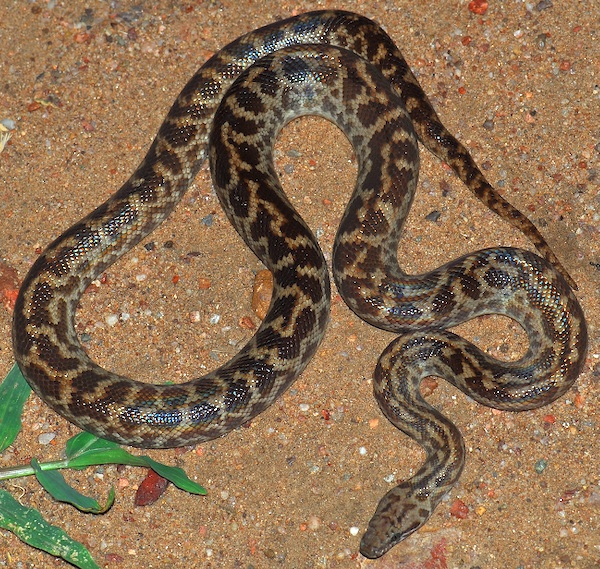
SPOTTED PYTHON
Antaresia maculosa
DESCRIPTION
Spotted Python (Antaresia maculosa) is a small to medium-sized python native to Australia. It is characterized by its distinctive pattern of dark brown or black spots on a lighter background, which provides excellent camouflage in its natural habitat. This species is primarily arboreal, often found in trees, and is known for its docile nature, making it a popular choice among reptile enthusiasts.
FUN FACTS
- Spotted Pythons are known for their ability to climb trees, which allows them to hunt birds and other arboreal prey effectively
- They are also popular in the pet trade due to their manageable size and docile temperament
- | Unlike many other snake species, Spotted Pythons can tolerate cooler temperatures, which allows them to thrive in a variety of habitats across Australia
- Their unique coloration not only aids in camouflage but also plays a role in thermoregulation
QUICK INFO
Lifespan15-20 years in the wild, up to 30 in captivity
Average Weight1-2 kg
Average Length1.2-1.5 m
Diet TypeCarnivore
Social Structuresolitary
Activity PatternNocturnal
Breeding SeasonSpring (September-November)
- Habitat
- Spotted Pythons inhabit a variety of environments, including woodlands, forests, and scrublands. They are often found in areas with plenty of cover, such as dense vegetation and trees.
- Biomes
- Temperate Forest, Tropical Rainforest
- Native Range
- Spotted Pythons are native to the northern and eastern regions of Australia, particularly in Queensland and New South Wales.
- Continent
- Australia
- Countries
- Australia
- Diet
- Spotted Pythons are carnivorous, primarily feeding on small mammals, birds, and reptiles. They are constrictors, subduing their prey by wrapping around it and suffocating it before consumption.
- Diet Type
- Carnivore
- Favorite Food
- small mammals, birds
- Social Structure
- solitary
- Activity Pattern
- Nocturnal
- Group Size
- 1
- Territorial
- 0
 VU
VU
1-2 kg
Weight
1.2-1.5 m
Length
- Coloration
- dark brown or black spots on a lighter background
- Sexual Dimorphism
- males are generally smaller than females
- Lifespan
- 15-20 years in the wild, up to 30 in captivity
- Offspring per Birth
- 5-15
- Sexual Maturity
- 2-3 years
- Breeding Season
- Spring (September-November)
LC
Least Concern
IUCN Red List Status
- Population Status
- The population of Spotted Pythons is currently stable, with no significant threats impacting their numbers.
- Wild Population Estimate
- unknown
- Population Trend
- Stable
- Endangered
- 0
- Threats
- The main threats to Spotted Pythons include habitat destruction and illegal pet trade. However, they are not currently facing significant population declines.
- Predators
- birds of prey, larger snakes, and mammals such as foxes
- Defense Mechanisms
- Spotted Pythons rely on their camouflage to avoid detection by predators, and they may also exhibit defensive behaviors such as hissing or striking when threatened.
- Found in Zoos
- Common