


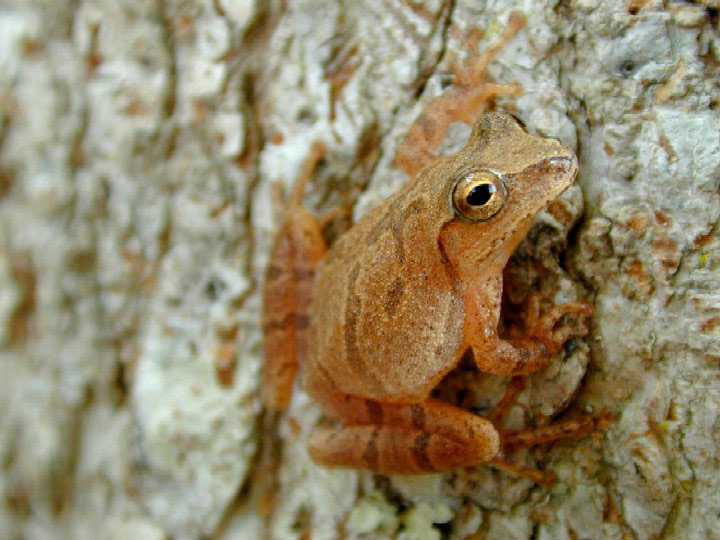
SPRING PEEPER
Pseudacris crucifer
DESCRIPTION
Spring Peeper (Pseudacris crucifer) is a small frog known for its distinctive, high-pitched call that heralds the arrival of spring in North America. Typically measuring about 1 to 1.5 inches in length, it has a light brown or tan coloration with a characteristic dark cross on its back, which helps it blend into its woodland habitat. These frogs are primarily nocturnal and are often found near temporary ponds and wetlands, where they breed and lay their eggs in shallow water.
FUN FACTS
- Spring Peepers are often one of the first frogs to emerge in the spring, making their calls a welcome sound after winter
- Their calls can be heard from a distance and are often described as sounding like a 'peep' or 'chirp', which is how they got their name.|These frogs have a remarkable ability to survive freezing temperatures
- They can tolerate being frozen for extended periods, allowing them to survive harsh winters and thaw out when temperatures rise
QUICK INFO
Lifespan3-5 years in the wild
Average Weight2-5 g
Average Length2.5-3.8 cm
Diet TypeInsectivore
Social Structuresolitary, with males gathering in groups during the breeding season to call for mates
Activity PatternNocturnal
Breeding SeasonSpring (March-April)
- Habitat
- Spring Peepers thrive in moist, wooded areas, particularly near ponds and wetlands where they can breed. They prefer habitats with ample vegetation that provides cover from predators.
- Biomes
- Temperate Forest, Wetlands
- Native Range
- Spring Peepers are native to eastern North America, ranging from southern Canada to the southeastern United States.
- Continent
- North America
- Countries
- Canada, United States
- Diet
- Spring Peepers primarily feed on small invertebrates, including insects and spiders. Their diet plays a crucial role in controlling pest populations in their ecosystems.
- Diet Type
- Insectivore
- Favorite Food
- small insects, spiders
- Social Structure
- solitary, with males gathering in groups during the breeding season to call for mates
- Activity Pattern
- Nocturnal
- Group Size
- 5-50
- Territorial
- 0
 VU
VU
 LC
LC

2-5 g
Weight
2.5-3.8 cm
Length
- Coloration
- light brown or tan with a dark cross pattern on the back
- Sexual Dimorphism
- males are typically smaller and have a darker throat during the breeding season
- Lifespan
- 3-5 years in the wild
- Offspring per Birth
- 100-300 eggs
- Sexual Maturity
- 1-2 years
- Breeding Season
- Spring (March-April)
LC
Least Concern
IUCN Red List Status
- Population Status
- The population of Spring Peepers is generally stable, but local declines can occur due to habitat loss.
- Wild Population Estimate
- unknown
- Population Trend
- Stable
- Endangered
- 0
- Threats
- Main threats include habitat destruction due to urban development and pollution of breeding sites. Climate change may also impact their breeding habitats and seasonal behaviors.
- Predators
- birds, snakes, small mammals, and larger amphibians
- Defense Mechanisms
- Spring Peepers rely on camouflage to avoid predation, blending into their surroundings during the day.
- Found in Zoos
- Uncommon