


SPRINGS SALAMANDER
Gyrinophilus porphyriticus
DESCRIPTION
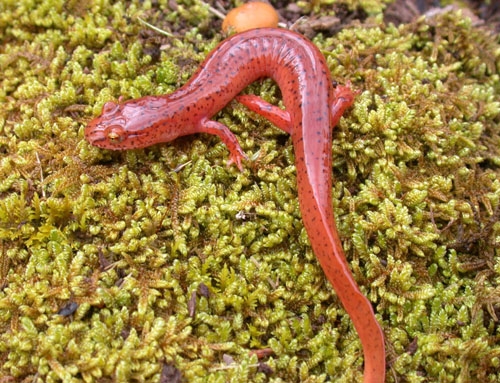
Springs Salamander (Gyrinophilus porphyriticus) is a medium-sized salamander characterized by its slender body and long limbs. It typically exhibits a coloration that ranges from yellow to brown, often with dark spots or mottling, which provides effective camouflage in its natural habitat. This species is primarily found in cool, clean springs and streams, where it is often seen foraging among rocks and vegetation, showcasing its aquatic adaptations.
FUN FACTS
- Springs Salamanders are known for their unique reproductive strategy, where females lay eggs in the spring, often in clusters attached to submerged rocks
- This species is also an indicator of environmental health, as they require clean, unpolluted water to thrive.|Despite their secretive nature, Springs Salamanders can be quite vocal during the breeding season, producing a variety of calls to attract mates
- Their ability to absorb oxygen through their skin makes them particularly sensitive to changes in their aquatic environment
QUICK INFO
Lifespan10-15 years in the wild
Average Length4-6 inches
Diet TypeInsectivore
Social Structuresolitary, typically found alone or in small groups during breeding season
Activity PatternNocturnal
Breeding SeasonSpring (March-May)
- Habitat
- This species inhabits cool, moist environments, particularly around springs and streams in forested areas. They prefer areas with abundant leaf litter and rocky substrates, which provide both food and shelter.
- Biomes
- Temperate Forest, Freshwater
- Native Range
- The Springs Salamander is native to the eastern United States, particularly in the Appalachian region.
- Continent
- North America
- Countries
- United States
- Diet
- Springs Salamanders primarily feed on small invertebrates, including insects and crustaceans. They are known to hunt by ambushing their prey in the water or on land.
- Diet Type
- Insectivore
- Favorite Food
- small invertebrates
- Social Structure
- solitary, typically found alone or in small groups during breeding season
- Activity Pattern
- Nocturnal
- Group Size
- 1-5
- Territorial
- 0
 LC
LC
 VU
VU

4-6 inches
Length
- Coloration
- yellow to brown with dark spots or mottling
- Sexual Dimorphism
- males are generally smaller and have more vibrant coloration than females
- Lifespan
- 10-15 years in the wild
- Offspring per Birth
- 10-20
- Sexual Maturity
- 2-3 years
- Breeding Season
- Spring (March-May)
LC
Least Concern
IUCN Red List Status
- Population Status
- The population of Springs Salamanders is considered stable in many areas, but local declines have been observed due to habitat loss.
- Wild Population Estimate
- unknown
- Population Trend
- Stable
- Endangered
- 0
- Threats
- Main threats include habitat destruction due to urban development and pollution of water sources. Climate change may also impact their cool, moist habitats.
- Predators
- fish, birds, and small mammals
- Defense Mechanisms
- They rely on camouflage to avoid predation and may also secrete toxins through their skin when threatened.
- Found in Zoos
- Uncommon