


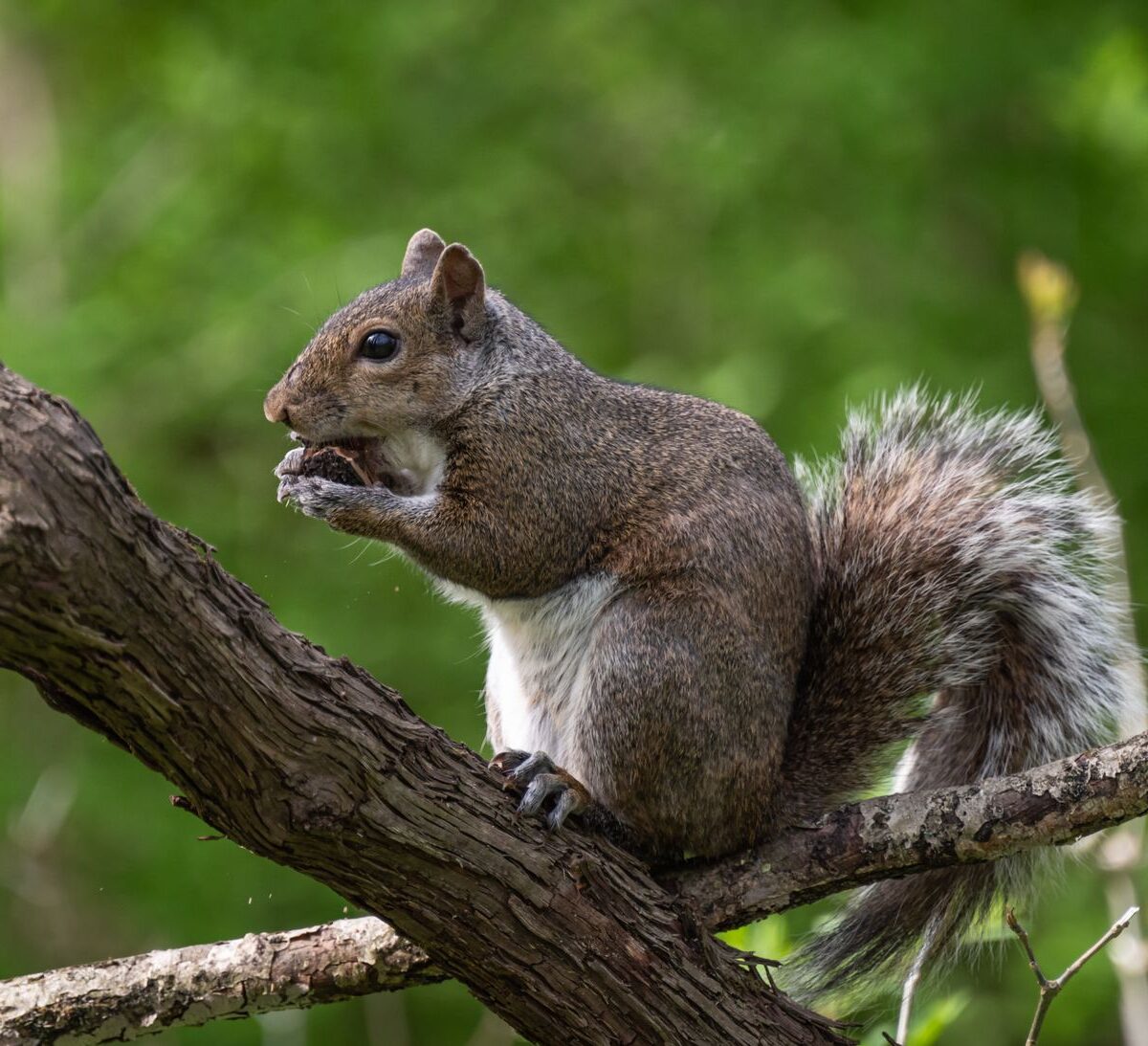
SQUIRREL
DESCRIPTION
Squirrel is commonly known as the Tree Squirrel, Ground Squirrel, and Flying Squirrel. These small to medium-sized rodents are characterized by their bushy tails, sharp claws, and large eyes, which aid in their arboreal lifestyle. They are highly agile and can leap between branches, making them adept at navigating their forested habitats.
FUN FACTS
- Squirrels have a unique way of communicating with each other, using a variety of vocalizations and tail movements to convey messages
- They are also known for their impressive memory, which helps them locate their buried food stores months later.|Flying Squirrels are not actually capable of true flight but glide between trees using a special membrane that stretches from their wrists to their ankles
- This adaptation allows them to escape predators and navigate their forested habitats effectively
QUICK INFO
Lifespan6-12 years in the wild, up to 18 years in captivit
Average Weight0.5-1.5 kg
Average Length20-50 cm
Diet TypeOmnivore
Social StructureSolitary or in small groups, depending on the species.
Activity PatternDiurnal
Breeding SeasonSpring (February-April)
- Habitat
- Squirrels inhabit a variety of environments, including forests, urban areas, and grasslands. They often build nests in trees or burrows in the ground, depending on the species.
- Biomes
- Temperate Forest, Urban, Grassland
- Native Range
- Squirrels are found across North America, Europe, Asia, and parts of Africa.
- Continent
- North America, Europe, Asia
- Countries
- United States, Canada, United Kingdom, Germany, China
- Diet
- Squirrels primarily eat nuts, seeds, fruits, and occasionally insects or small animals. They are known for their habit of hoarding food for winter months.
- Diet Type
- Omnivore
- Favorite Food
- Nuts, seeds, fruits
- Social Structure
- Solitary or in small groups, depending on the species.
- Activity Pattern
- Diurnal
- Group Size
- 1-10
- Territorial
- 1
 CR
CR
 LC
LC
 LC
LC
0.5-1.5 kg
Weight
20-50 cm
Length
- Coloration
- Typically gray, brown, or reddish fur with a lighter underbelly.
- Sexual Dimorphism
- Males are generally slightly larger than females.
- Lifespan
- 6-12 years in the wild, up to 18 years in captivit
- Gestation Period
- 44-45 days
- Offspring per Birth
- 2-8
- Sexual Maturity
- 1 year
- Breeding Season
- Spring (February-April)
LC
Least Concern
IUCN Red List Status
- Population Status
- Squirrel populations are generally stable, with some species being abundant.
- Wild Population Estimate
- Millions, varies by species
- Population Trend
- Stable
- Endangered
- 0
- Threats
- Main threats include habitat loss due to urbanization and deforestation. Additionally, they face predation from birds of prey and domestic cats.
- Predators
- Hawks, owls, snakes, foxes, domestic cats
- Defense Mechanisms
- Squirrels use their agility to escape predators and can also use vocalizations to warn others of danger.
- Compatible Animals
- None
- Found in Zoos
- Common