


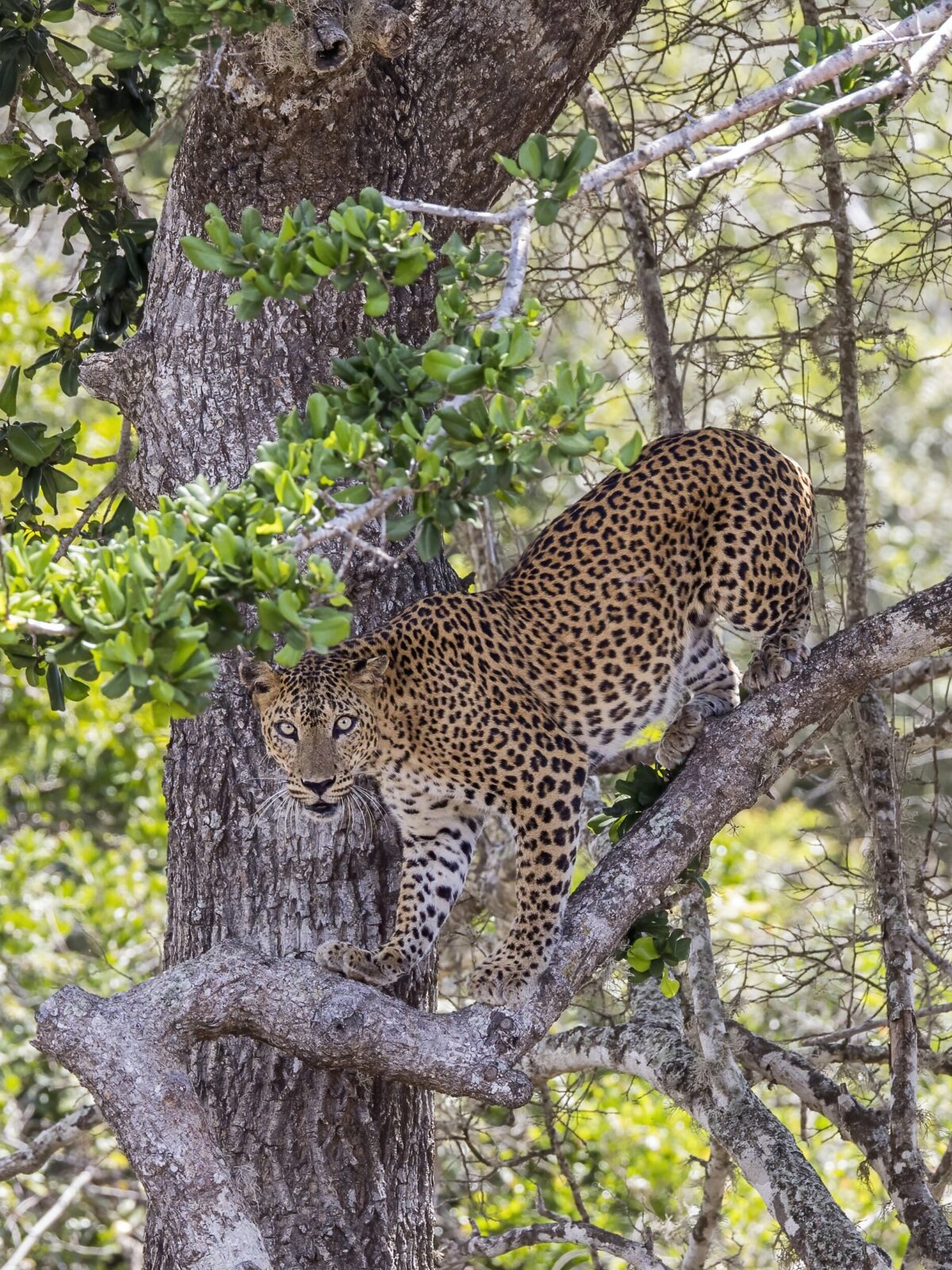
SRI LANKA LEOPARD
Panthera pardus kotiya
DESCRIPTION
Sri Lanka Leopard (Panthera pardus kotiya) is a subspecies of leopard found exclusively in Sri Lanka. It is characterized by its robust build, with a distinctive coat featuring dark rosettes on a golden-yellow background. This leopard is primarily nocturnal and is known for its solitary behavior, often hunting alone and marking its territory with scent markings.
FUN FACTS
- Sri Lanka Leopards are known for their exceptional climbing skills, often dragging their prey up into trees to avoid scavengers
- They are also highly adaptable, capable of living in a variety of habitats, from dense forests to open grasslands
QUICK INFO
Lifespan10-15 years in the wild, up to 20 years in captivi
Average Weight60-90 kg
Average Length1.5-2.3 m
Diet TypeCarnivore
Social StructureSolitary, with individuals maintaining their own territories.
Activity PatternNocturnal
Breeding SeasonYear-round, with peaks depending on environmental conditions.
- Habitat
- This leopard inhabits a range of environments, including tropical rainforests, dry forests, and grasslands. It prefers areas with dense vegetation for stalking prey and for cover.
- Biomes
- Tropical Rainforest, Savanna, Dry Forest
- Native Range
- Endemic to Sri Lanka, found throughout the island in various habitats.
- Continent
- Asia
- Countries
- Sri Lanka
- Diet
- The Sri Lanka Leopard primarily preys on a variety of animals, including deer, wild boar, and smaller mammals. It is an opportunistic hunter, adapting its diet based on the availability of prey.
- Diet Type
- Carnivore
- Favorite Food
- deer, wild boar
- Social Structure
- Solitary, with individuals maintaining their own territories.
- Activity Pattern
- Nocturnal
- Group Size
- 1
- Territorial
- 1
60-90 kg
Weight
1.5-2.3 m
Length
- Coloration
- Golden-yellow coat with dark rosettes and spots.
- Sexual Dimorphism
- Males are generally larger than females.
- Lifespan
- 10-15 years in the wild, up to 20 years in captivi
- Gestation Period
- 90-105 days
- Offspring per Birth
- 1-4
- Sexual Maturity
- 2-3 years
- Breeding Season
- Year-round, with peaks depending on environmental conditions.
EN
Endangered
IUCN Red List Status
- Population Status
- The population of Sri Lanka Leopards is currently declining due to habitat loss and poaching.
- Wild Population Estimate
- 1,000-2,000
- Population Trend
- Decreasing
- Endangered
- 1
- Threats
- Main threats include habitat destruction due to agriculture and urbanization, as well as poaching for their beautiful pelts. Human-wildlife conflict also poses a significant risk to their survival.
- Conservation Program
- Conservation efforts include habitat protection and anti-poaching initiatives within national parks.
- Predators
- Humans are the primary threat to Sri Lanka Leopards, as they are hunted and their habitats are encroached upon. Young leopards may also be vulnerable to larger predators such as crocodiles.
- Defense Mechanisms
- Leopards are known for their stealth and strength, allowing them to escape threats by climbing trees or hiding in dense foliage.
- Found in Zoos
- Uncommon