


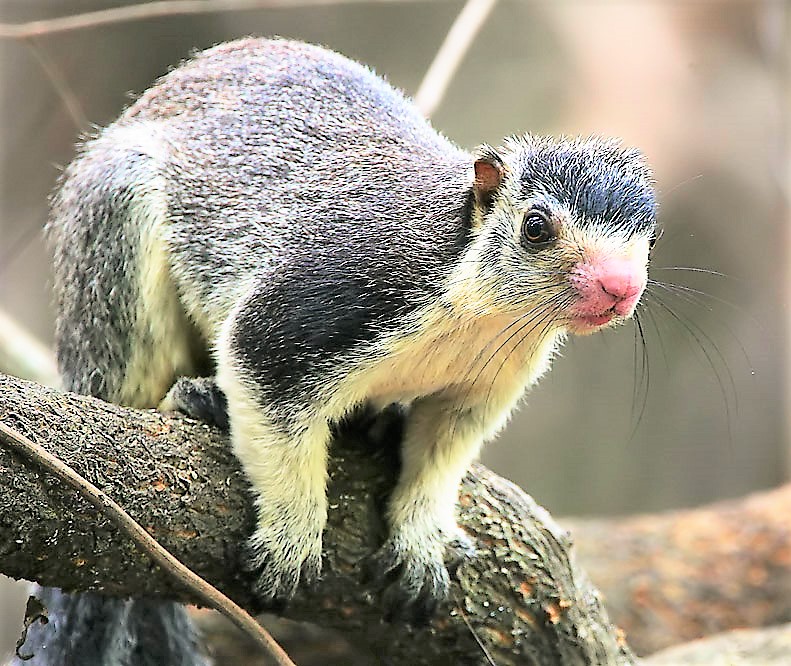
SRI LANKAN GIANT SQUIRREL
Ratufa macrora
DESCRIPTION
Also called the Ceylon Giant Squirrel, the Sri Lankan Giant Squirrel (Ratufa macrora) is a large tree squirrel native to Sri Lanka. It is characterized by its striking coloration, which includes a mix of black, brown, and orange fur, making it one of the most visually distinctive squirrels in the world. These squirrels are primarily arboreal, spending most of their time in trees, where they are known for their agility and ability to leap between branches.
FUN FACTS
- Sri Lankan Giant Squirrels are known for their impressive leaps, which can reach distances of up to 10 meters between trees
- Their vibrant fur not only serves as camouflage among the leaves but also plays a role in social signaling among individuals.| These squirrels have a unique vocalization system, using a variety of sounds to communicate with each other, which can include alarm calls and mating calls
- Their social interactions are complex, and they often engage in playful behavior, especially during the breeding season
QUICK INFO
Lifespan10-12 years in the wild, up to 15 years in captivi
Average Weight1.5-2.5 kg
Average Length50-70 cm
Diet TypeHerbivore
Social Structuresolitary, occasionally seen in pairs during breeding
Activity PatternDiurnal
Breeding SeasonYear-round, with peaks during the rainy season
- Habitat
- They inhabit tropical and subtropical forests, particularly in areas with dense canopy cover. These squirrels prefer mature forests where they can find ample food and nesting sites.
- Biomes
- Tropical Rainforest
- Native Range
- Endemic to Sri Lanka, found in various forested regions across the island.
- Continent
- Asia
- Countries
- Sri Lanka
- Diet
- Sri Lankan Giant Squirrels primarily feed on fruits, nuts, and seeds, but they may also consume flowers and bark. Their diet is largely herbivorous, reflecting their role in seed dispersal within their forest habitat.
- Diet Type
- Herbivore
- Favorite Food
- fruits, nuts, seeds
- Social Structure
- solitary, occasionally seen in pairs during breeding
- Activity Pattern
- Diurnal
- Group Size
- 1-2
- Territorial
- 1
 VU
VU
 LC
LC
1.5-2.5 kg
Weight
50-70 cm
Length
- Coloration
- black, brown, and orange fur
- Lifespan
- 10-12 years in the wild, up to 15 years in captivi
- Gestation Period
- 45-50 days
- Offspring per Birth
- 1-3
- Sexual Maturity
- 1-2 years
- Breeding Season
- Year-round, with peaks during the rainy season
EN
Endangered
IUCN Red List Status
- Population Status
- The population is currently considered to be decreasing due to habitat loss.
- Wild Population Estimate
- unknown
- Population Trend
- Decreasing
- Endangered
- 1
- Threats
- Main threats include habitat destruction due to deforestation and human encroachment. Additionally, hunting and poaching pose risks to their population.
- Conservation Program
- Various conservation efforts are underway in Sri Lanka to protect their habitat and raise awareness about their ecological importance.
- Predators
- Birds of prey, snakes, and larger mammals such as leopards may prey on Sri Lankan Giant Squirrels.
- Defense Mechanisms
- They use their agility to escape predators by quickly climbing trees and leaping between branches.
- Found in Zoos
- Uncommon