


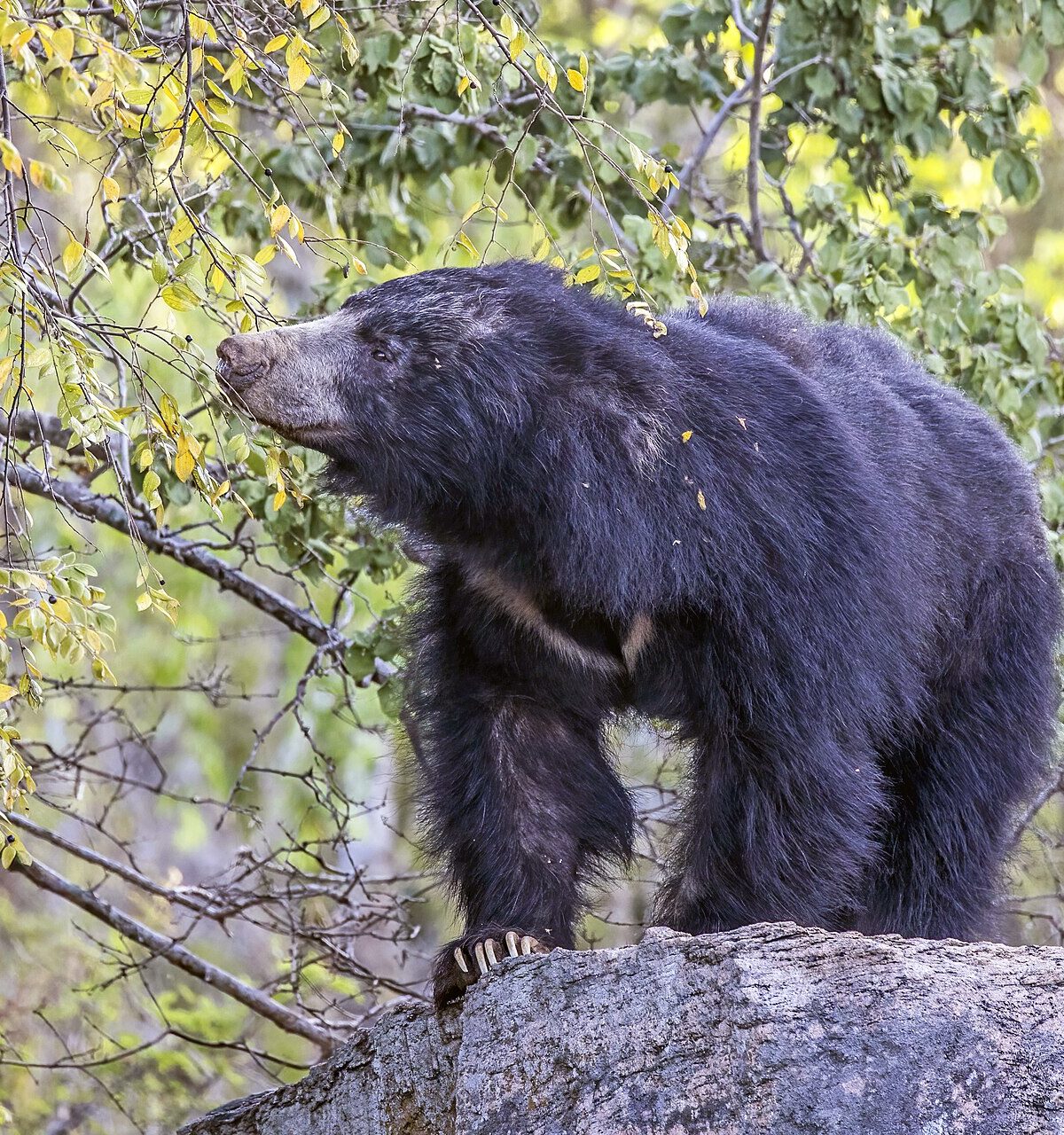
SRI LANKAN SLOTH BEAR
Melursus ursinus inornatus
DESCRIPTION
Sri Lankan Sloth Bear (Melursus ursinus inornatus) is commonly known as the Indian Sloth Bear. This subspecies is characterized by its shaggy black fur, a distinctive white V-shaped marking on its chest, and a long snout adapted for foraging. They are primarily nocturnal and are known for their unique behavior of using their long claws to dig for insects and fruits, making them an important part of their ecosystem.
FUN FACTS
- Sri Lankan Sloth Bears are known for their unique method of foraging, which involves using their long claws to dig into termite mounds and ant hills
- This behavior not only provides them with food but also helps aerate the soil, benefiting the ecosystem
- | Unlike other bear species, Sloth Bears have a specialized diet that includes a significant amount of fruit and honey, making them important seed dispersers in their habitat
- Their ability to consume large quantities of honey has earned them a reputation as 'honey bears' in local folklore
QUICK INFO
Lifespan20-30 years in the wild
Average Weight100-140 kg
Average Length1.5-2.0 m
Diet TypeOmnivore
Social Structuresolitary, typically living alone except during mating season
Activity PatternNocturnal
Breeding SeasonSpring (March-May)
- Habitat
- Sri Lankan Sloth Bears inhabit dry forests, scrublands, and grasslands. They prefer areas with abundant food sources and cover for shelter.
- Biomes
- Tropical Dry Forest, Grassland
- Native Range
- Endemic to Sri Lanka, found in various forested regions across the island.
- Continent
- Asia
- Countries
- Sri Lanka
- Diet
- They primarily feed on insects, fruits, and honey, showcasing their omnivorous diet. Their long snouts and powerful claws allow them to access food sources that are often hidden.
- Diet Type
- Omnivore
- Favorite Food
- insects, fruits, honey
- Social Structure
- solitary, typically living alone except during mating season
- Activity Pattern
- Nocturnal
- Group Size
- 1
- Territorial
- 0
100-140 kg
Weight
1.5-2.0 m
Length
1.0 m at shoulder
Height (Shoulder)
- Coloration
- shaggy black fur with a white V-shaped marking on the chest
- Sexual Dimorphism
- males are generally larger than females
- Lifespan
- 20-30 years in the wild
- Gestation Period
- 210 days
- Offspring per Birth
- 1-2
- Sexual Maturity
- 3-4 years
- Breeding Season
- Spring (March-May)
VU
Vulnerable
IUCN Red List Status
- Population Status
- The population is currently declining due to habitat loss and poaching.
- Wild Population Estimate
- 5,000-10,000
- Population Trend
- Decreasing
- Endangered
- 1
- Threats
- Main threats include habitat destruction due to agriculture and urbanization, as well as poaching for their body parts. These factors have significantly impacted their population numbers.
- Conservation Program
- The Sri Lankan government has initiated several conservation programs aimed at protecting their habitats and raising awareness about their plight.
- Predators
- Humans are the primary threat, but young bears may be vulnerable to large carnivores such as leopards.
- Defense Mechanisms
- They can stand on their hind legs and use their powerful claws to defend themselves when threatened.
- Found in Zoos
- Uncommon