


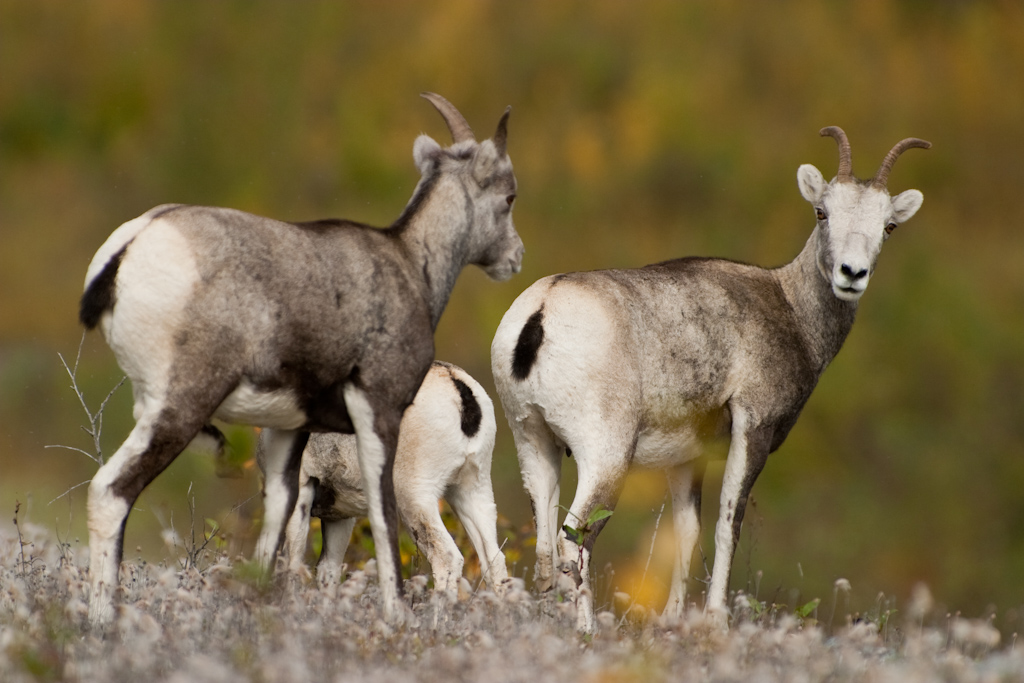
STONE’S SHEEP
Ovis dalli stonei
DESCRIPTION
Stone’s Sheep (Ovis dalli stonei) is a subspecies of the Dall's sheep, characterized by its impressive curved horns and a thick, woolly coat that varies in color from light gray to dark brown. These sheep are well-adapted to their rugged mountainous habitats, displaying excellent climbing abilities and a keen sense of balance. They are primarily found in remote areas of northern British Columbia and the Yukon, where they navigate steep terrains and rocky outcrops with ease.
FUN FACTS
- Stone’s Sheep are known for their impressive climbing abilities, which allow them to navigate steep and rocky terrains that would be challenging for many other animals
- Their unique adaptations, such as their specialized hooves and strong legs, enable them to thrive in harsh alpine environments
- | The horns of male Stone’s Sheep can grow to impressive lengths, sometimes exceeding 90 cm, and are used in battles for dominance during the breeding season
- These battles can be quite dramatic, with males charging at each other and clashing their horns in a display of strength and fitness
QUICK INFO
Lifespan10-15 years in the wild, up to 20 years in captivi
Average Weight50-90 kg
Average Length1.5-1.8 m
Diet TypeHerbivore
Social Structuregroup — they typically form small groups, especially during the winter.
Activity PatternDiurnal
Breeding SeasonFall (November-December)
- Habitat
- Stone’s Sheep inhabit mountainous regions, often favoring steep, rocky slopes and alpine meadows. They are typically found at elevations ranging from 1,200 to 3,000 meters.
- Biomes
- Alpine, Tundra
- Native Range
- Stone’s Sheep are native to the mountainous regions of northwestern North America, particularly in British Columbia and the Yukon.
- Continent
- North America
- Countries
- Canada, United States
- Diet
- Stone’s Sheep are herbivores, primarily grazing on grasses, sedges, and various shrubs. They also consume lichens and other vegetation found in their alpine and subalpine habitats.
- Diet Type
- Herbivore
- Favorite Food
- grasses, sedges, shrubs
- Social Structure
- group — they typically form small groups, especially during the winter.
- Activity Pattern
- Diurnal
- Group Size
- 5-20
- Territorial
- 0
 LC
LC
LC
LC
 LC
LC
LC
LC
50-90 kg
Weight
1.5-1.8 m
Length
0.9-1.1 m at shoulder
Height (Shoulder)
- Coloration
- light gray to dark brown woolly coat
- Sexual Dimorphism
- males are larger and have more prominent horns than females
- Lifespan
- 10-15 years in the wild, up to 20 years in captivi
- Gestation Period
- 150 days
- Offspring per Birth
- 1
- Sexual Maturity
- 2-3 years
- Breeding Season
- Fall (November-December)
LC
Least Concern
IUCN Red List Status
- Population Status
- The population of Stone’s Sheep is considered stable, although local populations may fluctuate due to environmental factors.
- Wild Population Estimate
- approximately 10,000
- Population Trend
- Stable
- Endangered
- 0
- Threats
- Main threats to Stone’s Sheep include habitat loss due to human encroachment and hunting pressures. Additionally, climate change poses a risk to their alpine habitats.
- Predators
- mountain lions, wolves, bears, and golden eagles
- Defense Mechanisms
- Stone’s Sheep rely on their agility and speed to escape predators, often fleeing to steep, rocky areas where they can evade capture.
- Found in Zoos
- Uncommon