


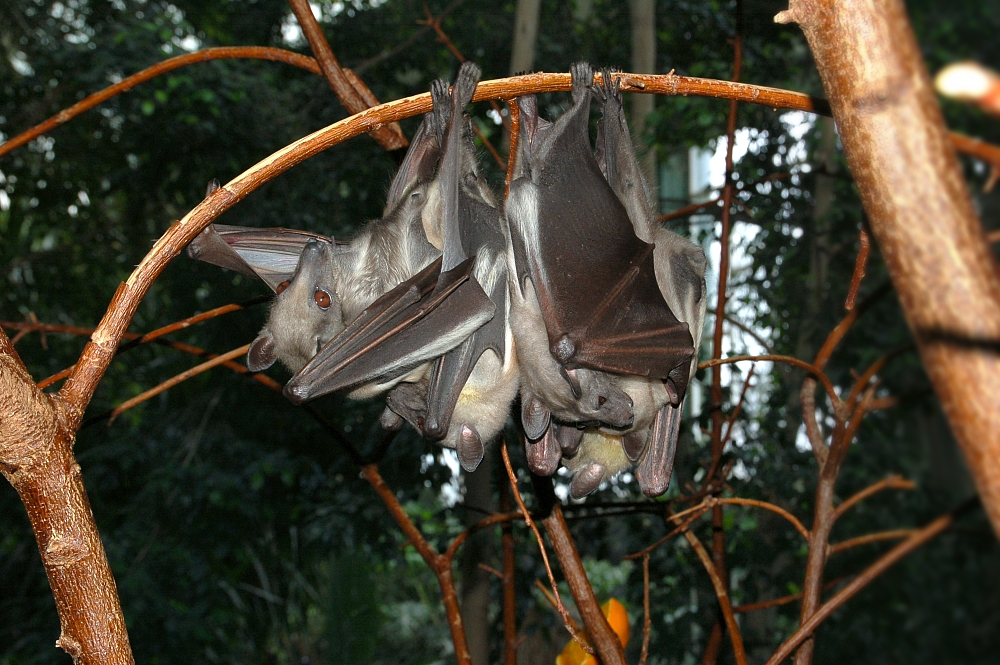
STRAW-COLORED FRUIT BAT
DESCRIPTION
Straw-Colored Fruit Bat, also known as the African Fruit Bat, is a large bat species characterized by its straw-colored fur and impressive wingspan. These bats are primarily frugivorous, playing a crucial role in their ecosystems as pollinators and seed dispersers. They are social animals, often roosting in large colonies, which can number in the thousands, and are known for their distinctive vocalizations during social interactions.
FUN FACTS
- Straw-Colored Fruit Bats are known for their impressive echolocation abilities, which they use to navigate and find food in the dark
- Additionally, they play a vital role in their ecosystems by helping to disperse seeds and pollinate flowers, making them essential for the health of their habitats.|These bats can consume large quantities of fruit in a single night, sometimes eating up to their body weight in food
- This feeding behavior not only sustains them but also contributes to the growth of new plants, as they help spread seeds across vast areas
QUICK INFO
Lifespan10-15 years in the wild, up to 20 years in captivi
Average Weight150-250 g
Average Length20-30 cm
Diet TypeHerbivore
Social StructureThey are highly social and often found in large colonies, which can consist of hundreds to thousands of individuals.
Activity PatternNocturnal
Breeding SeasonVariable, often linked to fruit availability
- Habitat
- Straw-Colored Fruit Bats inhabit tropical and subtropical forests, often roosting in caves or large trees. They prefer areas with abundant fruiting trees, which provide their primary food source.
- Biomes
- Tropical Rainforest, Subtropical Forest
- Native Range
- They are found across much of sub-Saharan Africa, from West Africa to East Africa.
- Continent
- Africa
- Countries
- Nigeria, Ghana, Uganda, Kenya, Tanzania
- Diet
- They primarily consume fruits, particularly figs, and are known to feed on nectar as well. This diet makes them important for the pollination of various plant species.
- Diet Type
- Herbivore
- Favorite Food
- Fruits, especially figs
- Social Structure
- They are highly social and often found in large colonies, which can consist of hundreds to thousands of individuals.
- Activity Pattern
- Nocturnal
- Group Size
- 100-1,000
- Territorial
- 0
 VU
VU
 LC
LC
150-250 g
Weight
20-30 cm
Length
- Coloration
- Straw-colored fur with a lighter underbelly
- Sexual Dimorphism
- Males are generally larger than females.
- Lifespan
- 10-15 years in the wild, up to 20 years in captivi
- Gestation Period
- 120 days
- Offspring per Birth
- 1
- Sexual Maturity
- 1-2 years
- Breeding Season
- Variable, often linked to fruit availability
LC
Least Concern
IUCN Red List Status
- Population Status
- The population is currently stable, but habitat loss poses a potential threat.
- Wild Population Estimate
- Unknown
- Population Trend
- Stable
- Endangered
- 0
- Threats
- Main threats include habitat destruction due to deforestation and hunting for bushmeat. These pressures can lead to localized declines in their populations.
- Predators
- Birds of prey, snakes, and larger mammals such as cats may prey on Straw-Colored Fruit Bats.
- Defense Mechanisms
- They rely on their ability to fly quickly and maneuver through trees to evade predators.
- Found in Zoos
- Uncommon