


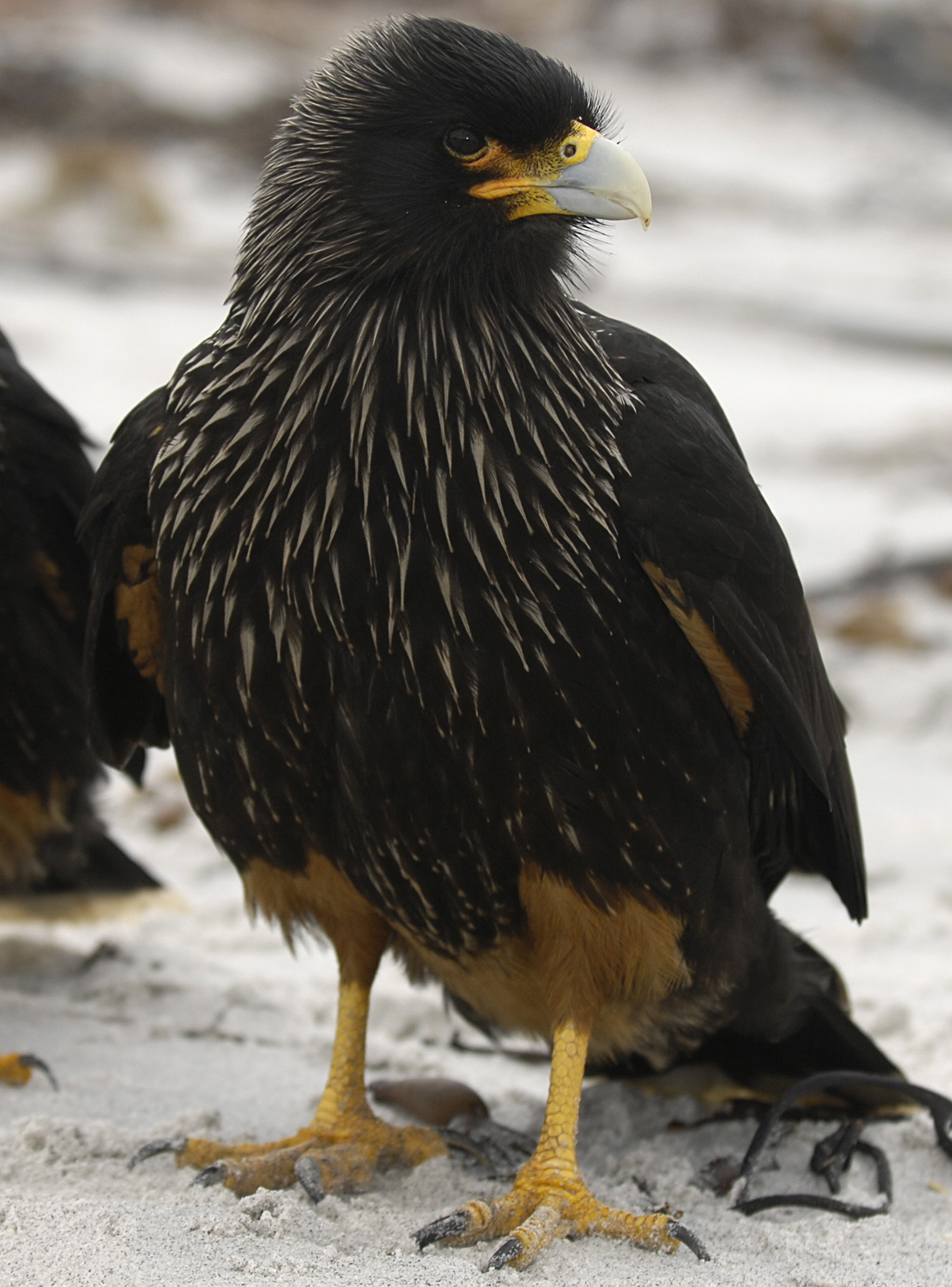
STRIATED CARACARA
Phalcoboenus australis
DESCRIPTION
Striated Caracara (Phalcoboenus australis), also known as Johnny Rook, is a large bird of prey characterized by its striking black and white plumage. This species exhibits a unique behavior of scavenging and hunting in groups, often seen foraging on the ground for carrion and small animals. They are known for their intelligence and adaptability, thriving in various environments, particularly in the sub-Antarctic regions.
FUN FACTS
- Striated Caracaras are known for their playful behavior, often engaging in aerial displays and interactions with other birds
- They have been observed using tools, such as stones, to break open eggs, showcasing their problem-solving abilities.| These birds have a unique relationship with the local sheep farming community, often scavenging on carcasses left behind, which helps in controlling the spread of disease while providing them with food
QUICK INFO
Lifespan10-15 years in the wild, up to 20 in captivity
Average Weight1.5-2.5 kg
Average Length50-60 cm
Diet TypeCarnivore
Social StructureThey are often found in pairs or small groups, displaying social behaviors during foraging and nesting.
Activity PatternDiurnal
Breeding SeasonSpring (September-November)
- Habitat
- These birds inhabit open grasslands, coastal areas, and rocky terrains, often found in remote islands and sub-Antarctic regions. They prefer habitats that provide ample foraging opportunities and nesting sites.
- Biomes
- Grassland, Coastal, Tundra
- Native Range
- Striated Caracaras are native to the Falkland Islands, South Georgia, and parts of the southern coast of South America.
- Continent
- South America
- Countries
- Argentina, Chile, Falkland Islands
- Diet
- Striated Caracaras primarily feed on carrion, small mammals, and birds, showcasing their opportunistic feeding habits. They are also known to scavenge from other predators.
- Diet Type
- Carnivore
- Favorite Food
- carrion, small mammals
- Social Structure
- They are often found in pairs or small groups, displaying social behaviors during foraging and nesting.
- Activity Pattern
- Diurnal
- Group Size
- 2-10
- Territorial
- 0
 LC
LC

1.5-2.5 kg
Weight
50-60 cm
Length
- Coloration
- They have a distinctive black body with a white head and neck, along with a rufous-colored breast.
- Sexual Dimorphism
- Males and females are similar in appearance, though females are generally larger.
- Lifespan
- 10-15 years in the wild, up to 20 in captivity
- Offspring per Birth
- 1-3
- Sexual Maturity
- 2-3 years
- Breeding Season
- Spring (September-November)
LC
Least Concern
IUCN Red List Status
- Population Status
- The population of Striated Caracaras is currently stable, though localized threats exist.
- Wild Population Estimate
- 5,000-10,000
- Population Trend
- Stable
- Endangered
- 0
- Threats
- Main threats include habitat destruction and human disturbance, particularly in nesting areas. Climate change also poses a potential risk to their habitat.
- Predators
- Eggs and chicks may be preyed upon by larger birds of prey and introduced species such as rats and cats.
- Defense Mechanisms
- They may use aggressive displays and vocalizations to deter potential threats.
- Found in Zoos
- Uncommon