


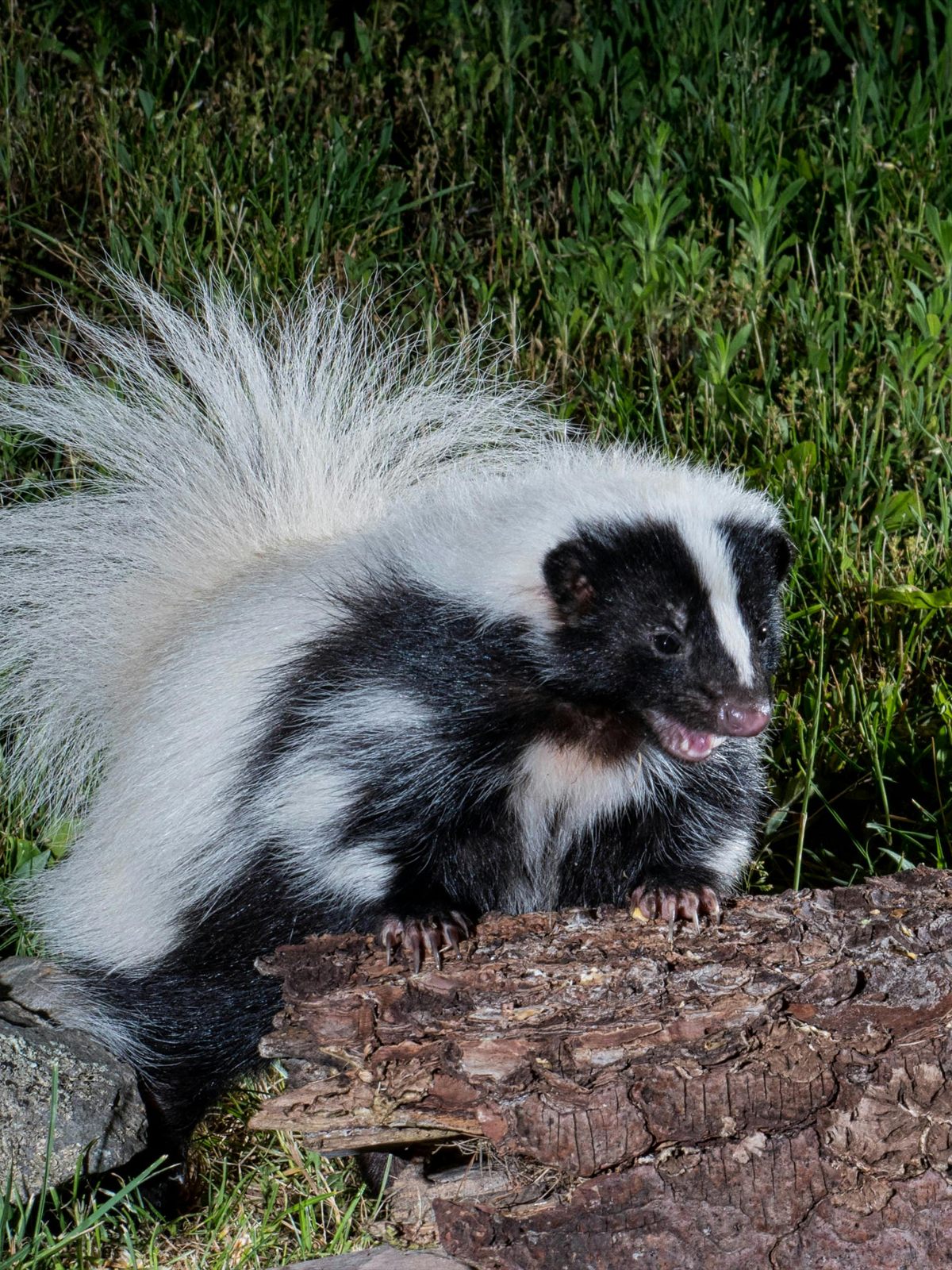
STRIPED SKUNK
Mephitis mephitis
DESCRIPTION
The striped skunk is a small to medium-sized mammal known for its distinctive black and white coloration. It is famous for its ability to spray a foul-smelling liquid as a defense mechanism.
FUN FACTS
- Striped skunks can spray their defensive liquid up to 3 meters away | They have a strong sense of smell and hearing, but poor eyesight | Skunks are known for their unique mating dance, which involves a series of hops and turns
QUICK INFO
Lifespan3-7 years in the wild, up to 10 years in captivity
Average Weight2.5-5.4 kg
Average Length55-77 cm
Diet TypeOmnivore
Social Structuresolitary, typically live alone except during mating season or a mother with her young
Activity PatternNocturnal
Breeding SeasonLate winter to early spring (February-April)
- Habitat
- Striped skunks are adaptable and can be found in a variety of habitats, including forests, grasslands, and urban areas. They prefer areas with ample cover for nesting and foraging.
- Biomes
- Temperate Forest, Grassland, Urban
- Native Range
- They are native to North America, ranging from southern Canada to northern Mexico.
- Continent
- North America
- Countries
- United States, Canada, Mexico
- Diet
- Striped skunks are omnivorous and consume a varied diet that includes insects, small mammals, fruits, and plants. They are opportunistic feeders and will eat whatever is available.
- Diet Type
- Omnivore
- Favorite Food
- insects, small mammals, fruits
- Social Structure
- solitary, typically live alone except during mating season or a mother with her young
- Activity Pattern
- Nocturnal
- Group Size
- 1
- Territorial
- 1
 LC
LC
2.5-5.4 kg
Weight
55-77 cm
Length
- Coloration
- black body with white stripes running down the back
- Lifespan
- 3-7 years in the wild, up to 10 years in captivity
- Gestation Period
- 63-65 days
- Offspring per Birth
- 3-10
- Sexual Maturity
- 1 year
- Breeding Season
- Late winter to early spring (February-April)
LC
Least Concern
IUCN Red List Status
- Population Status
- The population is currently stable and widespread across its range.
- Wild Population Estimate
- Unknown
- Population Trend
- Stable
- Endangered
- 0
- Threats
- Main threats include habitat loss and vehicle collisions. They are also sometimes hunted for their pelts.
- Predators
- Coyotes, foxes, and domestic dogs
- Defense Mechanisms
- They can spray a noxious liquid from their anal glands to deter predators.
- Found in Zoos
- Uncommon