


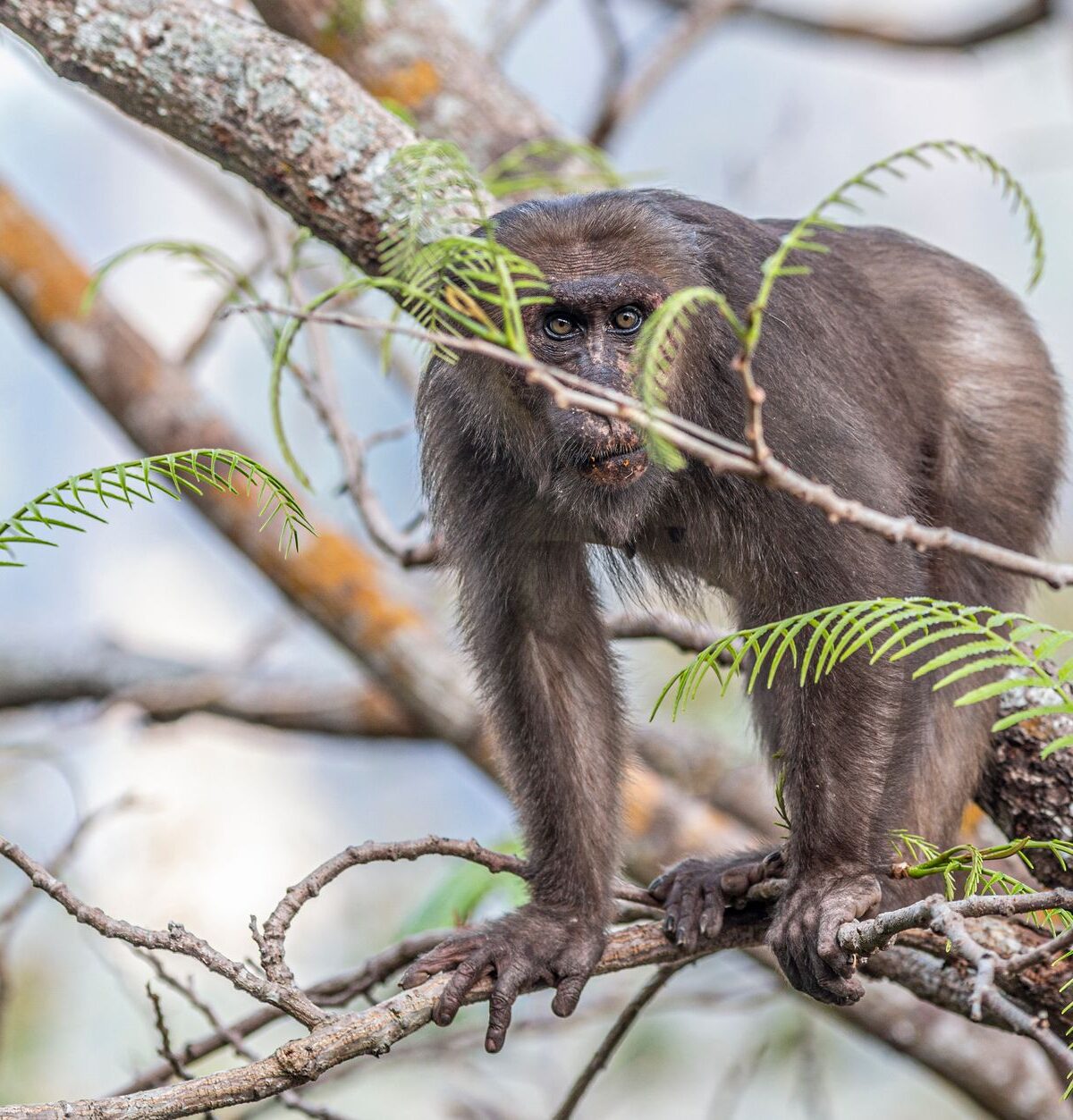
STUMP-TAILED MACAQUE
Macaca arctoides
DESCRIPTION
Stump-tailed Macaque (Macaca arctoides) is a distinctive primate known for its short, stump-like tail and robust body. This species exhibits a thick coat of fur that varies in color from gray to brown, with a characteristic bare face and a prominent brow ridge. Stump-tailed Macaques are social animals, often found in groups, and they exhibit complex behaviors including grooming and vocal communication, which play a crucial role in their social structure.
FUN FACTS
- Stump-tailed Macaques are known for their unique social structures, which can include complex hierarchies and alliances among individuals
- They are also highly intelligent, capable of using tools and solving problems in their environment.|These macaques have a distinctive communication system that includes a variety of vocalizations and facial expressions, allowing them to convey different messages to their troop members
- Their social interactions are crucial for maintaining group cohesion and stability
QUICK INFO
Lifespan15-20 years in the wild, up to 30 in captivity
Average Weight10-20 kg
Average Length50-70 cm
Diet TypeOmnivore
Social Structuregroup — they live in social groups that exhibit a hierarchy, with dominant individuals leading the troop.
Activity PatternDiurnal
Breeding SeasonYear-round, with peaks depending on the region
- Habitat
- These macaques inhabit a range of environments, including tropical and subtropical forests, as well as mountainous regions. They are often found in areas with dense vegetation that provides both food and cover.
- Biomes
- Tropical Rainforest, Temperate Forest, Montane
- Native Range
- Stump-tailed Macaques are native to the mountainous regions of Southeast Asia, particularly in countries like Myanmar, Thailand, and parts of China.
- Continent
- Asia
- Countries
- Myanmar, Thailand, China, India, Bhutan
- Diet
- Stump-tailed Macaques are omnivorous, feeding on a variety of fruits, leaves, seeds, and small invertebrates. Their diet can vary significantly based on seasonal availability of food sources.
- Diet Type
- Omnivore
- Favorite Food
- fruits, leaves, seeds
- Social Structure
- group — they live in social groups that exhibit a hierarchy, with dominant individuals leading the troop.
- Activity Pattern
- Diurnal
- Group Size
- 5-20
- Territorial
- 1
 VU
VU
 VU
VU
10-20 kg
Weight
50-70 cm
Length
- Coloration
- gray to brown fur with a bare face and prominent brow ridge
- Sexual Dimorphism
- males are generally larger than females
- Lifespan
- 15-20 years in the wild, up to 30 in captivity
- Gestation Period
- 160 days
- Offspring per Birth
- 1
- Sexual Maturity
- 3-4 years
- Breeding Season
- Year-round, with peaks depending on the region
LC
Least Concern
IUCN Red List Status
- Population Status
- The population of Stump-tailed Macaques is currently stable, but they face threats from habitat loss and hunting.
- Wild Population Estimate
- 20,000-30,000
- Population Trend
- Stable
- Endangered
- 0
- Threats
- Main threats include habitat destruction due to deforestation and hunting for bushmeat. These factors have led to localized declines in their populations.
- Predators
- Leopards, large birds of prey, and humans are known predators of Stump-tailed Macaques.
- Defense Mechanisms
- They use vocalizations and social cohesion to defend against predators, often alerting the group to potential threats.
- Compatible Animals
- other macaque species, various primates
- Found in Zoos
- Uncommon