


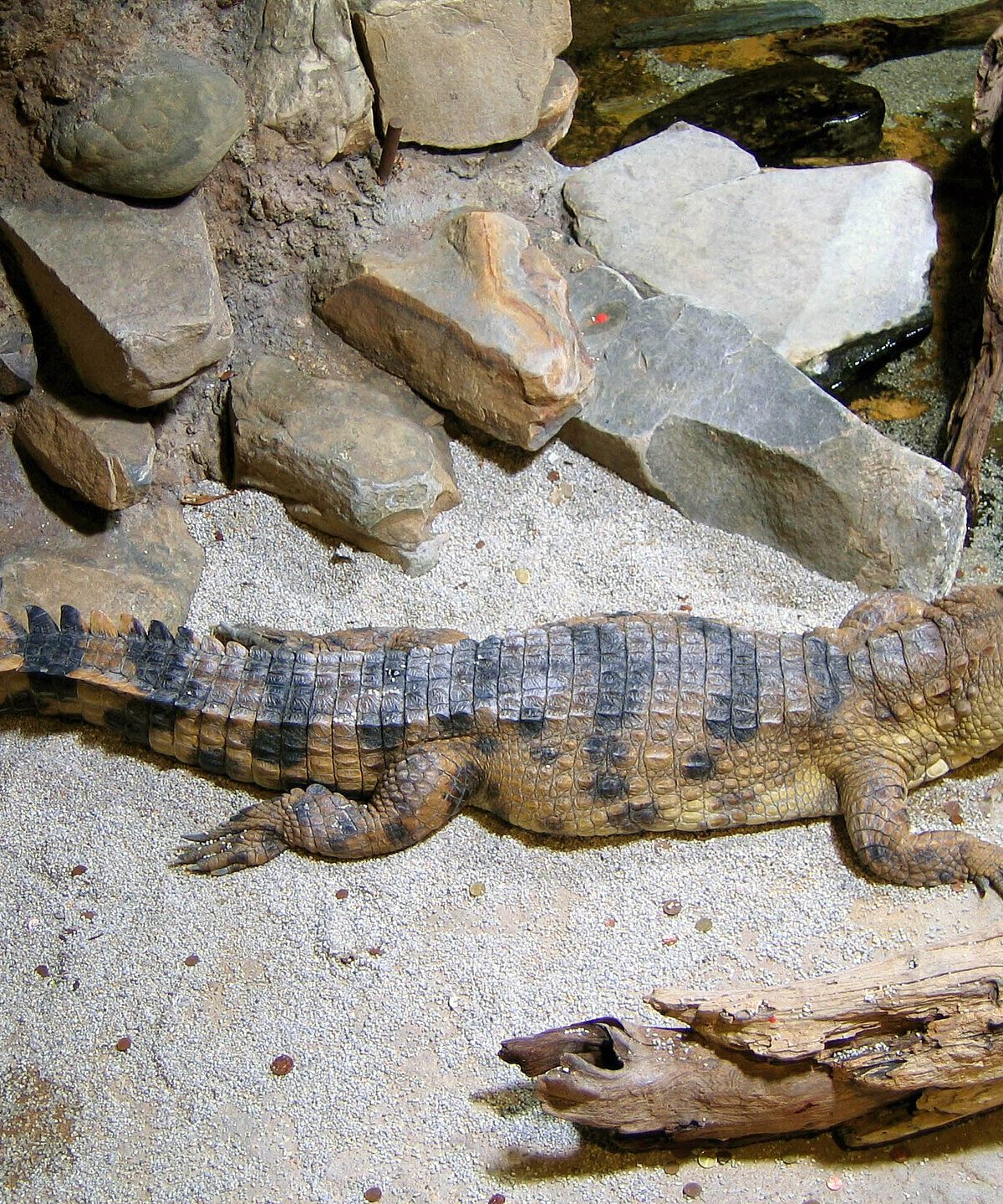
STUMPFFOOTED CROCODILE
Crocodylus cataphractus
DESCRIPTION
Stumpffooted Crocodile (Crocodylus cataphractus) is commonly known as the African Slender-snouted Crocodile, characterized by its elongated snout and slender body. This species exhibits a unique adaptation to its environment, often found in freshwater habitats such as rivers and swamps across Africa. They are known for their elusive behavior, often remaining submerged with only their eyes and nostrils visible, making them effective ambush predators.
FUN FACTS
- Stumpffooted Crocodiles are known for their unique hunting strategy, which involves lying in wait for hours, perfectly still, until prey comes within striking distance
- This patience and stealth make them highly effective predators in their aquatic environments
- | Unlike many other crocodile species, Stumpffooted Crocodiles are less aggressive towards humans, often avoiding contact and retreating when approached
- This behavior has made them a subject of interest for researchers studying crocodilian behavior and ecology
QUICK INFO
Lifespan30-40 years in the wild, up to 70 in captivity
Average Weight50-100 kg
Average Length2.5-3.5 m
Diet TypeCarnivore
Social Structuresolitary, with occasional pairings during the breeding season
Activity PatternNocturnal
Breeding SeasonWet season (varies by region)
- Habitat
- These crocodiles inhabit freshwater environments, including rivers, lakes, and swamps, often preferring areas with dense vegetation for cover. They are well-adapted to both slow-moving and fast-flowing waters.
- Biomes
- Freshwater, Wetlands
- Native Range
- The native range of the Stumpffooted Crocodile includes various regions across Central and West Africa.
- Continent
- Africa
- Countries
- Cameroon, Central African Republic, Democratic Republic of the Congo, Gabon, Republic of the Congo
- Diet
- Stumpffooted Crocodiles primarily feed on fish, amphibians, and small mammals. Their diet reflects their aquatic habitat, where they utilize their stealth to capture prey.
- Diet Type
- Carnivore
- Favorite Food
- fish, amphibians
- Social Structure
- solitary, with occasional pairings during the breeding season
- Activity Pattern
- Nocturnal
- Group Size
- 1-2
- Territorial
- 1
50-100 kg
Weight
2.5-3.5 m
Length
- Coloration
- They typically have a dark olive or brown coloration with lighter underbellies, providing camouflage in their aquatic habitats.
- Sexual Dimorphism
- Males are generally larger than females.
- Lifespan
- 30-40 years in the wild, up to 70 in captivity
- Gestation Period
- 90-100 days
- Offspring per Birth
- 10-30
- Sexual Maturity
- 4-6 years
- Breeding Season
- Wet season (varies by region)
VU
Vulnerable
IUCN Red List Status
- Population Status
- The population of Stumpffooted Crocodiles is currently declining due to habitat loss and hunting.
- Wild Population Estimate
- Unknown, but believed to be decreasing
- Population Trend
- Decreasing
- Endangered
- 1
- Threats
- Main threats include habitat destruction due to agriculture and urbanization, as well as hunting for their skin and meat. These pressures have led to a significant decline in their populations.
- Predators
- Humans are the primary threat, but young crocodiles may also fall prey to larger predators such as birds of prey and larger reptiles.
- Defense Mechanisms
- They rely on camouflage and stealth to avoid detection, and can also exhibit aggressive behavior when threatened.
- Found in Zoos
- Uncommon