


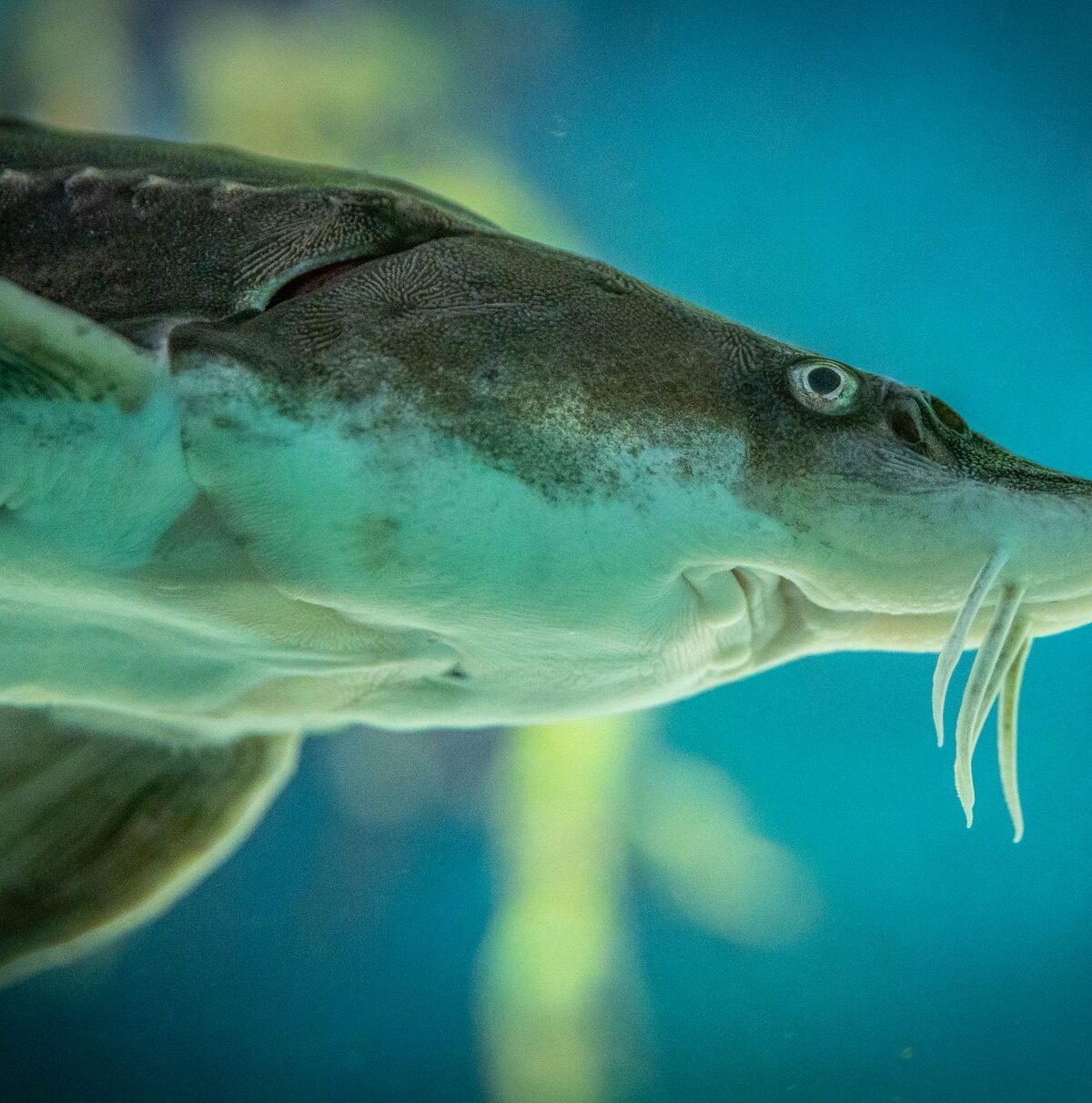
STURGEON
DESCRIPTION
Sturgeon is a group of fish known for their elongated bodies and bony scutes instead of scales. They are bottom feeders, often using their sensitive barbels to detect food in the substrate. Sturgeon are anadromous, meaning they migrate from saltwater to freshwater to spawn, and they can live for several decades, with some species reaching over 100 years of age.
FUN FACTS
- Sturgeon are one of the oldest families of fish, with fossils dating back over 200 million years
- They are often referred to as 'living fossils' due to their primitive features and long evolutionary history.|Some species of sturgeon can grow to be extremely large, with the Beluga sturgeon being the largest, capable of reaching lengths of over 7 meters and weights exceeding 1,500 kg
- Their roe is highly prized as caviar, making them a target for poaching and illegal fishing
QUICK INFO
Lifespan20-60 years in the wild, up to 100 years in captiv
Average Weight150-300 kg
Average Length2-3 m
Diet TypeOmnivore
Social Structuresolitary, typically found alone or in small groups during migration
Activity PatternNocturnal
Breeding SeasonSpring (April-June)
- Habitat
- Sturgeon inhabit a variety of freshwater and brackish environments, including rivers, lakes, and estuaries. They prefer areas with soft substrates where they can forage for food.
- Biomes
- Freshwater, Estuary
- Native Range
- Sturgeon are found in North America, Europe, and Asia, primarily in the Northern Hemisphere.
- Continent
- North America, Europe, Asia
- Countries
- United States, Canada, Russia, China, Germany, France
- Diet
- Sturgeon primarily feed on benthic invertebrates, small fish, and crustaceans. They use their specialized snouts to forage along the riverbed.
- Diet Type
- Omnivore
- Favorite Food
- benthic invertebrates, small fish
- Social Structure
- solitary, typically found alone or in small groups during migration
- Activity Pattern
- Nocturnal
- Group Size
- 1-5
- Territorial
- 0
 VU
VU
150-300 kg
Weight
2-3 m
Length
- Coloration
- typically grayish or brown with lighter underbellies
- Sexual Dimorphism
- males are generally smaller than females
- Lifespan
- 20-60 years in the wild, up to 100 years in captiv
- Offspring per Birth
- 100,000-1,000,000 eggs
- Sexual Maturity
- 5-15 years, depending on species
- Breeding Season
- Spring (April-June)
CR
Critically Endangered
IUCN Red List Status
- Population Status
- Many sturgeon species are critically endangered due to overfishing and habitat loss.
- Wild Population Estimate
- unknown, but significantly reduced from historical levels
- Population Trend
- Decreasing
- Endangered
- 1
- Threats
- The main threats to sturgeon include habitat degradation, pollution, and overfishing for their roe, which is processed into caviar. Dams and river modifications also disrupt their migratory patterns.
- Conservation Program
- Various international and national programs aim to protect sturgeon habitats and regulate fishing practices.
- Predators
- Larger fish, birds of prey, and humans are the primary predators of sturgeon. Juvenile sturgeon are particularly vulnerable to predation.
- Defense Mechanisms
- Sturgeon have tough, bony plates that provide some protection against predators.
- Compatible Animals
- none
- Found in Zoos
- Uncommon