


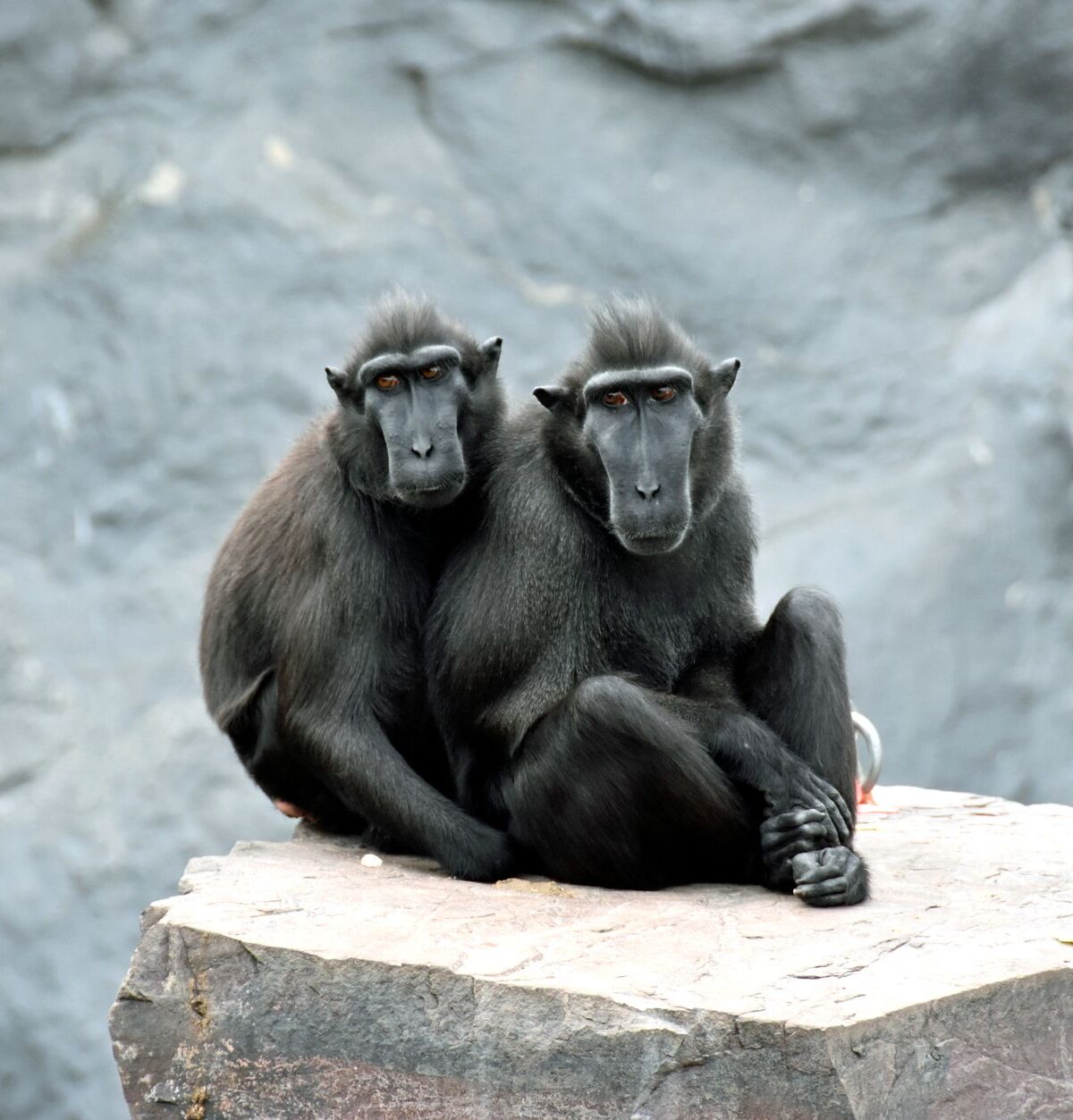
SULAWESI MACAQUE
Macaca nigra
DESCRIPTION
Sulawesi Macaque (Macaca nigra) is commonly known as the Black Macaque and is characterized by its dark fur and distinctive facial features, including a prominent brow ridge and a short tail. These primates are highly social and live in groups, exhibiting complex behaviors and communication methods. They inhabit the tropical forests of Sulawesi, where they play a crucial role in seed dispersal and maintaining the ecological balance of their environment.
FUN FACTS
- Sulawesi Macaques are known for their intelligence and problem-solving abilities, often using tools to access food
- They have a unique social structure where females remain in their natal groups while males often disperse, which helps maintain genetic diversity.| These macaques have a complex vocal communication system, with different calls used to convey specific messages, such as alerts to danger or calls to gather the group
QUICK INFO
Lifespan15-20 years in the wild, up to 30 in captivity
Average Weight6-10 kg
Average Length50-70 cm
Diet TypeOmnivore
Social StructureThey live in groups, typically consisting of 10-30 individuals, with a matriarchal social structure.
Activity PatternDiurnal
Breeding SeasonYear-round, with peaks during certain months
- Habitat
- They primarily inhabit tropical rainforests, often found in hilly or mountainous regions. These macaques are also known to adapt to secondary forests and disturbed areas.
- Biomes
- Tropical Rainforest
- Native Range
- Endemic to the island of Sulawesi in Indonesia.
- Continent
- Asia
- Countries
- Indonesia
- Diet
- Sulawesi Macaques are omnivorous, feeding on a variety of fruits, seeds, leaves, and occasionally small animals or insects. Their diet varies seasonally based on food availability.
- Diet Type
- Omnivore
- Favorite Food
- fruits, seeds, leaves
- Social Structure
- They live in groups, typically consisting of 10-30 individuals, with a matriarchal social structure.
- Activity Pattern
- Diurnal
- Group Size
- 10-30
- Territorial
- 1
 VU
VU
 LC
LC
6-10 kg
Weight
50-70 cm
Length
- Coloration
- They have dark black or brown fur with lighter facial features.
- Sexual Dimorphism
- Males are generally larger than females.
- Lifespan
- 15-20 years in the wild, up to 30 in captivity
- Gestation Period
- 160 days
- Offspring per Birth
- 1
- Sexual Maturity
- 3-4 years
- Breeding Season
- Year-round, with peaks during certain months
EN
Endangered
IUCN Red List Status
- Population Status
- The population is currently declining due to habitat loss and hunting.
- Wild Population Estimate
- 10,000-20,000
- Population Trend
- Decreasing
- Endangered
- 1
- Threats
- Main threats include habitat destruction due to logging and agriculture, as well as hunting for bushmeat and the pet trade. These pressures have led to a significant decline in their population.
- Conservation Program
- Various conservation efforts are underway, including habitat protection and awareness campaigns.
- Predators
- Large birds of prey, snakes, and occasionally larger mammals may prey on juvenile Sulawesi Macaques.
- Defense Mechanisms
- They use vocalizations and group cohesion to deter predators, and they can also exhibit aggressive behaviors when threatened.
- Found in Zoos
- Uncommon