


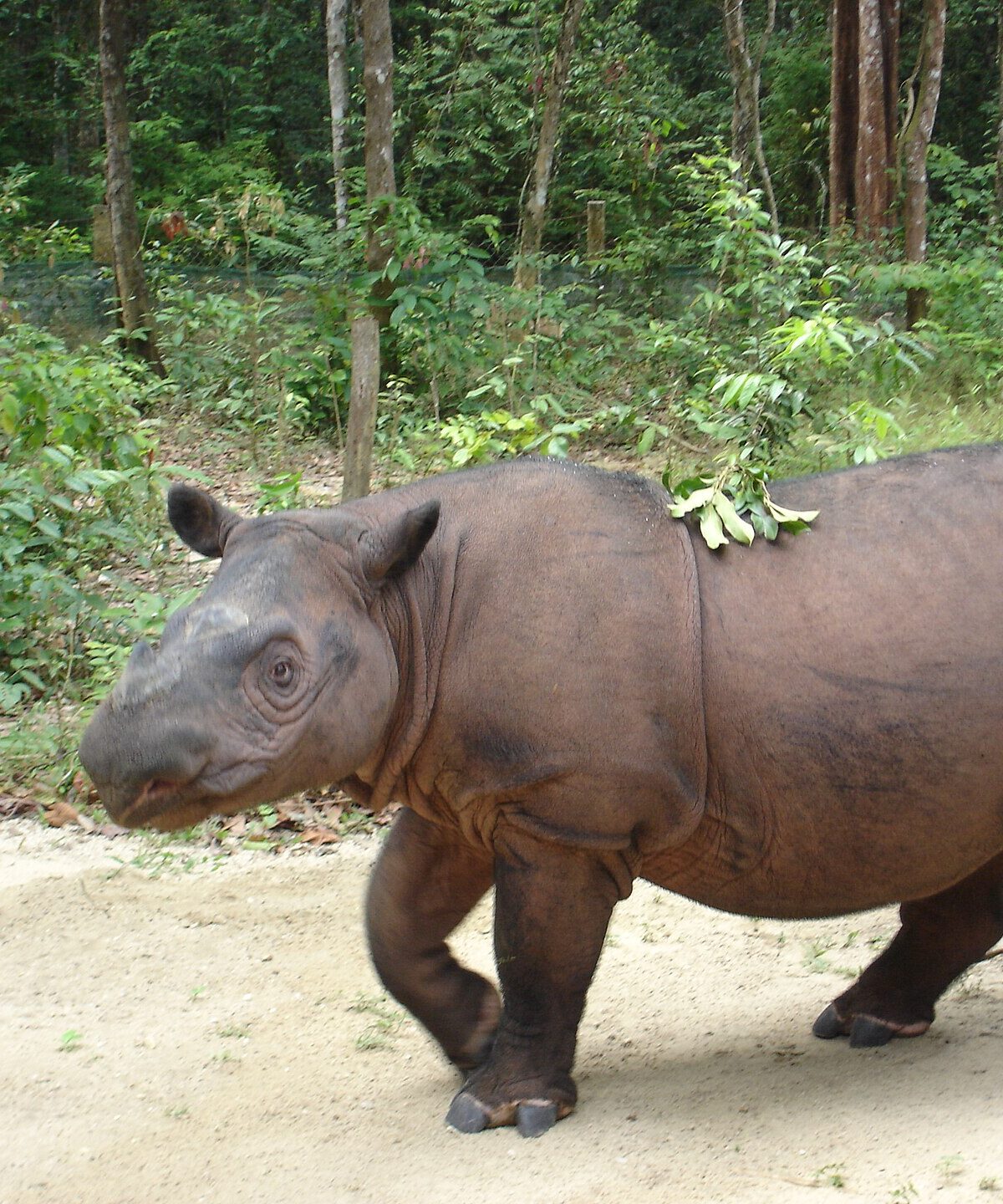
SUMATRAN RHINOCEROS
DESCRIPTION
Sumatran Rhinoceros, also known as the Asian Two-horned Rhinoceros, is the smallest of all living rhinoceros species, characterized by its hairy body and two distinct horns. This species has a unique appearance with a reddish-brown skin that is covered in coarse hair, giving it a shaggy look. Sumatran Rhinoceroses are primarily solitary animals, often found in dense tropical forests where they play a crucial role in their ecosystem by helping to maintain the structure of the forest through their feeding habits.
FUN FACTS
- Sumatran Rhinoceroses are the only rhino species with hair, which helps them adapt to their humid rainforest environment by providing insulation and protection from insects
- | They are also known for their unique vocalizations, which include a range of sounds such as grunts and whistles, used for communication with other rhinos
QUICK INFO
Lifespan30-40 years in the wild, up to 50 in captivity
Average Weight500-1,000 kg
Average Length2.5-3.1 m
Diet TypeHerbivore
Social Structuresolitary, with occasional pairings during mating season
Activity PatternNocturnal
Breeding SeasonYear-round, with peaks during certain months
- Habitat
- Sumatran Rhinoceroses inhabit dense tropical rainforests and mountainous regions, often near water sources. They prefer areas with abundant vegetation that provides both food and cover.
- Biomes
- Tropical Rainforest
- Native Range
- The native range of the Sumatran Rhinoceros includes the islands of Sumatra and Borneo in Southeast Asia.
- Continent
- Asia
- Countries
- Indonesia, Malaysia
- Diet
- They are herbivores, primarily feeding on leaves, fruits, and shrubs.
- Diet Type
- Herbivore
- Favorite Food
- leaves, fruits, shrubs
- Social Structure
- solitary, with occasional pairings during mating season
- Activity Pattern
- Nocturnal
- Group Size
- 1
- Territorial
- 1
500-1,000 kg
Weight
2.5-3.1 m
Length
1.2 m at shoulder
Height (Shoulder)
- Coloration
- reddish-brown with coarse hair
- Sexual Dimorphism
- males are generally larger than females
- Lifespan
- 30-40 years in the wild, up to 50 in captivity
- Gestation Period
- 15-16 months
- Offspring per Birth
- 1
- Sexual Maturity
- 3-4 years
- Breeding Season
- Year-round, with peaks during certain months
CR
Critically Endangered
IUCN Red List Status
- Population Status
- The Sumatran Rhinoceros is critically endangered, with a declining population due to habitat loss and poaching.
- Wild Population Estimate
- Less than 80 individuals
- Population Trend
- Decreasing
- Endangered
- 1
- Threats
- The main threats to the Sumatran Rhinoceros include habitat destruction due to logging and agricultural expansion, as well as poaching for their horns. Conservation efforts are critical to prevent their extinction.
- Conservation Program
- Sumatran Rhino Rescue, various habitat protection initiatives
- Predators
- Humans are the primary threat, but young rhinoceroses may be vulnerable to large carnivores such as tigers.
- Defense Mechanisms
- They rely on their size and strength for defense, using their horns to fend off threats.
- Found in Zoos
- Rare