


SUN BEAR
Helarctos malayanus
DESCRIPTION
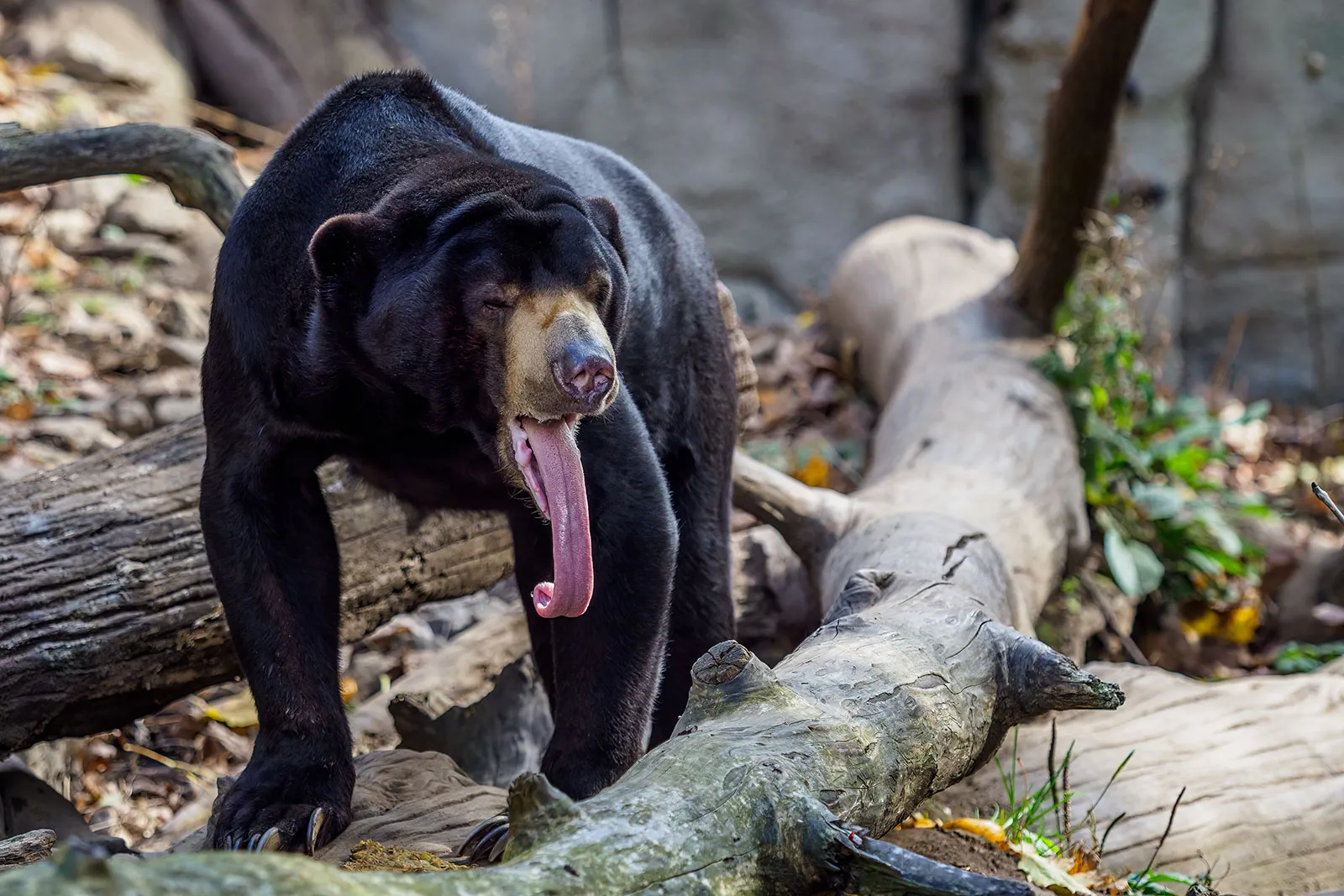
Also called the Honey Bear and Malayan Sun Bear, the Sun Bear is the smallest bear species, characterized by its short, sleek black fur and a distinctive orange to cream-colored chest patch that resembles a rising sun. They have a long tongue, which can extend up to 25 centimeters, allowing them to extract honey from beehives and insects from tree bark. Sun Bears are primarily solitary and are known for their arboreal lifestyle, spending a significant amount of time in trees, where they forage for food and rest.
FUN FACTS
- Sun Bears have the longest tongue of any bear species, which they use to reach honey and insects deep within tree bark
- They are also known for their unique vocalizations, which include a variety of sounds such as growls, barks, and even a form of 'chattering' that resembles a human laugh
QUICK INFO
Lifespan15-20 years in the wild, up to 30 in captivity
Average Weight50-65 kg
Average Length1.2-1.5 m
Diet TypeOmnivore
Social StructureSolitary, with individuals typically living alone except during mating season or a mother with her cubs.
Activity PatternNocturnal
Breeding SeasonYear-round, with peaks depending on the region
- Habitat
- Sun Bears inhabit tropical rainforests, preferring areas with dense vegetation and abundant food sources. They are often found in lowland forests and mountainous regions.
- Biomes
- Tropical Rainforest
- Native Range
- Sun Bears are native to Southeast Asia, found in countries such as Malaysia, Thailand, Vietnam, and Indonesia.
- Continent
- Asia
- Countries
- Malaysia, Thailand, Vietnam, Indonesia, Myanmar, Cambodia, Laos
- Diet
- Sun Bears are omnivorous, feeding on a variety of fruits, insects, and small vertebrates. They are particularly fond of honey, which they access using their long tongues.
- Diet Type
- Omnivore
- Favorite Food
- Honey, fruits, insects
- Social Structure
- Solitary, with individuals typically living alone except during mating season or a mother with her cubs.
- Activity Pattern
- Nocturnal
- Group Size
- 1
- Territorial
- 0
50-65 kg
Weight
1.2-1.5 m
Length
- Coloration
- Short black fur with a distinctive orange to cream-colored chest patch.
- Sexual Dimorphism
- Males are generally larger than females.
- Lifespan
- 15-20 years in the wild, up to 30 in captivity
- Gestation Period
- 95-110 days
- Offspring per Birth
- 1-2
- Sexual Maturity
- 2-3 years
- Breeding Season
- Year-round, with peaks depending on the region
VU
Vulnerable
IUCN Red List Status
- Population Status
- The Sun Bear population is currently declining due to habitat loss and poaching.
- Wild Population Estimate
- Less than 10,000
- Population Trend
- Decreasing
- Endangered
- 1
- Threats
- Main threats to Sun Bears include deforestation for agriculture and logging, as well as poaching for their body parts and the illegal pet trade. Habitat fragmentation also poses a significant risk to their survival.
- Predators
- Humans are the primary threat, but young bears may be vulnerable to large cats and other carnivores.
- Defense Mechanisms
- Sun Bears can climb trees to escape threats and use their strong claws for defense.
- Found in Zoos
- Uncommon