


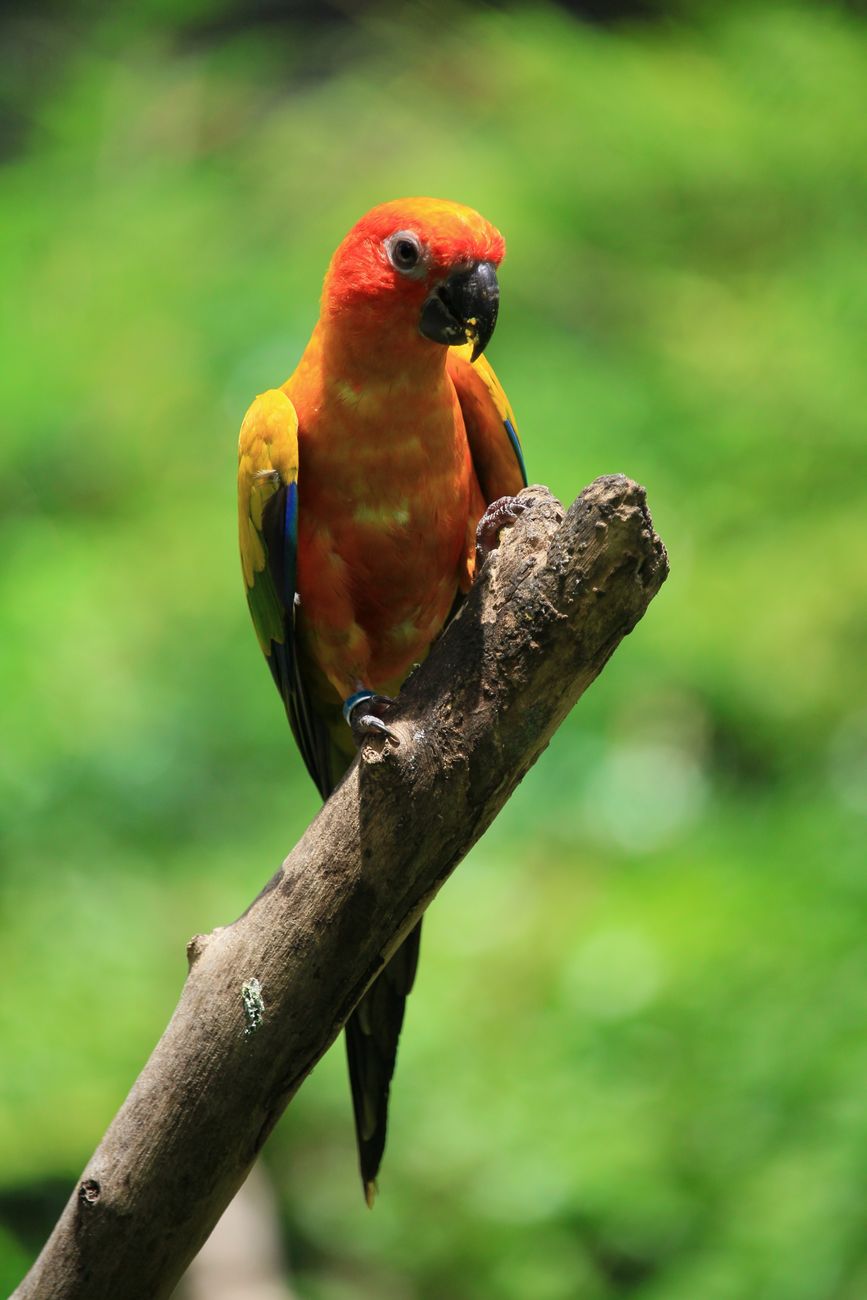
SUN PARAKEET
Aratinga solstitialis
DESCRIPTION
Sun Parakeet (Aratinga solstitialis) is commonly known as the Sun Conure and is a vibrant, colorful bird native to South America. These parakeets are characterized by their bright yellow and orange plumage, with green and blue accents on their wings and tail. They are highly social and intelligent birds, often seen in flocks, engaging in playful behavior and vocalizations that include a variety of squawks and whistles.
FUN FACTS
- Sun Parakeets are known for their exceptional vocal abilities and can learn to mimic human speech and sounds
- They are also highly social and require plenty of interaction and stimulation to thrive, making them popular pets despite their conservation status.|These birds are often seen engaging in playful behaviors, such as hanging upside down and playing with toys
- Their vibrant colors and lively personalities make them a favorite among bird enthusiasts and visitors at zoos
QUICK INFO
Lifespan15-30 years in captivity
Average Weight100-120 g
Average Length30-33 cm
Diet TypeHerbivore
Social StructureThey are typically found in groups, often forming flocks of 5-30 individuals. These flocks are characterized by strong social interactions and cooperative behaviors.
Activity PatternDiurnal
Breeding SeasonSpring to early summer
- Habitat
- They inhabit tropical forests, savannas, and woodlands, often found in areas with abundant fruiting trees. Sun Parakeets prefer open areas where they can forage and socialize.
- Biomes
- Tropical Rainforest, Savanna
- Native Range
- The native range of the Sun Parakeet includes northeastern South America, particularly in countries like Brazil, Guyana, Suriname, and French Guiana.
- Continent
- South America
- Countries
- Brazil, Guyana, Suriname, French Guiana
- Diet
- Sun Parakeets primarily feed on seeds, fruits, and nuts, enjoying a varied diet that includes berries and other plant materials.
- Diet Type
- Herbivore
- Favorite Food
- seeds, fruits, nuts
- Social Structure
- They are typically found in groups, often forming flocks of 5-30 individuals. These flocks are characterized by strong social interactions and cooperative behaviors.
- Activity Pattern
- Diurnal
- Group Size
- 5-30
- Territorial
- 0
 LC
LC
100-120 g
Weight
30-33 cm
Length
- Coloration
- Bright yellow and orange with green and blue accents on wings and tail.
- Sexual Dimorphism
- Males and females are similar in appearance, making it difficult to distinguish between the sexes.
- Lifespan
- 15-30 years in captivity
- Offspring per Birth
- 3-5
- Sexual Maturity
- 1-2 years
- Breeding Season
- Spring to early summer
EN
Endangered
IUCN Red List Status
- Population Status
- The population of Sun Parakeets is currently declining due to habitat loss and the pet trade.
- Wild Population Estimate
- 20,000-50,000
- Population Trend
- Decreasing
- Endangered
- 1
- Threats
- Main threats include habitat destruction due to deforestation and capture for the pet trade. These factors have significantly impacted their populations in the wild.
- Conservation Program
- Various conservation efforts are underway, including habitat protection and breeding programs in captivity.
- Predators
- Predators include birds of prey, snakes, and larger mammals that may prey on eggs or young birds.
- Defense Mechanisms
- They use loud vocalizations to warn of danger and can also fly away quickly to escape predators.
- Compatible Animals
- Other parakeets, small parrots, finches
- Found in Zoos
- Common