


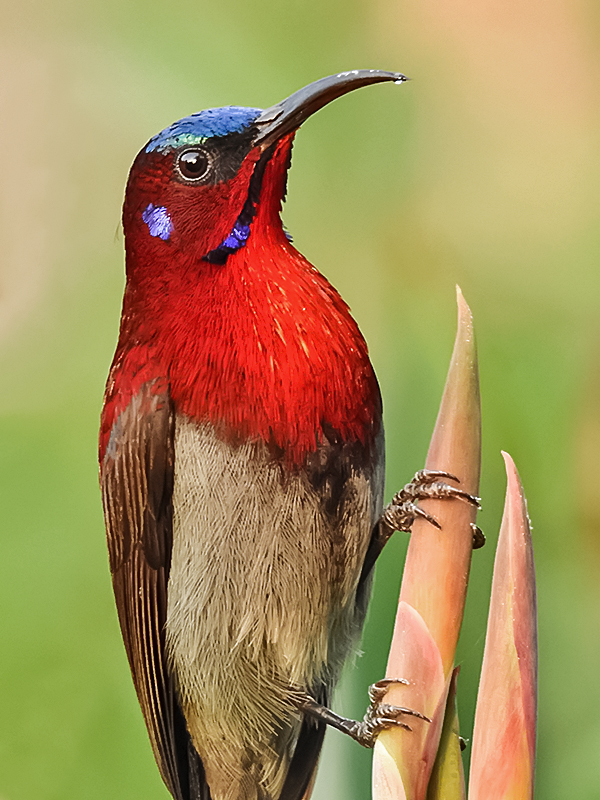
SUNBIRD
DESCRIPTION
Sunbirds are small, brightly colored birds that are often compared to hummingbirds due to their vibrant plumage and nectar-feeding habits. They exhibit sexual dimorphism, with males typically displaying more vivid colors than females. These birds are known for their agility and acrobatic flight, often hovering in front of flowers to feed on nectar, which is their primary food source.
FUN FACTS
- Sunbirds are often referred to as the 'jewels of the forest' due to their stunning colors and iridescence
- They have a unique feeding technique where they can insert their long, curved bills into flowers to access nectar, which is a skill that few other birds possess.| Some species of sunbirds are known to mimic the calls of other birds, which may help them in attracting mates or deterring rivals
- Their role as pollinators is vital for many flowering plants, making them an important part of their ecosystems
QUICK INFO
Lifespan5-10 years in the wild
Average Weight10-20 g
Average Length10-15 cm
Diet TypeOmnivore
Social Structurepair, often seen in small groups during foraging
Activity PatternDiurnal
Breeding SeasonSpring to early summer
- Habitat
- Sunbirds inhabit a variety of environments, including tropical and subtropical forests, gardens, and scrublands. They are often found in areas with abundant flowering plants.
- Biomes
- Tropical Rainforest, Savanna, Woodland
- Native Range
- Sunbirds are native to Africa, with some species found in parts of Asia.
- Continent
- Africa, Asia
- Countries
- South Africa, Kenya, India, Malaysia
- Diet
- Sunbirds primarily feed on nectar from flowers, but they also consume insects and spiders for protein. This diet allows them to play a crucial role in pollination.
- Diet Type
- Omnivore
- Favorite Food
- nectar, insects
- Social Structure
- pair, often seen in small groups during foraging
- Activity Pattern
- Diurnal
- Group Size
- 2-10
- Territorial
- 1
 LC
LC
10-20 g
Weight
10-15 cm
Length
- Coloration
- vibrant, iridescent colors, often with metallic hues
- Sexual Dimorphism
- males are more colorful than females
- Lifespan
- 5-10 years in the wild
- Offspring per Birth
- 2-3
- Sexual Maturity
- 1 year
- Breeding Season
- Spring to early summer
LC
Least Concern
IUCN Red List Status
- Population Status
- Generally stable, but some species may be threatened due to habitat loss.
- Wild Population Estimate
- Unknown
- Population Trend
- Stable
- Endangered
- 0
- Threats
- Habitat destruction due to agriculture and urbanization poses a significant threat to sunbird populations. Climate change may also impact their food sources and breeding habitats.
- Predators
- Larger birds of prey, snakes, and domestic cats are known to prey on sunbirds.
- Defense Mechanisms
- Sunbirds often use their agility to evade predators and may also use camouflage among flowers.
- Compatible Animals
- hummingbirds, small finches
- Found in Zoos
- Uncommon