


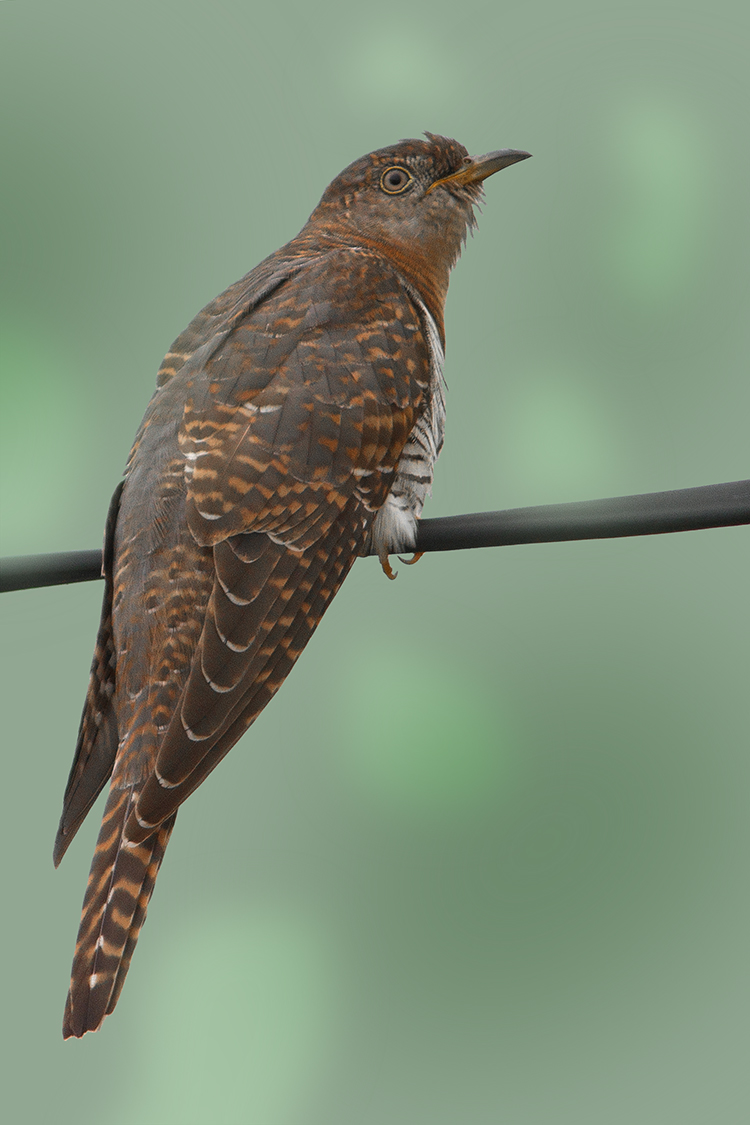
SUNDA CUCKOO
Cuculus saturatus
DESCRIPTION
Sunda Cuckoo (Cuculus saturatus) is a medium-sized bird known for its distinctive call and striking plumage. It typically exhibits a brownish coloration with lighter underparts, which helps it blend into its forested habitat. This species is known for its brood parasitism, laying its eggs in the nests of other birds, which raises its young, a behavior that is common among cuckoos.
FUN FACTS
- Sunda Cuckoo is known for its unique reproductive strategy, where it lays its eggs in the nests of other bird species, often leading to the host birds raising the cuckoo chicks as their own
- This behavior not only ensures the survival of the cuckoo's offspring but also places a significant burden on the host species, which may struggle to feed the additional chick
- | The call of the Sunda Cuckoo is distinctive and can be heard echoing through the forests of Southeast Asia, often described as a series of rapid 'cu-cu' sounds
- This vocalization plays a crucial role in attracting mates and establishing territory, making it an important aspect of their breeding behavior
QUICK INFO
Lifespanup to 5 years in the wild
Average Weight100-150 g
Average Length30-35 cm
Diet TypeInsectivore
Social Structuresolitary, typically seen alone or in pairs during the breeding season
Activity PatternDiurnal
Breeding SeasonSpring to early summer
- Habitat
- This species inhabits tropical and subtropical forests, often favoring areas with dense foliage. It is also found in secondary growth and plantations, where it can find ample food and nesting opportunities.
- Biomes
- Tropical Rainforest, Subtropical Forest
- Native Range
- The Sunda Cuckoo is native to Southeast Asia, particularly found in countries like Indonesia, Malaysia, and the Philippines.
- Continent
- Asia
- Countries
- Indonesia, Malaysia, Philippines, Brunei, Thailand
- Diet
- The Sunda Cuckoo primarily feeds on insects and other invertebrates, which it catches while foraging in trees and shrubs.
- Diet Type
- Insectivore
- Favorite Food
- insects, caterpillars
- Social Structure
- solitary, typically seen alone or in pairs during the breeding season
- Activity Pattern
- Diurnal
- Group Size
- 1-2
- Territorial
- 1
 LC
LC
 VU
VU
 LC
LC
100-150 g
Weight
30-35 cm
Length
- Coloration
- brown and white with streaks and spots
- Sexual Dimorphism
- males and females are similar in appearance
- Lifespan
- up to 5 years in the wild
- Offspring per Birth
- 1-3
- Sexual Maturity
- 1 year
- Breeding Season
- Spring to early summer
LC
Least Concern
IUCN Red List Status
- Population Status
- The population of Sunda Cuckoo is currently stable, but habitat loss poses a potential threat.
- Wild Population Estimate
- unknown
- Population Trend
- Stable
- Endangered
- 0
- Threats
- Main threats include habitat destruction due to deforestation and agricultural expansion. These activities reduce the availability of suitable nesting sites and food resources.
- Predators
- snakes, birds of prey, and larger mammals may prey on eggs and young chicks.
- Defense Mechanisms
- Sunda Cuckoos rely on their cryptic coloration to avoid detection by predators.
- Found in Zoos
- Rare