


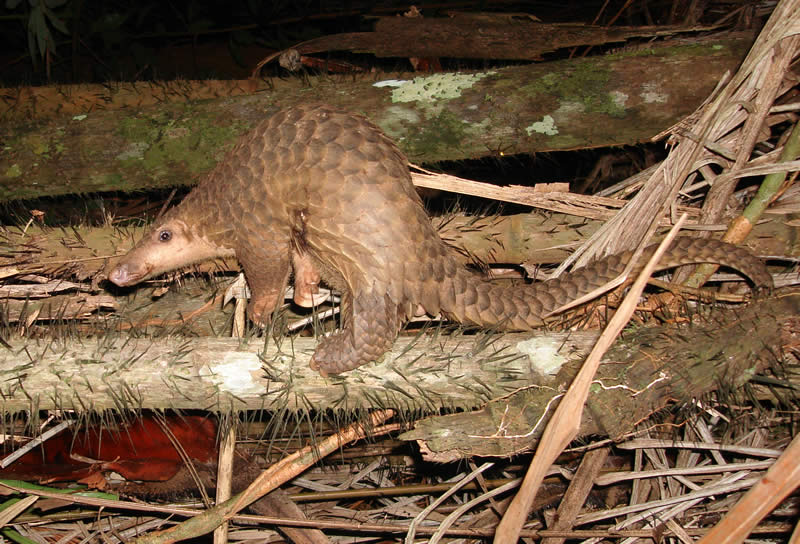
SUNDA PANGOLIN
DESCRIPTION
Also called the Malayan Pangolin, Sunda Pangolin is a unique mammal known for its distinctive keratin scales that cover its body. This nocturnal creature is primarily solitary and is an expert climber, often found in trees as well as on the ground. Its diet mainly consists of ants and termites, which it extracts using its long, sticky tongue, showcasing its specialized feeding behavior.
FUN FACTS
- Sunda Pangolins are the only mammals with scales, which are made of keratin, the same material as human nails
- They can consume up to 70 million insects in a year, showcasing their vital role in controlling insect populations in their habitats
QUICK INFO
Lifespan10-20 years in the wild
Average Weight10-15 kg
Average Length1-1.5 m
Diet TypeInsectivore
Social Structuresolitary, typically found alone except during mating or a mother with her young
Activity PatternNocturnal
Breeding SeasonYear-round
- Habitat
- Sunda Pangolins inhabit tropical forests, grasslands, and scrublands, often preferring areas with abundant insect populations. They are also found in secondary forests and near agricultural lands.
- Biomes
- Tropical Rainforest, Grassland
- Native Range
- Sunda Pangolin is native to Southeast Asia, including countries like Indonesia, Malaysia, and Thailand.
- Continent
- Asia
- Countries
- Indonesia, Malaysia, Thailand, Myanmar, Vietnam, Cambodia
- Diet
- Sunda Pangolin primarily feeds on ants and termites, using its long tongue to extract them from their nests. It plays a crucial role in controlling insect populations in its ecosystem.
- Diet Type
- Insectivore
- Favorite Food
- ants, termites
- Social Structure
- solitary, typically found alone except during mating or a mother with her young
- Activity Pattern
- Nocturnal
- Group Size
- 1
- Territorial
- 0
10-15 kg
Weight
1-1.5 m
Length
- Coloration
- brown to gray with overlapping scales
- Lifespan
- 10-20 years in the wild
- Gestation Period
- 90-120 days
- Offspring per Birth
- 1
- Sexual Maturity
- 2-3 years
- Breeding Season
- Year-round
EN
Endangered
IUCN Red List Status
- Population Status
- Sunda Pangolin populations are declining due to poaching and habitat loss.
- Wild Population Estimate
- Unknown, but significantly decreasing
- Population Trend
- Decreasing
- Endangered
- 1
- Threats
- The main threats to Sunda Pangolins include illegal wildlife trade for their scales and meat, as well as habitat destruction due to deforestation. These factors have led to a significant decline in their populations.
- Conservation Program
- Various conservation programs are in place, including habitat protection and anti-poaching initiatives.
- Predators
- Large carnivores such as tigers and leopards may prey on young pangolins, while humans are their primary threat through hunting and habitat destruction.
- Defense Mechanisms
- Sunda Pangolins can curl into a tight ball, using their tough scales as armor against predators.
- Found in Zoos
- Uncommon