


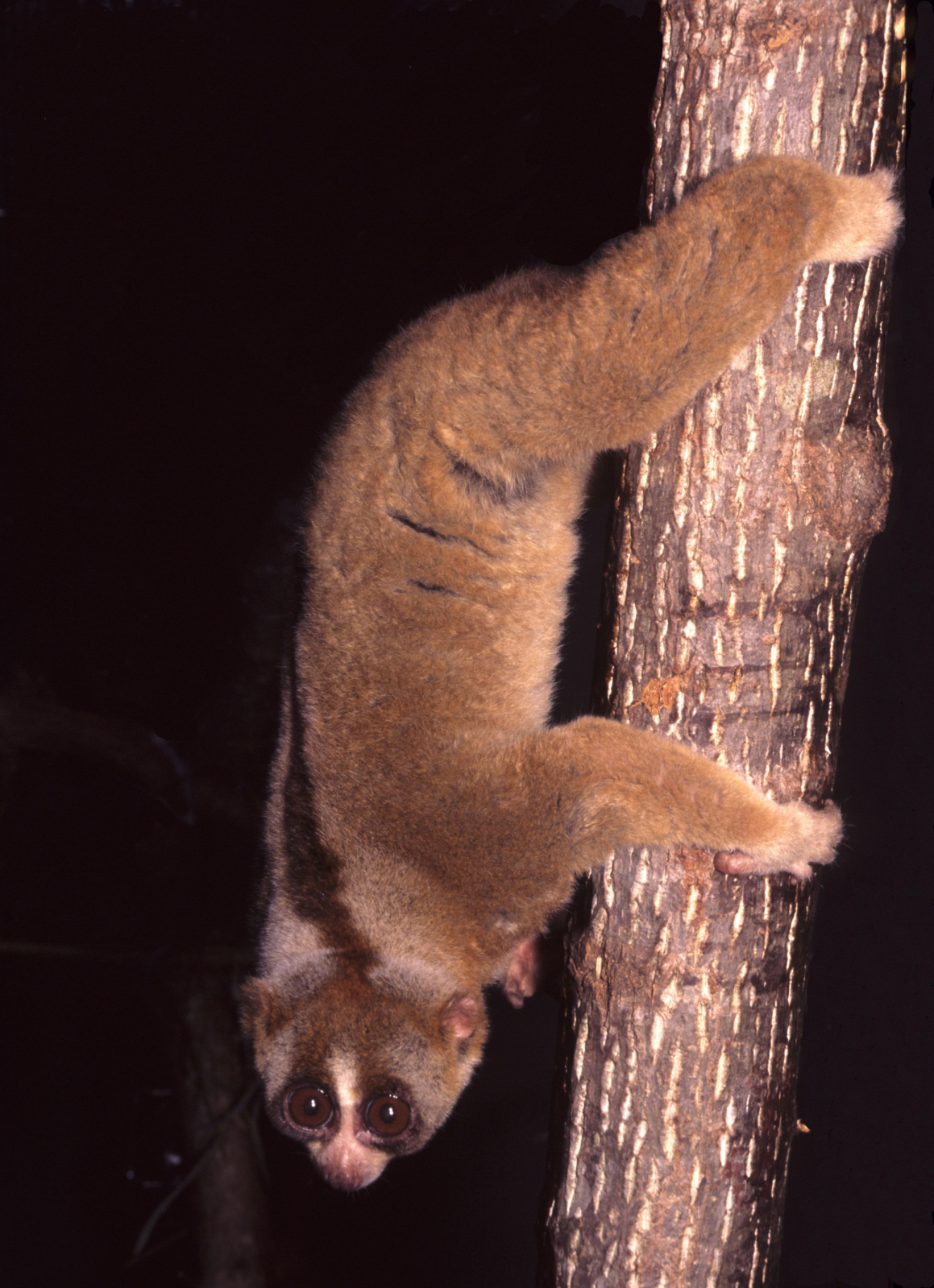
SUNDA SLOW LORIS
Nycticebus coucang
DESCRIPTION
Sunda Slow Loris (Nycticebus coucang) is also known as the Coucang, a small primate characterized by its large, round eyes and a slow, deliberate movement. This nocturnal creature has a distinctive appearance with a soft, dense fur that ranges from gray to brown, often with lighter patches on its face and limbs. Sunda Slow Lorises are arboreal and primarily found in the tropical forests of Southeast Asia, where they exhibit a unique blend of social and solitary behaviors.
FUN FACTS
- Sunda Slow Lorises have a unique ability to produce a toxin from their elbow glands, which they can mix with their saliva to create a venomous bite
- This adaptation helps them defend against predators and is quite rare among primates
- | They are known for their slow, deliberate movements, which help them avoid detection by both predators and prey
- This slow lifestyle is a key part of their survival strategy in the dense forests they inhabit
QUICK INFO
Lifespan10-15 years in the wild, up to 20 years in captivi
Average Weight1-2 kg
Average Length25-38 cm
Diet TypeOmnivore
Social StructureSolitary, though they may occasionally be seen in pairs or small family groups. They have overlapping home ranges but are generally territorial.
Activity PatternNocturnal
Breeding SeasonYear-round, with peaks depending on local conditions
- Habitat
- They inhabit tropical rainforests, secondary forests, and mangrove forests, often residing in the canopy. These environments provide ample food sources and shelter from predators.
- Biomes
- Tropical Rainforest
- Native Range
- Sunda Slow Lorises are native to Southeast Asia, specifically found in countries like Indonesia, Malaysia, and Thailand.
- Continent
- Asia
- Countries
- Indonesia, Malaysia, Thailand
- Diet
- Sunda Slow Lorises are primarily frugivorous, feeding on fruits, but they also consume leaves, flowers, and insects. Their diet is supplemented with a variety of plant materials, making them opportunistic feeders.
- Diet Type
- Omnivore
- Favorite Food
- fruits, leaves, insects
- Social Structure
- Solitary, though they may occasionally be seen in pairs or small family groups. They have overlapping home ranges but are generally territorial.
- Activity Pattern
- Nocturnal
- Group Size
- 1-2
- Territorial
- 1
 VU
VU
 LC
LC
1-2 kg
Weight
25-38 cm
Length
- Coloration
- Soft fur that ranges from gray to brown with lighter facial markings.
- Lifespan
- 10-15 years in the wild, up to 20 years in captivi
- Gestation Period
- 6 months
- Offspring per Birth
- 1-2
- Sexual Maturity
- 1-2 years
- Breeding Season
- Year-round, with peaks depending on local conditions
EN
Endangered
IUCN Red List Status
- Population Status
- The population of Sunda Slow Lorises is currently declining due to habitat loss and illegal pet trade.
- Wild Population Estimate
- Unknown, but believed to be decreasing
- Population Trend
- Decreasing
- Endangered
- 1
- Threats
- Main threats include habitat destruction due to deforestation and the illegal wildlife trade. These factors have significantly impacted their populations across their native range.
- Conservation Program
- Various local and international conservation efforts are in place, including habitat protection and anti-poaching initiatives.
- Predators
- Birds of prey, snakes, and larger mammals may prey on Sunda Slow Lorises, particularly when they are on the ground.
- Defense Mechanisms
- They possess a toxic bite, which is a unique defense mechanism among primates, allowing them to deter potential predators.
- Found in Zoos
- Uncommon