


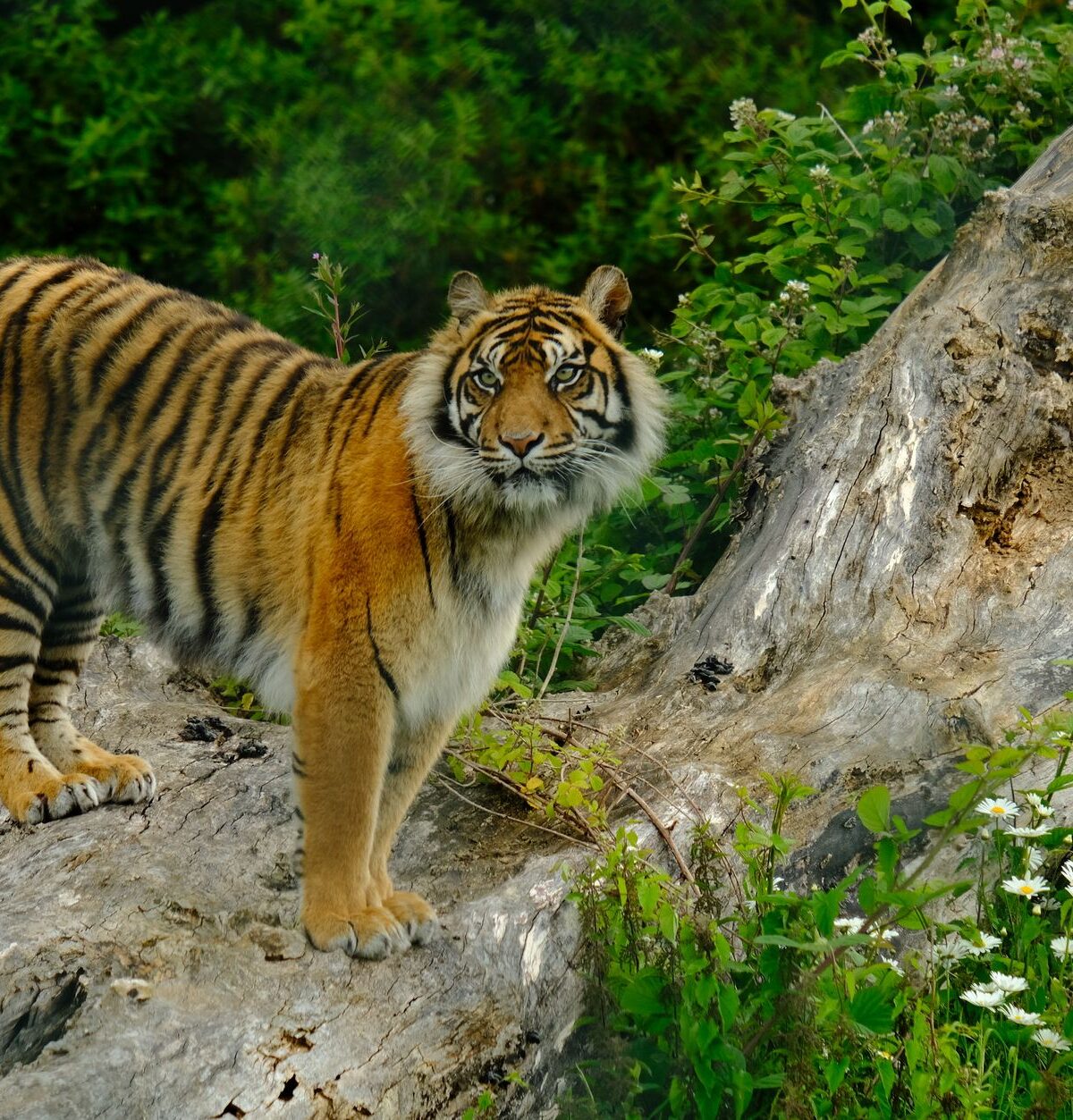
SUNDA TIGER
DESCRIPTION
Also called the Sumatran Tiger, the Sunda Tiger is a distinct subspecies of tiger found exclusively on the Indonesian island of Sumatra. It is smaller than its mainland relatives, with a more compact body and darker fur, featuring closely spaced stripes that help it blend into the dense rainforest habitat. This solitary predator is known for its stealth and agility, making it an adept hunter in its lush environment.
FUN FACTS
- Sunda Tigers are the smallest of all tiger subspecies, which helps them navigate the dense forests of Sumatra more effectively
- They are also known for their unique vocalizations, including a distinctive roar that can be heard over long distances, which they use to communicate with other tigers.| Unlike other tiger subspecies, Sunda Tigers have adapted to their island environment by developing a more robust swimming ability, allowing them to cross rivers and hunt in aquatic habitats
- This adaptation is crucial for their survival in the fragmented landscapes of Sumatra
QUICK INFO
Lifespan10-15 years in the wild, up to 20 years in captivi
Average Weight90-140 kg
Average Length2.3-2.6 m
Diet TypeCarnivore
Social Structuresolitary, typically living alone except during mating or when a mother is raising her cubs
Activity PatternNocturnal
Breeding SeasonYear-round, with peaks depending on environmental conditions
- Habitat
- The Sunda Tiger inhabits tropical rainforests, swamps, and mountainous regions, relying on dense vegetation for cover while hunting. These habitats provide ample prey and shelter, crucial for their survival.
- Biomes
- Tropical Rainforest, Swamp
- Native Range
- The Sunda Tiger is native to the island of Sumatra in Indonesia.
- Continent
- Asia
- Countries
- Indonesia
- Diet
- The Sunda Tiger primarily preys on ungulates such as deer and wild boar, but it will also hunt smaller mammals and birds when necessary.
- Diet Type
- Carnivore
- Favorite Food
- deer, wild boar
- Social Structure
- solitary, typically living alone except during mating or when a mother is raising her cubs
- Activity Pattern
- Nocturnal
- Group Size
- 1-3
- Territorial
- 1
90-140 kg
Weight
2.3-2.6 m
Length
- Coloration
- dark orange fur with closely spaced black stripes
- Sexual Dimorphism
- males are generally larger than females
- Lifespan
- 10-15 years in the wild, up to 20 years in captivi
- Gestation Period
- 93-112 days
- Offspring per Birth
- 1-4
- Sexual Maturity
- 3-4 years
- Breeding Season
- Year-round, with peaks depending on environmental conditions
CR
Critically Endangered
IUCN Red List Status
- Population Status
- The population of Sunda Tigers is critically low, primarily due to habitat loss and poaching.
- Wild Population Estimate
- 400-500
- Population Trend
- Decreasing
- Endangered
- 1
- Threats
- Main threats include habitat destruction due to logging and agriculture, as well as poaching for their body parts. These factors have led to a significant decline in their population.
- Conservation Program
- Sumatran Tiger Conservation Program
- Defense Mechanisms
- Sunda Tigers rely on their camouflage and stealth to avoid detection by both prey and potential threats.
- Found in Zoos
- Uncommon