


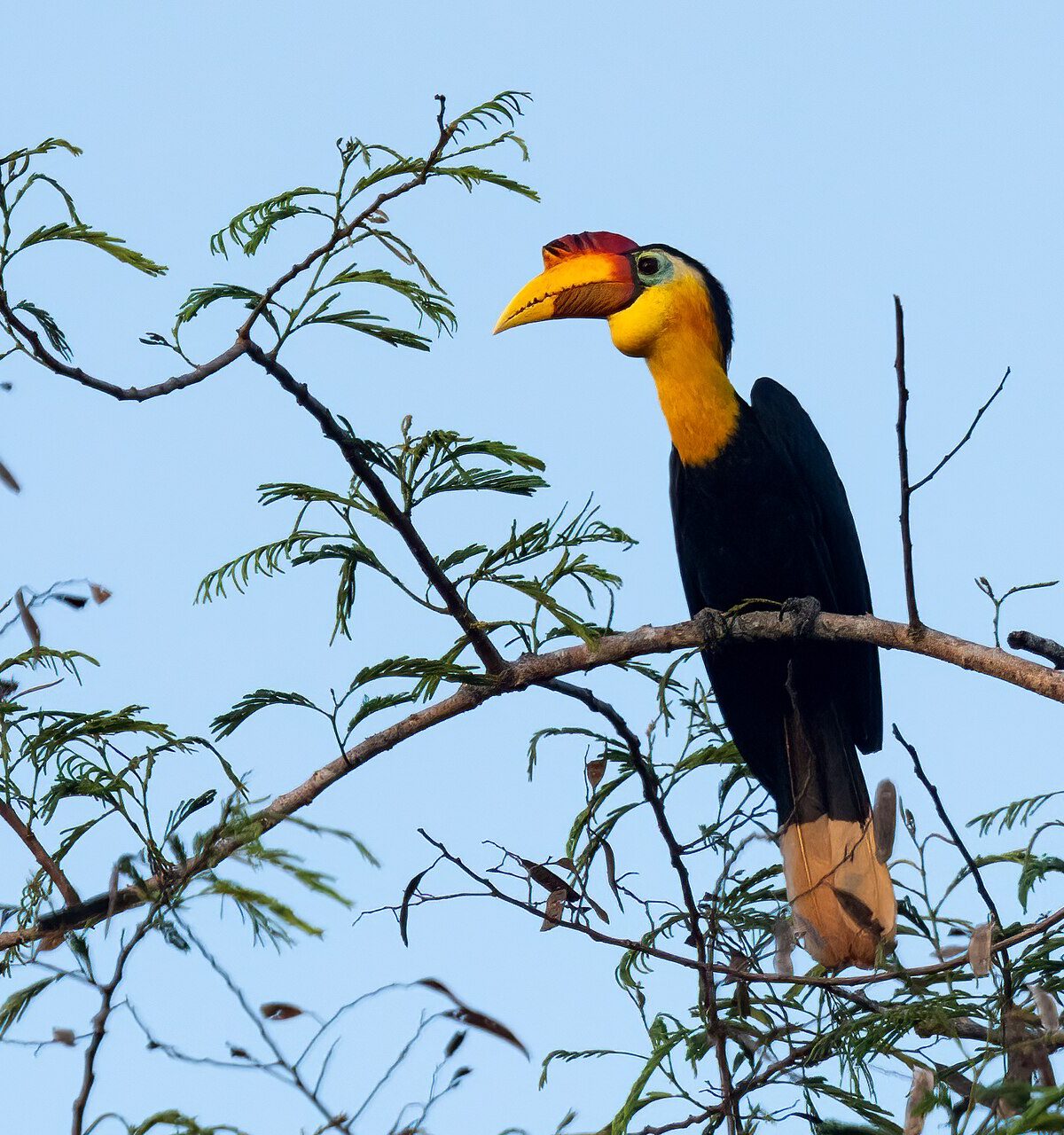
SUNDA WRINKLED HORNBILL
Rhabdotorrhinus corrugatus
DESCRIPTION
Sunda Wrinkled Hornbill (Rhabdotorrhinus corrugatus) is a striking bird known for its unique appearance, characterized by a large, curved bill that features prominent wrinkles. This species exhibits a predominantly black plumage with white wing patches and a distinctive yellowish-orange casque on its bill, which is more pronounced in males. They are primarily found in the tropical rainforests of Southeast Asia, where they play a crucial role in seed dispersal and maintaining the health of their ecosystem.
FUN FACTS
- Sunda Wrinkled Hornbills are known for their unique nesting behavior, where the female seals herself inside a tree cavity to lay eggs, relying on the male to bring her food during this time
- This species also plays a vital role in their ecosystem as seed dispersers, helping to maintain the diversity of their forest habitats
QUICK INFO
LifespanUp to 30 years in captivity.
Average Weight1.5-2.5 kg
Average Length60-70 cm
Diet TypeOmnivore
Social StructureThey are typically seen in pairs or small family groups, often consisting of a mated pair and their offspring.
Activity PatternDiurnal
Breeding SeasonTypically during the rainy season.
- Habitat
- These hornbills inhabit dense tropical rainforests, often favoring areas with abundant fruiting trees. They are arboreal and spend much of their time in the canopy.
- Biomes
- Tropical Rainforest
- Native Range
- The Sunda Wrinkled Hornbill is native to the islands of Borneo and Sumatra.
- Continent
- Asia
- Countries
- Indonesia, Malaysia, Brunei
- Diet
- Sunda Wrinkled Hornbills primarily feed on fruits, particularly figs, but they also consume insects and small vertebrates.
- Diet Type
- Omnivore
- Favorite Food
- Fruits, figs
- Social Structure
- They are typically seen in pairs or small family groups, often consisting of a mated pair and their offspring.
- Activity Pattern
- Diurnal
- Group Size
- 2-6
- Territorial
- 1
 VU
VU
 LC
LC
1.5-2.5 kg
Weight
60-70 cm
Length
- Coloration
- Predominantly black with white wing patches and a yellow-orange casque.
- Sexual Dimorphism
- Males have larger casques than females.
- Lifespan
- Up to 30 years in captivity.
- Offspring per Birth
- 1-2
- Sexual Maturity
- 3-4 years
- Breeding Season
- Typically during the rainy season.
EN
Endangered
IUCN Red List Status
- Population Status
- The population is currently declining due to habitat loss and hunting.
- Wild Population Estimate
- 10,000-20,000
- Population Trend
- Decreasing
- Endangered
- 1
- Threats
- Main threats include deforestation for agriculture and logging, as well as hunting for bushmeat and the pet trade. These activities have significantly reduced their habitat and population numbers.
- Predators
- Large birds of prey, snakes, and possibly larger mammals.
- Defense Mechanisms
- They use their size and strong beaks to defend themselves against predators.
- Found in Zoos
- Uncommon