


SURINAM TOAD
Pipa pipa
DESCRIPTION
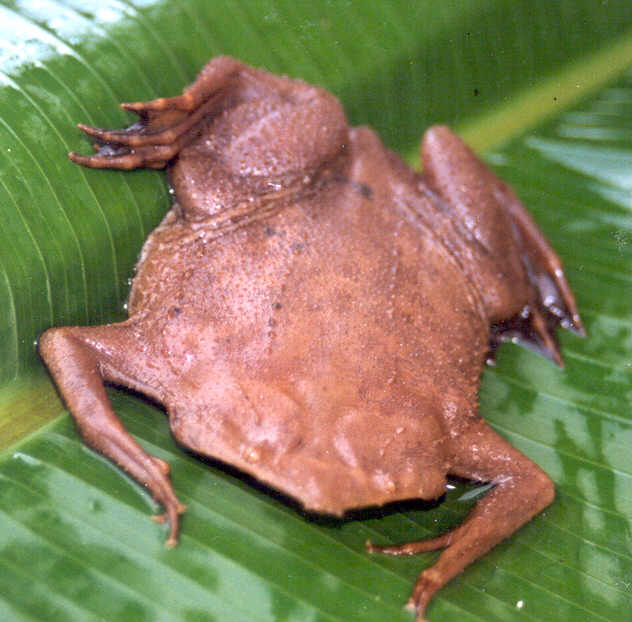
Surinam Toad (Pipa pipa) is a unique amphibian known for its flattened, disc-like body and the ability to camouflage with its environment. This species exhibits a remarkable reproductive strategy where the female carries fertilized eggs embedded in her back, which later develop into tadpoles. They are primarily aquatic and are often found in slow-moving waters, where they use their specialized skin to blend in with the leaf litter and debris on the bottom.
FUN FACTS
- Surinam Toads are often referred to as 'the toad that gives birth from its back' due to their unique reproductive method, where the female's back serves as a nursery for developing tadpoles
- This fascinating adaptation allows the young to be protected from predators until they are ready to swim away
- | Another interesting fact is that Surinam Toads have a very flat body shape, which helps them to hide effectively among the leaf litter at the bottom of their aquatic habitats
- This adaptation not only aids in camouflage but also allows them to remain motionless for long periods, increasing their chances of ambushing prey
QUICK INFO
Lifespan10-15 years in the wild, up to 20 in captivity
Average Weight200-300 g
Average Length10-15 cm
Diet TypeCarnivore
Social Structuresolitary, occasionally found in pairs during breeding
Activity PatternNocturnal
Breeding SeasonRainy season (varies by region)
- Habitat
- Surinam Toads inhabit freshwater environments such as swamps, ponds, and slow-moving streams. They prefer areas with abundant vegetation that provides cover and hunting grounds.
- Biomes
- Tropical Rainforest, Freshwater
- Native Range
- The native range of the Surinam Toad includes the Amazon Basin, particularly in countries like Suriname, Brazil, and parts of Colombia.
- Continent
- South America
- Countries
- Suriname, Brazil, Colombia
- Diet
- Surinam Toads primarily feed on small invertebrates, which they capture using their long, sticky tongues. They are ambush predators, waiting for prey to come close before striking.
- Diet Type
- Carnivore
- Favorite Food
- small invertebrates
- Social Structure
- solitary, occasionally found in pairs during breeding
- Activity Pattern
- Nocturnal
- Group Size
- 1-2
- Territorial
- 0
 VU
VU
 LC
LC
200-300 g
Weight
10-15 cm
Length
- Coloration
- brown to gray with a mottled pattern for camouflage
- Sexual Dimorphism
- males are generally smaller than females
- Lifespan
- 10-15 years in the wild, up to 20 in captivity
- Offspring per Birth
- 20-30
- Sexual Maturity
- 2-3 years
- Breeding Season
- Rainy season (varies by region)
LC
Least Concern
IUCN Red List Status
- Population Status
- The population status of Surinam Toads is currently stable, but habitat destruction poses a potential threat.
- Wild Population Estimate
- unknown
- Population Trend
- Stable
- Endangered
- 0
- Threats
- Main threats include habitat loss due to deforestation and pollution of water bodies. Climate change may also impact their breeding habitats.
- Predators
- birds, snakes, and larger fish are known to prey on Surinam Toads.
- Defense Mechanisms
- Their primary defense mechanism is their excellent camouflage, which helps them blend into their surroundings.
- Found in Zoos
- Uncommon