


SWIFT PARROT
Lathamus discolor
DESCRIPTION
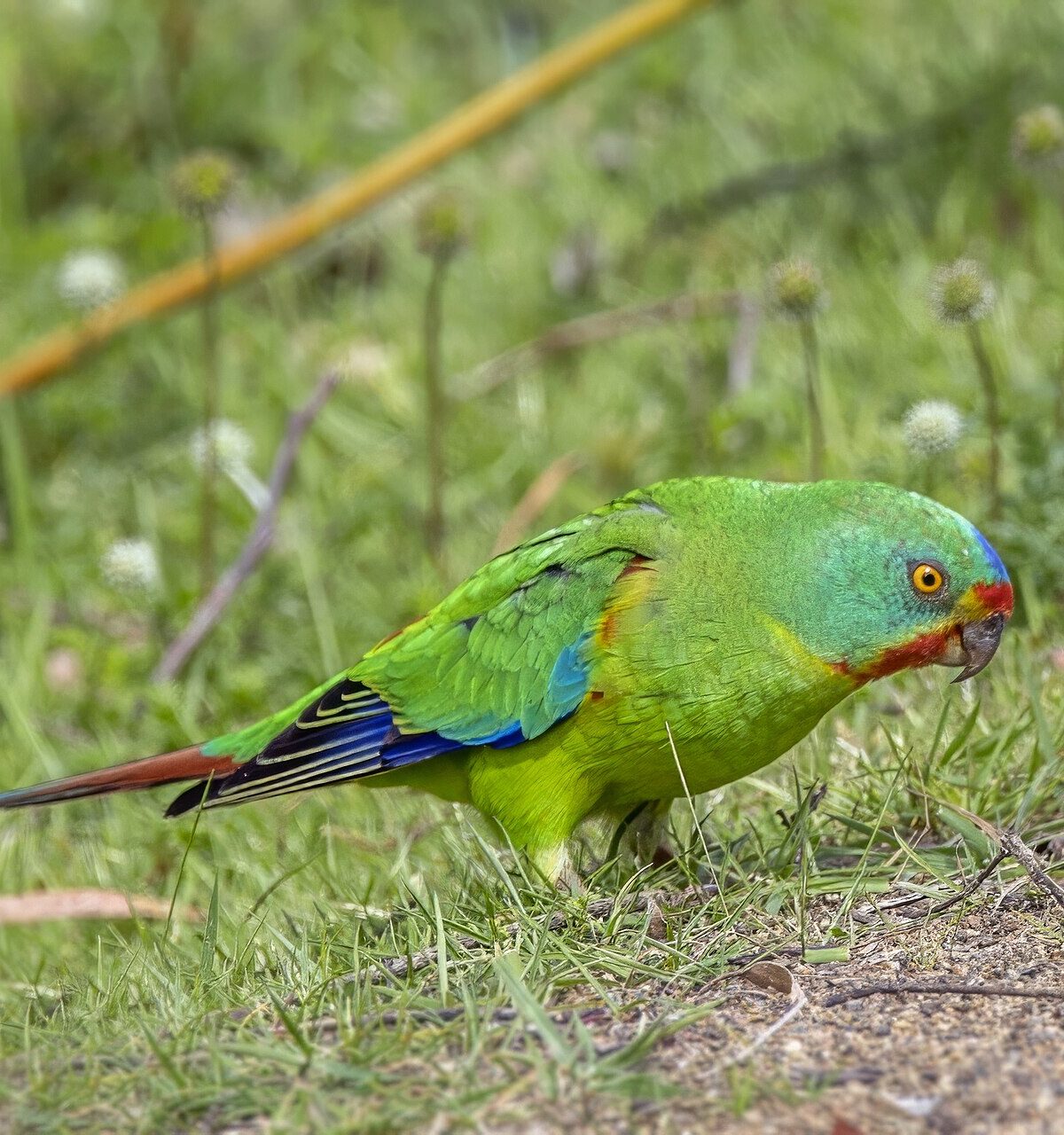
Swift Parrot (Lathamus discolor) is a small, brightly colored parrot native to Australia, known for its vibrant green plumage and striking red forehead and throat. This species is highly social and often seen in flocks, exhibiting acrobatic flight patterns as they move through their forest habitats. They are primarily found in Tasmania and are known for their migratory behavior, traveling to mainland Australia during the breeding season.
FUN FACTS
- Swift Parrots are one of the few parrot species that migrate long distances, traveling from Tasmania to the mainland of Australia for breeding
- They are also known for their unique feeding behavior, where they can often be seen hanging upside down to access nectar from flowers.|These parrots have a distinctive call that sounds like a series of high-pitched whistles, which they use to communicate with their flock
- Their vibrant colors and playful nature make them a favorite among birdwatchers and conservationists alike
QUICK INFO
Lifespan5-10 years in the wild, up to 15 years in captivit
Average Weight70-100 g
Average Length24-28 cm
Diet TypeHerbivore
Social Structuregroup — they are often found in flocks, especially during feeding and migration.
Activity PatternDiurnal
Breeding SeasonSpring to early summer (September to January)
- Habitat
- Swift Parrots inhabit eucalypt forests and woodlands, particularly those with abundant flowering species. They prefer areas with a mix of mature trees and open spaces for foraging.
- Biomes
- Temperate Forest, Woodland
- Native Range
- The native range of the Swift Parrot includes Tasmania and parts of southeastern Australia, where they migrate seasonally.
- Continent
- Australia
- Countries
- Australia, Tasmania
- Diet
- Swift Parrots primarily feed on nectar from flowering trees, as well as fruits and seeds. They play a crucial role in pollination within their ecosystem.
- Diet Type
- Herbivore
- Favorite Food
- nectar, fruits, seeds
- Social Structure
- group — they are often found in flocks, especially during feeding and migration.
- Activity Pattern
- Diurnal
- Group Size
- 10-50
- Territorial
- 0

 VU
VU
70-100 g
Weight
24-28 cm
Length
- Coloration
- vibrant green with a red forehead and throat, yellow underparts, and blue wing patches
- Sexual Dimorphism
- males and females are similar in appearance, but males may have slightly brighter coloration.
- Lifespan
- 5-10 years in the wild, up to 15 years in captivit
- Offspring per Birth
- 2-5
- Sexual Maturity
- 1 year
- Breeding Season
- Spring to early summer (September to January)
EN
Endangered
IUCN Red List Status
- Population Status
- The Swift Parrot population is currently declining due to habitat loss and other threats.
- Wild Population Estimate
- less than 1,000
- Population Trend
- Decreasing
- Endangered
- 1
- Threats
- Main threats to the Swift Parrot include habitat destruction due to logging and land clearing, as well as predation by invasive species such as cats and foxes. Climate change also poses a risk to their migratory patterns and food sources.
- Conservation Program
- Conservation efforts include habitat restoration and protection, as well as monitoring of populations and breeding programs.
- Predators
- cats, foxes, birds of prey
- Defense Mechanisms
- Swift Parrots rely on their agility and speed to evade predators, often using dense foliage for cover.
- Found in Zoos
- Uncommon