


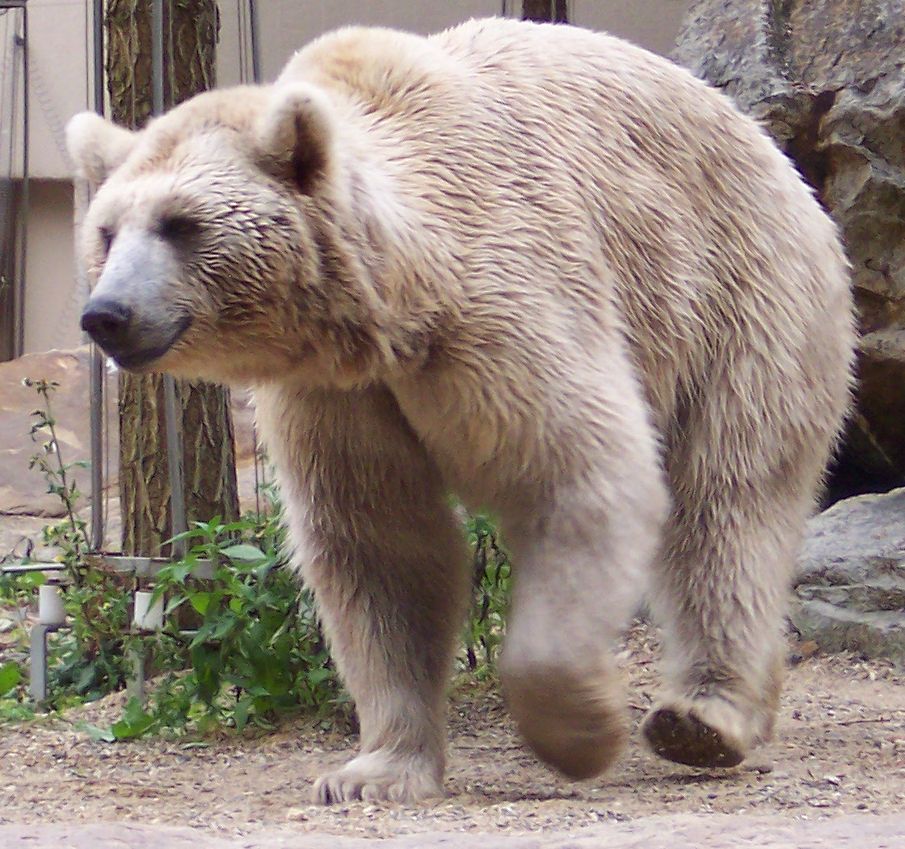
SYRIAN BROWN BEAR
Ursus arctos syriacus
DESCRIPTION
Syrian Brown Bear (Ursus arctos syriacus) is a subspecies of the brown bear found primarily in the mountainous regions of the Middle East. It has a robust body with a thick fur coat that varies in color from light brown to dark brown, often with a lighter muzzle. These bears are generally solitary and are known for their intelligence and adaptability to various environments.
FUN FACTS
- Syrian Brown Bears are known for their impressive climbing abilities, often ascending trees to escape threats or find food
- They also have a keen sense of smell, which they use to locate food from great distances.|These bears have a unique hibernation pattern, where they may enter a state of torpor during the coldest months, but can be active if food is available, unlike some other bear species that hibernate more strictly
QUICK INFO
Lifespan15-25 years in the wild, up to 30 in captivity
Average Weight150-250 kg
Average Length1.8-2.5 m
Diet TypeOmnivore
Social Structuresolitary, typically living alone except for mothers with cubs
Activity PatternDiurnal
Breeding SeasonSpring (March-May)
- Habitat
- They inhabit mountainous and forested areas, often preferring regions with dense vegetation for cover. These bears are also found in scrublands and grasslands, depending on food availability.
- Biomes
- Temperate Forest, Mountain
- Native Range
- The native range of the Syrian Brown Bear includes parts of the Middle East, particularly in countries like Syria, Turkey, and Iran.
- Continent
- Asia
- Countries
- Syria, Turkey, Iran, Iraq
- Diet
- Syrian Brown Bears are omnivorous, feeding on a varied diet that includes fruits, nuts, insects, and small mammals. They are opportunistic feeders and will scavenge when necessary.
- Diet Type
- Omnivore
- Favorite Food
- fruits, nuts, insects
- Social Structure
- solitary, typically living alone except for mothers with cubs
- Activity Pattern
- Diurnal
- Group Size
- 1-2
- Territorial
- 1

150-250 kg
Weight
1.8-2.5 m
Length
1.2 m at shoulder
Height (Shoulder)
- Coloration
- fur ranges from light brown to dark brown, often with a lighter muzzle
- Sexual Dimorphism
- males are generally larger than females
- Lifespan
- 15-25 years in the wild, up to 30 in captivity
- Gestation Period
- 110 days
- Offspring per Birth
- 1-3
- Sexual Maturity
- 3-4 years
- Breeding Season
- Spring (March-May)
EN
Endangered
IUCN Red List Status
- Population Status
- The population of Syrian Brown Bears is currently declining due to habitat loss and hunting.
- Wild Population Estimate
- 1,000-2,500
- Population Trend
- Decreasing
- Endangered
- 1
- Threats
- Main threats include habitat destruction due to urbanization and agriculture, as well as poaching for their fur and body parts. Human-wildlife conflict also poses a significant risk to their survival.
- Predators
- Humans are the primary threat, but young bears may be vulnerable to wolves and large cats.
- Defense Mechanisms
- They can defend themselves with their size and strength, using their powerful claws and teeth if threatened.
- Found in Zoos
- Uncommon